





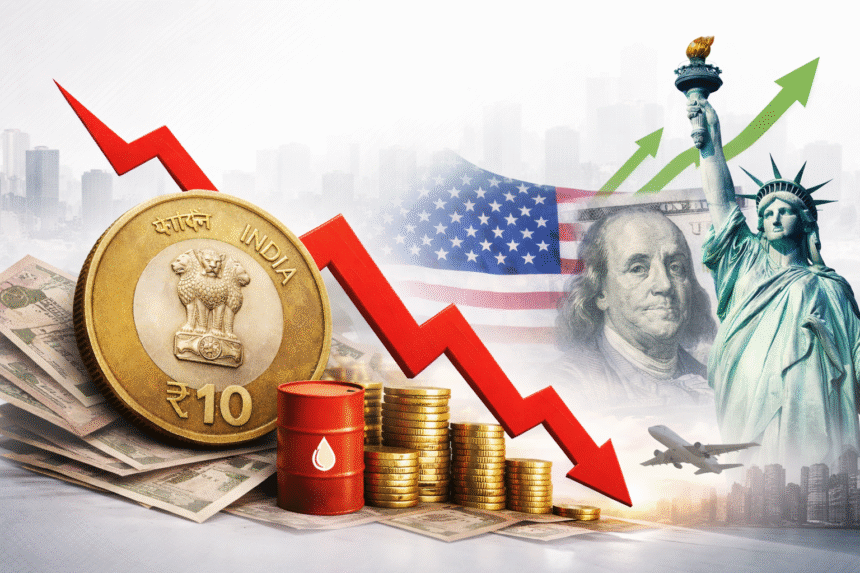
The Indian Rupee has come under heavy pressure and has fallen past the 91 mark against the US Dollar. This sudden decline has caught the attention of markets, businesses, and ordinary people across the country.
So, why is the rupee weakening so fast?
Is this dangerous for India’s economy?
Who benefits and who suffers?
Let’s break it down in a simple, easy-to-understand way.
What Is Happening to the Rupee?
When we say the rupee is weak, it means India needs more rupees to buy one US dollar.
Earlier:
-
₹82–83 = 1 US dollar
Now:
-
₹91+ = 1 US dollar
This shows the rupee has lost value compared to the dollar.
Why Is India’s Currency Under Pressure?
1. US Dollar Is Very Strong Right Now
The biggest reason is the global strength of the US dollar.
-
US interest rates remain high
-
Investors prefer US assets
-
Money flows towards the dollar
When the dollar strengthens, currencies like the rupee weaken.
2. Rising Crude Oil Prices
India imports most of its oil.
-
Higher oil prices mean higher dollar demand
-
More dollars are needed for imports
-
This puts pressure on the rupee
Oil prices and rupee value are closely linked.
3. Foreign Investors Are Pulling Out Money
Foreign investors are:
-
Selling Indian shares and bonds
-
Converting rupees into dollars
-
Moving funds back to the US
This reduces dollar supply in India and weakens the rupee.
4. Global Uncertainty and Risk Aversion
Global issues like:
-
Economic slowdown fears
-
Geopolitical tensions
-
Market volatility
make investors cautious. They prefer safe currencies like the dollar, hurting the rupee.
5. India’s Trade Deficit
India imports more than it exports.
-
More dollars go out than come in
-
Trade deficit increases
-
Rupee remains under pressure
How Does a Weak Rupee Impact the Indian Economy?
Negative Impact (Cons)
Costlier Imports
-
Fuel prices rise
-
Electronics and machinery get expensive
-
Edible oil and fertilizers cost more
This can increase inflation.
Pressure on Household Budgets
-
Travel abroad becomes costly
-
Foreign education expenses rise
-
Imported goods cost more
Higher Inflation Risk
-
Import inflation affects daily items
-
RBI may delay interest rate cuts
Positive Impact (Pros)
Exporters Gain
-
IT, pharma, textile exporters earn more
-
Same dollar income gives higher rupee value
Boost to Make in India
-
Imported goods become expensive
-
Indian products become competitive
-
Domestic manufacturing gets support
NRIs Benefit
-
Remittances fetch more rupees
-
Good time to send money to India
What Is RBI and Government Doing?
RBI Intervention
-
RBI sells dollars from forex reserves
-
Buys rupees to control sharp volatility
Strong Forex Reserves
India still holds healthy foreign exchange reserves, helping manage sudden shocks.
Focus on Inflation Control
RBI is watching:
-
Inflation trends
-
Currency movement
-
Global interest rates
Export Promotion
Government continues to:
-
Encourage exports
-
Support MSMEs
-
Reduce import dependence
Is Rupee at 91 a Serious Crisis?
Not yet.
Experts say:
-
The fall is gradual, not panic-driven
-
India’s economy remains stable
-
RBI has tools to manage volatility
However, long-term weakness must be monitored closely.
What Should Common People Know?
-
No need to panic
-
Expect short-term price pressure
-
Long-term investments should stay disciplined
-
Export-related sectors may benefit
Frequently Asked Questions (FAQs)
Q1. Why is the rupee falling against the dollar?
Due to strong US dollar, high oil prices, foreign fund outflows, and global uncertainty.
Q2. Is a weak rupee always bad?
No. It hurts imports but helps exports and remittances.
Q3. Can RBI stop the rupee fall completely?
RBI can reduce volatility, but cannot fight global market forces alone.
Q4. Will prices increase due to rupee weakness?
Imported goods and fuel prices may rise, affecting inflation.
Final Words
The rupee’s fall against the dollar is driven mainly by global factors, not a weak Indian economy. While it creates short-term challenges, it also opens doors for exports and manufacturing growth.
The key lies in balanced policy action and global stability.
