




How to Save Money Every Month: 25 Practical Money-Saving Tips for Indian Families (2026 Guide)

Have you ever wondered where your salary goes every month?
You receive your paycheck, pay a few bills, buy groceries, shop online occasionally, eat out with family, and before you know it, there’s very little left in your bank account.
If this sounds familiar, you’re not alone.
Many Indian families struggle to save money—not because they don’t earn enough, but because they don’t have a structured saving plan. Rising living costs, lifestyle inflation, and impulse spending make it difficult to build meaningful savings.
The good news is that saving money isn’t about giving up everything you enjoy.
It’s about making smarter financial decisions, building healthy habits, and consistently setting aside money for your future.
Whether you’re saving for an emergency fund, your child’s education, a new home, retirement, or simply greater financial security, even small monthly savings can grow into a significant amount over time.
Learning how to save money every month is one of the most valuable financial skills.
New to personal finance?
This article is part of our comprehensive Personal Finance Guide for Beginners in India, where you’ll learn budgeting, saving, investing, insurance, and other essential money management skills to build long-term financial security.
In this guide, you’ll discover:
- Why saving money every month is important.
- Where most families unknowingly waste money.
- 25 practical money-saving tips you can start using today.
- How to build long-term saving habits.
- Common mistakes that prevent people from saving.
- Simple ways to increase your monthly savings without sacrificing your quality of life.
Remember, financial success isn’t determined only by how much you earn.
It’s also determined by how much you keep.
Key Takeaways
- Saving money every month helps you prepare for emergencies, achieve financial goals, and reduce financial stress.
- Small daily savings can grow into substantial amounts over time.
- Creating a monthly budget makes it easier to control spending.
- Building consistent saving habits is more important than making large one-time contributions.
- Before investing aggressively, focus on building an emergency fund and maintaining a healthy savings habit.
Why Saving Money Every Month Matters
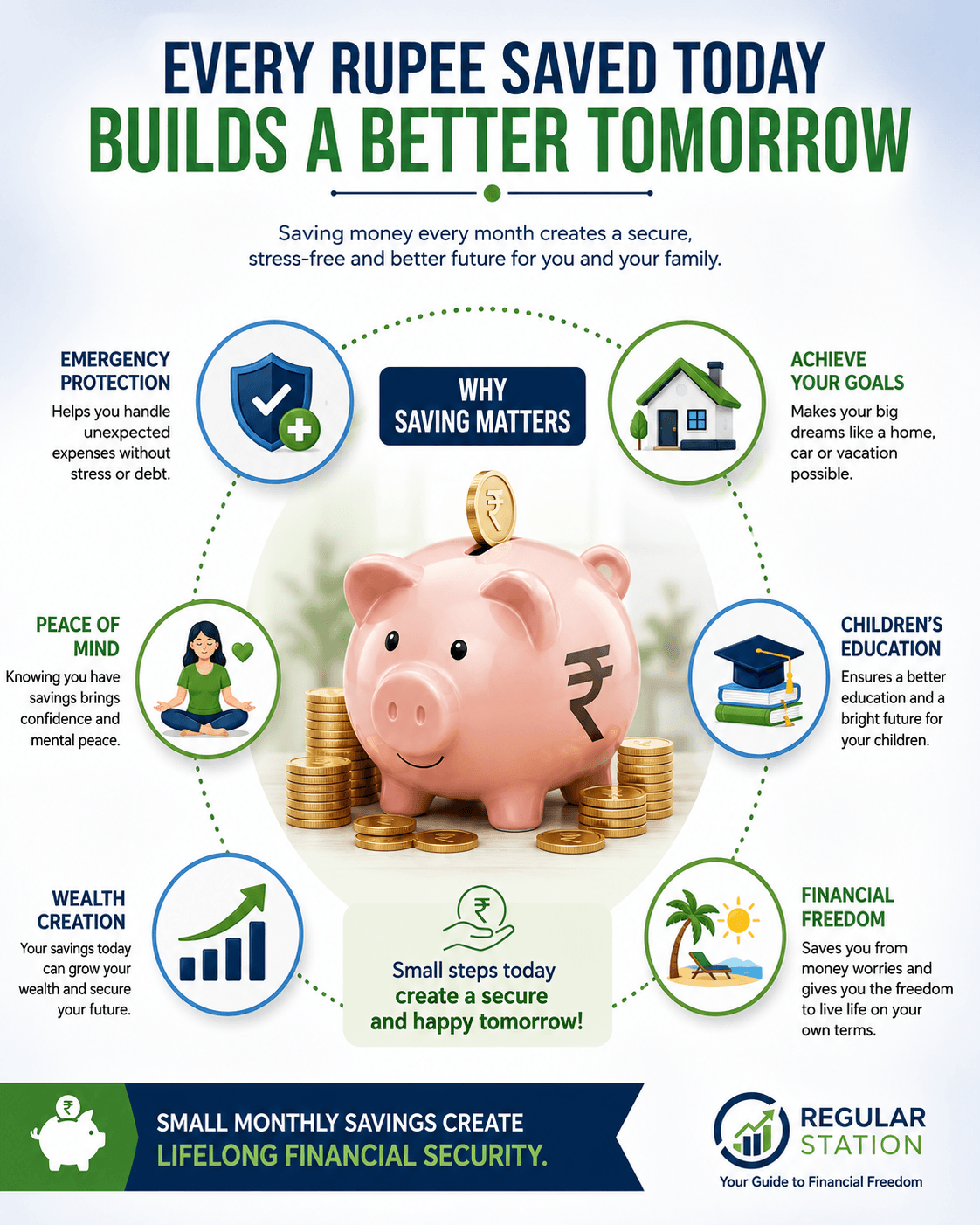
Saving money is one of the most important financial habits you can develop.
It gives you the freedom to handle unexpected expenses, achieve long-term goals, and make financial decisions with confidence instead of stress.
Unfortunately, many people think saving is something they can start later—after receiving a salary increase, paying off a loan, or reaching a certain income level.
In reality, the best time to begin saving is today, regardless of how much you earn.
Even modest monthly savings can make a significant difference over time.
1. It Helps You Handle Financial Emergencies
Unexpected situations can happen at any time.
Examples include:
- Medical emergencies
- Job loss
- Major vehicle repairs
- Home maintenance
- Family emergencies
Without savings, these situations often lead to borrowing money or relying on high-interest credit cards.
One of the smartest financial goals is to build an emergency fund that can cover several months of essential expenses.
Related Reading: Before focusing on investments, learn how to build a financial safety net with our Emergency Fund Guide for Beginners in India.
2. It Reduces Financial Stress
Money is one of the biggest sources of stress for many households.
Living paycheck to paycheck means every unexpected expense can create anxiety.
Having money saved provides peace of mind.
Instead of worrying about how you’ll pay an unexpected bill, you’ll know you have a financial cushion available.
Saving doesn’t eliminate every financial problem, but it gives you more options and greater confidence.
3. It Helps You Achieve Financial Goals
Most financial goals require consistent saving.
Examples include:
- Buying a home
- Purchasing a vehicle
- Children’s education
- Higher education
- Starting a business
- Retirement planning
- Family vacations
Saving regularly makes these goals more achievable without relying heavily on debt.
4. It Reduces Dependence on Loans
Many purchases are financed because people don’t have enough savings.
Examples include:
- Personal loans
- Credit cards
- Buy Now, Pay Later (BNPL)
- Consumer loans
While borrowing is sometimes necessary, relying on debt for routine expenses can create long-term financial pressure.
Saving first allows you to borrow less and pay less interest over time.
5. It Helps You Invest with Confidence
Saving and investing are closely connected—but they are not the same.
Savings provide financial stability.
Investments help build long-term wealth.
If you invest without having adequate savings, you may be forced to withdraw your investments during emergencies.
That’s why many financial planners recommend:
- Build an emergency fund.
- Develop a monthly saving habit.
- Then increase your long-term investments.
Small Savings Can Create Big Results
Many people underestimate the power of consistent saving.
Let’s look at a simple example.
| Daily Saving | Monthly Saving | Yearly Saving |
|---|---|---|
| ₹100 | ₹3,000 | ₹36,000 |
| ₹200 | ₹6,000 | ₹72,000 |
| ₹500 | ₹15,000 | ₹1,80,000 |
These amounts don’t include any investment returns.
They’re simply the result of saving small amounts consistently.
The lesson is clear:
You don’t need a huge salary to build meaningful savings.
You need consistent financial habits.
Saving Is a Habit, Not an Amount
Many people believe they can’t save because they don’t earn enough.
In reality, people with higher incomes often struggle to save as well.
Why?
Because expenses usually increase alongside income—a phenomenon known as lifestyle inflation.
The goal isn’t to save what’s left after spending.
The goal is to save first and spend what’s left.
This simple mindset shift can transform your finances over time.
Every Family Can Save Something
Your monthly savings will depend on your income and responsibilities.
What’s important is developing the habit of saving regularly.
Whether you can save:
- ₹2,000
- ₹5,000
- ₹10,000
- ₹20,000
every contribution brings you closer to financial security.
The amount may vary, but the habit should remain consistent.
Regular Station Pro Tip:
Don’t compare your savings with others. Focus on improving your own financial habits. Saving consistently every month is more valuable than making occasional large deposits.
Know Where Your Money Goes First
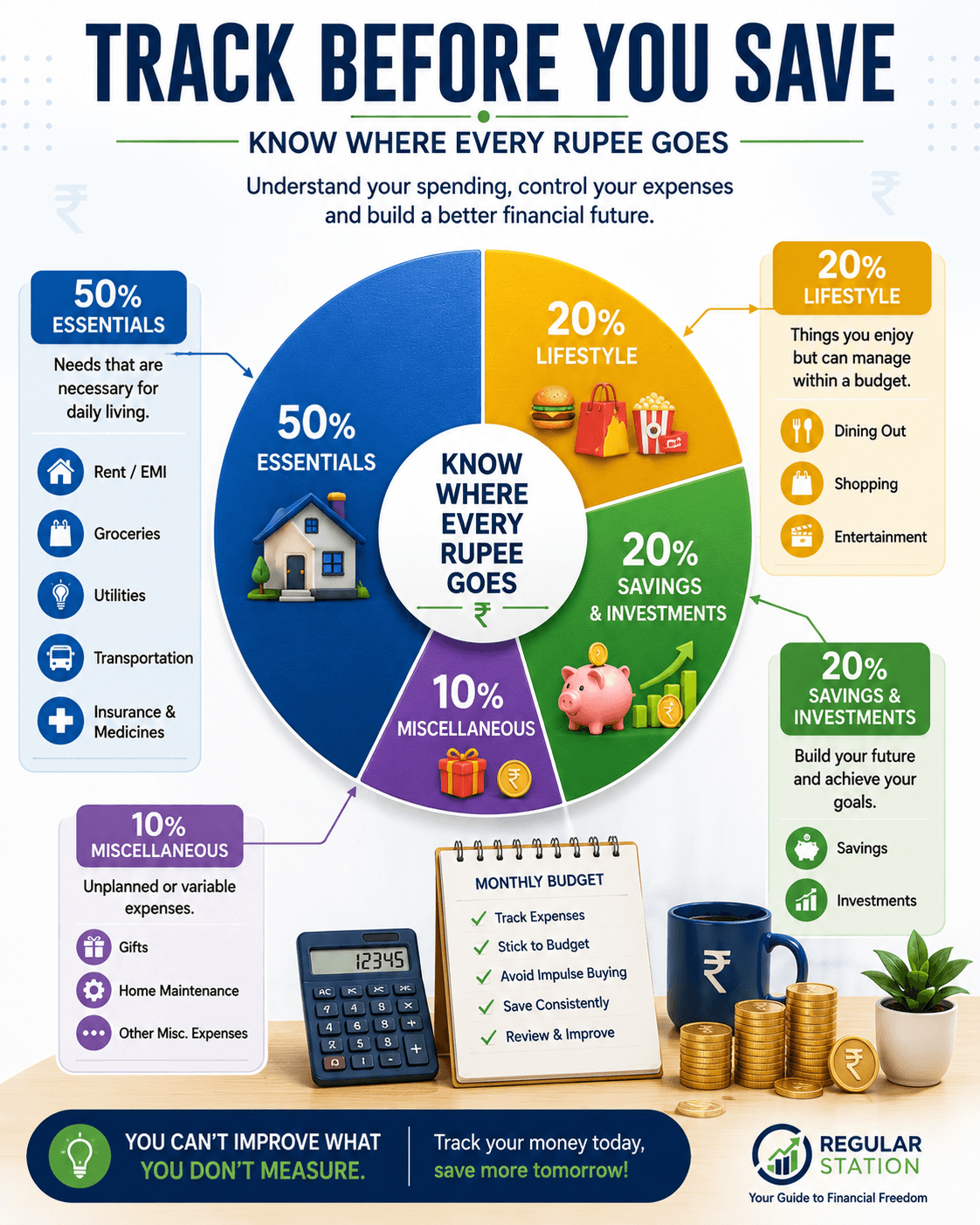
Before you start cutting expenses or searching for ways to save money, you need to answer one simple question:
“Where is my money actually going every month?”
Many people believe they don’t have enough income to save.
However, after tracking their expenses for just one month, they often discover that a significant amount of money is spent on small, unnecessary purchases that add up over time.
You can’t improve what you don’t measure.
Understanding your spending habits is the first step toward building a consistent monthly saving habit.
Track Your Monthly Income and Expenses
Start by writing down your monthly take-home income.
Then list every expense—even the small ones.
Many people remember their major expenses like rent or EMI but forget about frequent spending such as:
- Tea and coffee
- Food delivery
- Online shopping
- Ride-sharing services
- OTT subscriptions
- Snacks
- Impulse purchases
These seemingly small expenses can quietly consume thousands of rupees every month.
Example Monthly Budget
| Category | Amount |
|---|---|
| Monthly Take-home Salary | ₹70,000 |
| House Rent | ₹18,000 |
| Groceries | ₹9,000 |
| Utilities | ₹4,000 |
| Transportation | ₹5,000 |
| Insurance | ₹3,000 |
| Dining Out | ₹4,500 |
| Shopping | ₹5,500 |
| Entertainment | ₹2,500 |
| Miscellaneous | ₹6,000 |
| Total Expenses | ₹57,500 |
| Potential Monthly Savings | ₹12,500 |
Looking at your finances in one place helps you identify areas where you can save without affecting your essential needs.
Understand the Difference Between Fixed and Variable Expenses
Not all expenses are the same.
Dividing them into two categories makes budgeting much easier.
Fixed Expenses
These are expenses that stay relatively similar every month.
Examples include:
- House rent
- Home loan EMI
- School fees
- Insurance premiums
- Internet bills
- Mobile plans
- Loan repayments
These expenses are usually predictable and difficult to reduce in the short term.
Variable Expenses
These expenses change from month to month and often offer the biggest opportunities for saving.
Examples include:
- Groceries
- Dining out
- Entertainment
- Shopping
- Fuel
- Travel
- Food delivery
- Online purchases
Most successful savers focus on optimizing variable expenses rather than trying to eliminate essential fixed costs.
Fixed vs Variable Expenses
| Fixed Expenses | Variable Expenses |
|---|---|
| Rent | Dining Out |
| EMI | Shopping |
| Insurance | Entertainment |
| School Fees | Travel |
| Internet | Food Delivery |
| Mobile Plan | Impulse Purchases |
Understanding this difference helps you make smarter financial decisions without compromising your lifestyle.
Identify Your “Money Leaks”
A money leak is a small, recurring expense that often goes unnoticed but gradually reduces your ability to save.
Individually, these purchases may seem insignificant.
Together, they can have a major impact on your monthly budget.
Common Money Leaks
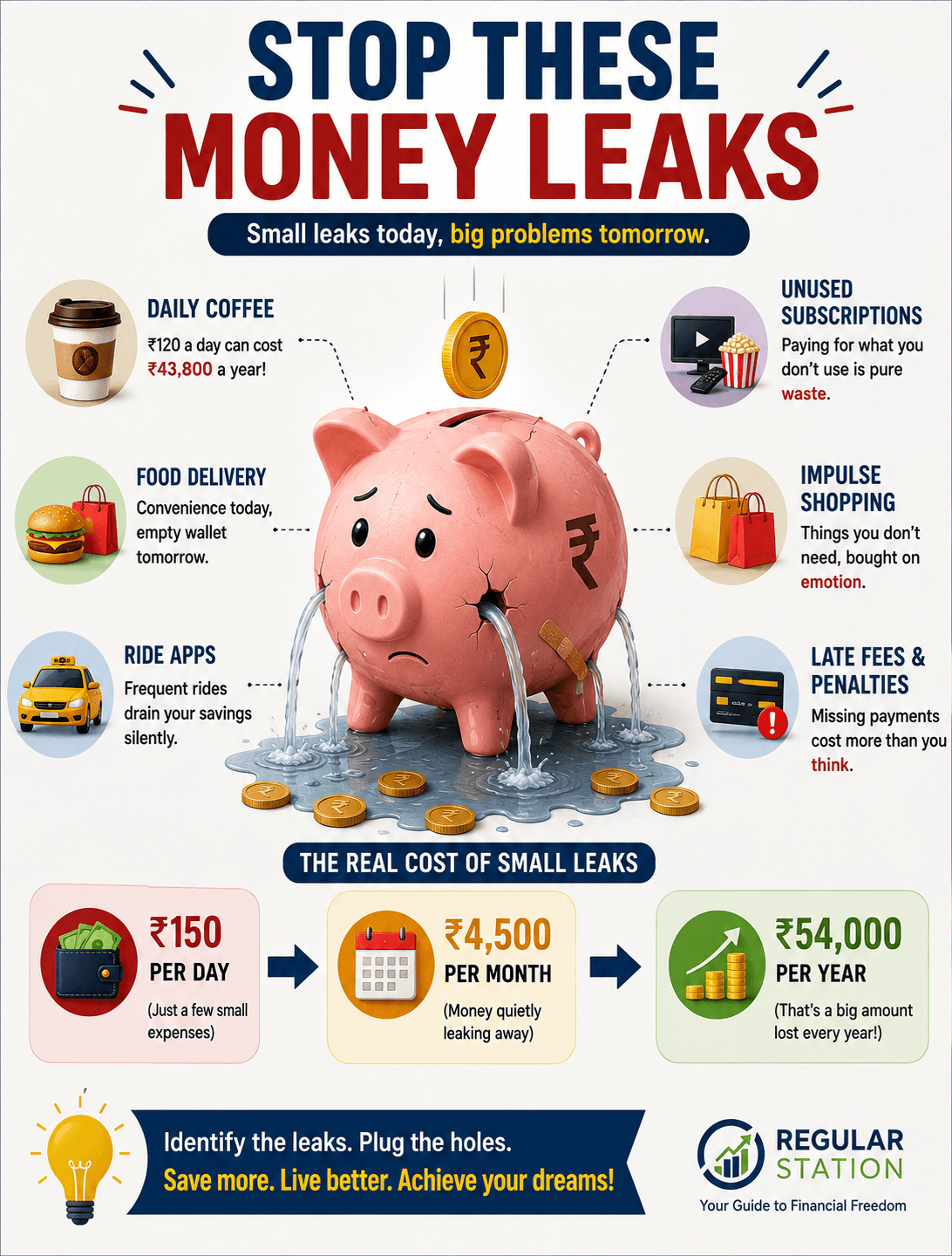
- Daily café coffee
- Frequent food delivery
- Unused gym memberships
- Multiple OTT subscriptions
- Impulse online shopping
- Convenience store purchases
- App-based microtransactions
- Late payment charges
- Excessive electricity usage
For example:
Daily coffee:
₹150
Monthly:
₹4,500
Yearly:
₹54,000
That’s enough to cover several months of emergency savings for many households.
Use Technology to Track Spending
You don’t need complicated software to manage your finances.
Simple tools can make a big difference.
Consider using:
- Your bank’s expense categorization feature
- A spreadsheet
- A budgeting app
- A notebook
- A monthly expense tracker
The best tool is the one you’ll use consistently.
Spend five minutes each day recording your expenses instead of trying to remember everything at the end of the month.
Review Your Expenses Every Week
Most people review their finances only when their bank balance is low.
Instead, make it a habit to review your spending every week.
Ask yourself:
- Did I stay within my budget?
- What unnecessary purchases did I make?
- Can I reduce any expenses next week?
- Did I save the amount I planned?
Weekly reviews make it easier to correct small mistakes before they become expensive habits.
Create a Monthly Spending Plan
Once you understand where your money goes, create a simple plan before the month begins.
A spending plan tells every rupee where it should go.
Instead of wondering where your money disappeared, you’ll know exactly how much is allocated for:
- Essential expenses
- Savings
- Investments
- Lifestyle spending
One of the simplest ways to organize this is through a structured budgeting method.
Related Reading: Our 50/30/20 Budget Rule Explained for Beginners in India shows how to divide your monthly income into needs, wants, and savings, making it easier to save consistently without feeling restricted.
Don’t Aim for Perfection
Many people give up after one month because they overspend in a few categories.
Remember:
Budgeting isn’t about being perfect.
It’s about becoming more aware of your financial habits.
Even if you reduce unnecessary spending by just ₹2,000–₹3,000 per month, you’ll build meaningful savings over the course of a year.
Progress is more important than perfection.
A Simple Exercise to Start Today
Take the last month’s bank statement and categorize every expense.
Highlight:
🟢 Essential
🟡 Important but flexible
🔴 Unnecessary
You’ll quickly discover opportunities to reduce spending without sacrificing your quality of life.
This simple exercise often becomes the turning point in developing better money management habits.
Regular Station Pro Tip:
Most people believe they need to earn more to save more. In reality, understanding where your money goes often reveals enough opportunities to increase your monthly savings without increasing your income.
25 Practical Money-Saving Tips for Indian Families
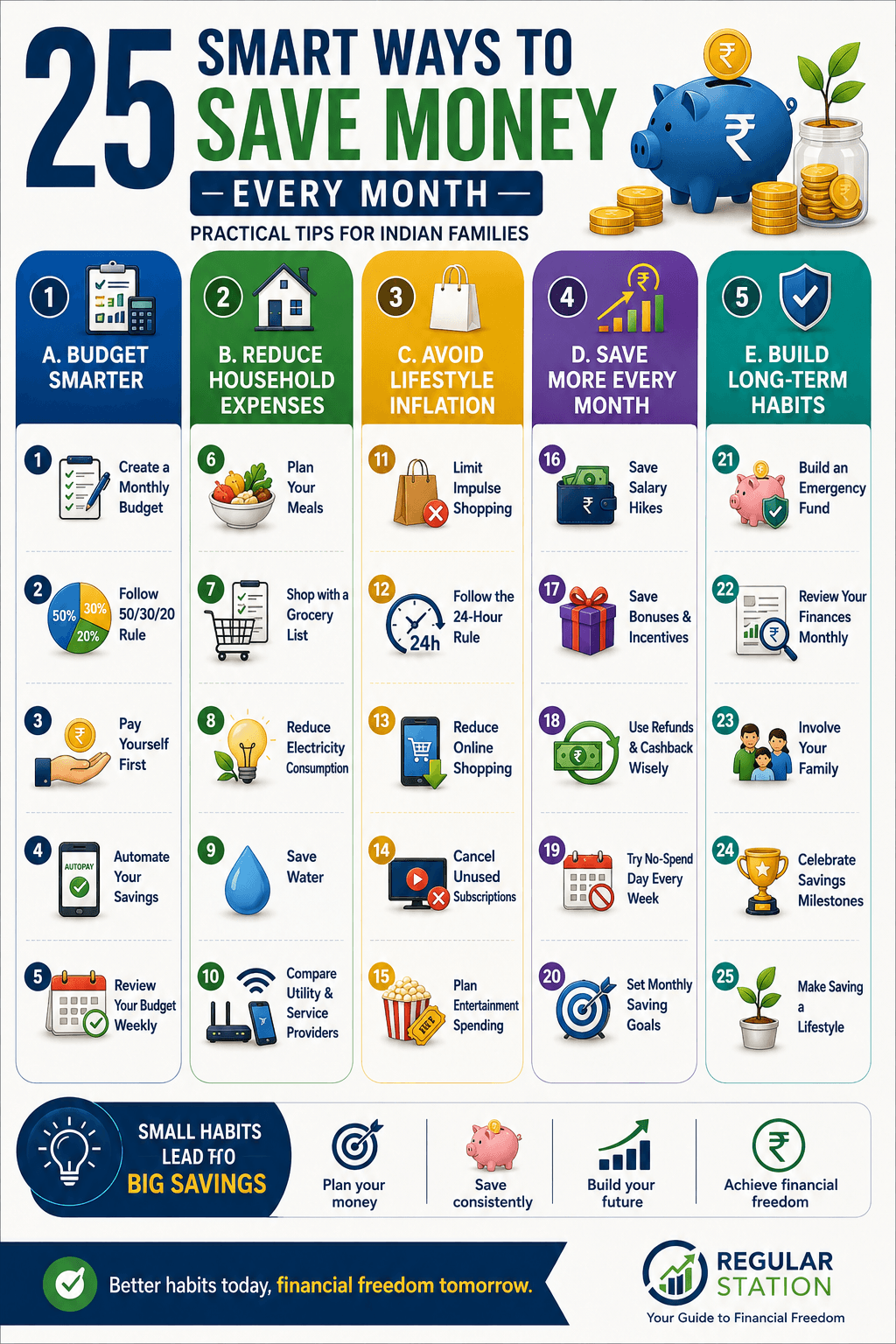
Saving money doesn’t always require a higher salary.
In many cases, it’s about making better financial decisions, reducing unnecessary expenses, and building consistent habits.
The following 25 practical tips are easy to implement and suitable for students, salaried employees, couples, and families across India.
You don’t have to follow all 25 at once. Start with a few that fit your lifestyle and gradually build better money habits over time.
If you’re wondering how to save money every month, start by creating a realistic budget.
A. Budget Smarter
1. Create a Monthly Budget
A budget gives every rupee a purpose.
Instead of wondering where your money went at the end of the month, you’ll know exactly how much is allocated for:
- Household expenses
- Savings
- Investments
- Entertainment
- Miscellaneous spending
Even a simple spreadsheet or notebook can help you stay in control.
2. Follow the 50/30/20 Budget Rule
One of the easiest budgeting methods is the 50/30/20 Rule.
It divides your monthly take-home income into:
- 50% for Needs
- 30% for Wants
- 20% for Savings & Investments
If you’re struggling to save every month, this framework provides a clear starting point.
Related Reading: Learn how to apply this budgeting method with practical Indian examples in our 50/30/20 Budget Rule Explained for Beginners in India.
3. Pay Yourself First
Many people save whatever remains after paying their monthly expenses.
Instead, reverse the process.
As soon as your salary is credited:
- Transfer a fixed amount to savings.
- Spend the remaining balance.
Treat your savings like a mandatory monthly bill.
4. Automate Your Savings
Automation removes the temptation to spend.
Set up an automatic transfer to your savings account every month.
For example:
- Salary credited on the 1st
- Automatic transfer on the 2nd
This “save first, spend later” approach builds consistency.
5. Review Your Budget Every Week
Don’t wait until the end of the month.
Spend just 10 minutes every weekend reviewing:
- Current spending
- Savings progress
- Unplanned expenses
- Areas to improve
Small corrections each week prevent bigger financial mistakes later.
B. Reduce Household Expenses
Household expenses usually consume the largest share of a family’s monthly budget.
Reducing them doesn’t mean lowering your quality of life—it means spending more efficiently.
6. Plan Your Meals
Meal planning helps you:
- Reduce food waste
- Avoid last-minute takeout
- Buy groceries more efficiently
Preparing a weekly meal plan can significantly lower monthly grocery and restaurant expenses.
7. Shop with a Grocery List
Shopping without a list often leads to impulse purchases.
Before visiting a supermarket:
- Check what you already have.
- Prepare a shopping list.
- Stick to it.
Buying only what you need helps control grocery costs.
8. Reduce Electricity Consumption
Simple habits can reduce your electricity bill.
Examples:
- Turn off unused lights and fans.
- Use LED bulbs.
- Unplug devices when not in use.
- Set air conditioners to an energy-efficient temperature.
Lower utility bills mean more money available for savings.
9. Save Water
Reducing water usage isn’t just environmentally responsible—it can also lower household expenses.
Simple actions include:
- Fix leaking taps.
- Use water-efficient fixtures.
- Avoid unnecessary wastage.
10. Compare Utility and Service Providers
Review your:
- Internet plan
- Mobile plan
- DTH or streaming subscriptions
You may find more affordable options that meet your needs without sacrificing quality.
C. Avoid Lifestyle Inflation
Lifestyle inflation happens when your spending increases every time your income increases.
Instead of becoming wealthier, your expenses simply grow alongside your salary.
Avoiding this habit is one of the most effective ways to increase long-term savings.
11. Limit Impulse Shopping
Before making an unplanned purchase, ask yourself:
“Do I really need this?”
Many impulse purchases lose their appeal after a day or two.
12. Follow the 24-Hour Rule
For non-essential purchases, wait at least 24 hours before buying.
This simple pause helps reduce emotional spending and prevents buyer’s remorse.
13. Reduce Online Shopping
Online stores make spending incredibly easy.
To control unnecessary purchases:
- Remove saved payment methods.
- Unsubscribe from promotional emails.
- Avoid browsing shopping apps when you’re bored.
Buying less often can significantly improve your monthly savings.
14. Cancel Unused Subscriptions
Review recurring subscriptions every few months.
Examples include:
- OTT platforms
- Music streaming
- Gym memberships
- Mobile apps
- Cloud storage services
If you’re not using a service regularly, consider cancelling it.
15. Plan Entertainment Spending
Entertainment is important—but it should fit within your budget.
Set a monthly entertainment allowance for:
- Movies
- Dining out
- Weekend outings
- Hobbies
Planning ahead helps you enjoy life without overspending.
Continue the 25 Practical Money-Saving Tips
D. Save More Every Month
Once you’ve reduced unnecessary expenses, the next step is to intentionally increase your monthly savings.
These habits help you save more without making major lifestyle sacrifices.
16. Save Every Salary Increase
Receiving a salary hike is exciting.
Unfortunately, many people immediately upgrade their lifestyle by buying a new phone, dining out more often, or increasing discretionary spending.
Instead, consider saving a significant portion of every salary increase.
Example
Current Salary:
₹60,000
New Salary:
₹70,000
Increase:
₹10,000
Instead of spending the entire increase:
- ₹5,000 → Savings
- ₹3,000 → Investments
- ₹2,000 → Lifestyle improvements
This approach helps your wealth grow alongside your income.
17. Save Bonuses and Incentives
Annual bonuses, incentives, and performance rewards provide an excellent opportunity to strengthen your finances.
Instead of spending the entire amount:
Consider allocating it like this:
- 50% Savings
- 30% Investments
- 20% Personal enjoyment
This balanced approach allows you to enjoy your success while securing your future.
18. Use Tax Refunds and Cashback Wisely
Tax refunds, cashback rewards, and unexpected income should not automatically become spending money.
Instead:
- Increase your emergency fund.
- Pay off high-interest debt.
- Invest toward long-term goals.
Treat windfall income as an opportunity to improve your financial position.
19. Try a No-Spend Day Every Week
Choose one day every week where you spend nothing except genuine emergencies.
Avoid:
- Online shopping
- Food delivery
- Coffee purchases
- Entertainment spending
One no-spend day every week can save thousands of rupees over a year while improving your awareness of spending habits.
20. Set Monthly Saving Goals
Saving becomes easier when you have a clear target.
Examples:
- Save ₹5,000 this month.
- Build ₹50,000 emergency fund.
- Save ₹1 lakh this year.
- Save for a vacation.
- Save for a new vehicle.
Specific goals increase motivation and make progress measurable.
E. Build Long-Term Money Habits
Saving money isn’t a one-time event.
It’s a lifelong habit.
The following tips help ensure your savings continue growing year after year.
21. Build an Emergency Fund First
Before making aggressive investments, create a financial safety net.
An emergency fund protects you from unexpected expenses such as:
- Medical emergencies
- Job loss
- Home repairs
- Vehicle repairs
- Family emergencies
Without emergency savings, you may have to rely on loans or withdraw long-term investments.
Related Reading: Our Emergency Fund Guide for Beginners in India explains how much you should save, where to keep your emergency fund, and how to build it step by step.
22. Review Your Finances Every Month
At the end of each month, ask yourself:
- Did I meet my savings goal?
- What unnecessary expenses did I have?
- Can I improve next month?
- Did I increase my savings?
Monthly reviews help you identify small problems before they become long-term financial habits.
23. Involve Your Family
Saving becomes much easier when everyone participates.
Discuss financial goals with your spouse and children.
Simple activities include:
- Family budgeting
- Grocery planning
- Reducing electricity usage
- Saving water
- Avoiding impulse purchases
Financial discipline becomes stronger when it’s a shared family habit.
24. Celebrate Savings Milestones
Saving money should feel rewarding.
Celebrate milestones such as:
- First ₹25,000 saved
- First ₹50,000
- First ₹1 lakh
- Fully funded emergency fund
Celebrations don’t need to be expensive.
Recognizing progress helps you stay motivated.
25. Make Saving a Lifestyle
The wealthiest people aren’t always the highest earners.
They’re often the most consistent savers.
Saving shouldn’t be something you do only when money is left over.
It should become part of your monthly routine.
Think of saving as paying your future self.
The earlier you build this habit, the easier long-term financial success becomes.
Which Tips Should You Start With?
Trying all 25 tips at once can feel overwhelming.
Instead, begin with these five high-impact habits:
✅ Create a monthly budget.
✅ Automate your savings.
✅ Track your expenses.
✅ Build an emergency fund.
✅ Review your finances every month.
Once these habits become routine, gradually adopt the remaining tips.
Small improvements, repeated consistently, create remarkable financial results.
New investors can learn more about financial markets through SEBI’s Investor Education Portal.
Regular Station Pro Tip:
Focus on building systems rather than relying on motivation. A simple monthly budget, automatic savings transfer, and regular expense review can often have a greater impact than trying dozens of money-saving tricks.
Common Money Leaks That Drain Your Savings
Have you ever reached the end of the month and wondered:
“I earned a good salary. So where did all my money go?”
The answer is often not one large expense.
It’s dozens of small, recurring expenses that quietly reduce your ability to save.
These hidden expenses are called money leaks.
Individually, they may seem insignificant.
Together, they can cost thousands—or even lakhs—of rupees over several years.
Identifying these leaks is one of the fastest ways to increase your monthly savings without earning more.
What Are Money Leaks?
Money leaks are unnecessary or poorly managed expenses that slowly drain your income without adding significant value to your life.
Unlike essential expenses such as rent or groceries, money leaks often happen automatically or impulsively.
Examples include:
- Ordering food when you already have groceries.
- Buying items during online sales because they’re “discounted.”
- Paying for subscriptions you rarely use.
- Making small impulse purchases every day.
- Paying late fees due to missed bill payments.
The goal isn’t to eliminate every non-essential expense.
It’s to become aware of them and spend intentionally.
Understanding where your money goes is essential if you want to save money every month.
1. Food Delivery
Ordering food occasionally is perfectly fine.
The problem begins when it becomes a habit.
Example
Food delivery:
₹400
Three times a week:
₹1,200
Monthly:
Approximately ₹4,800
Yearly:
Nearly ₹58,000
Preparing meals at home just a few extra times each week can create substantial savings over time.
2. Daily Coffee and Snacks
Many people spend small amounts every day without noticing.
Example:
Coffee:
₹120
Snack:
₹80
Daily:
₹200
Monthly:
₹6,000
Yearly:
₹72,000
You don’t have to stop enjoying coffee.
Simply reducing the frequency can make a meaningful difference.
3. Unused Subscriptions
Take a moment to review your monthly subscriptions.
Examples:
- OTT platforms
- Music streaming
- Cloud storage
- Fitness apps
- Premium software
- Gym memberships
Ask yourself:
“Did I actually use this service in the last month?”
If not, consider cancelling or downgrading it.
4. Impulse Shopping
Flash sales and limited-time offers often encourage emotional spending.
Before making a purchase, ask:
- Do I need it?
- Will I still want it next week?
- Is it replacing something essential?
Following the 24-hour rule for non-essential purchases can reduce impulse spending significantly.
5. Late Payment Charges
Missing payment deadlines can result in:
- Credit card interest
- Late fees
- Penalties
- Reduced credit score
Automating bill payments or setting reminders helps avoid unnecessary costs.
6. Lifestyle Inflation
One of the biggest money leaks is increasing your spending every time your income increases.
Instead of upgrading everything after every salary hike:
- Save more.
- Invest more.
- Increase your emergency fund.
Enjoy your income growth—but don’t let every raise disappear into higher expenses.
Needs vs Wants: Make Better Spending Decisions
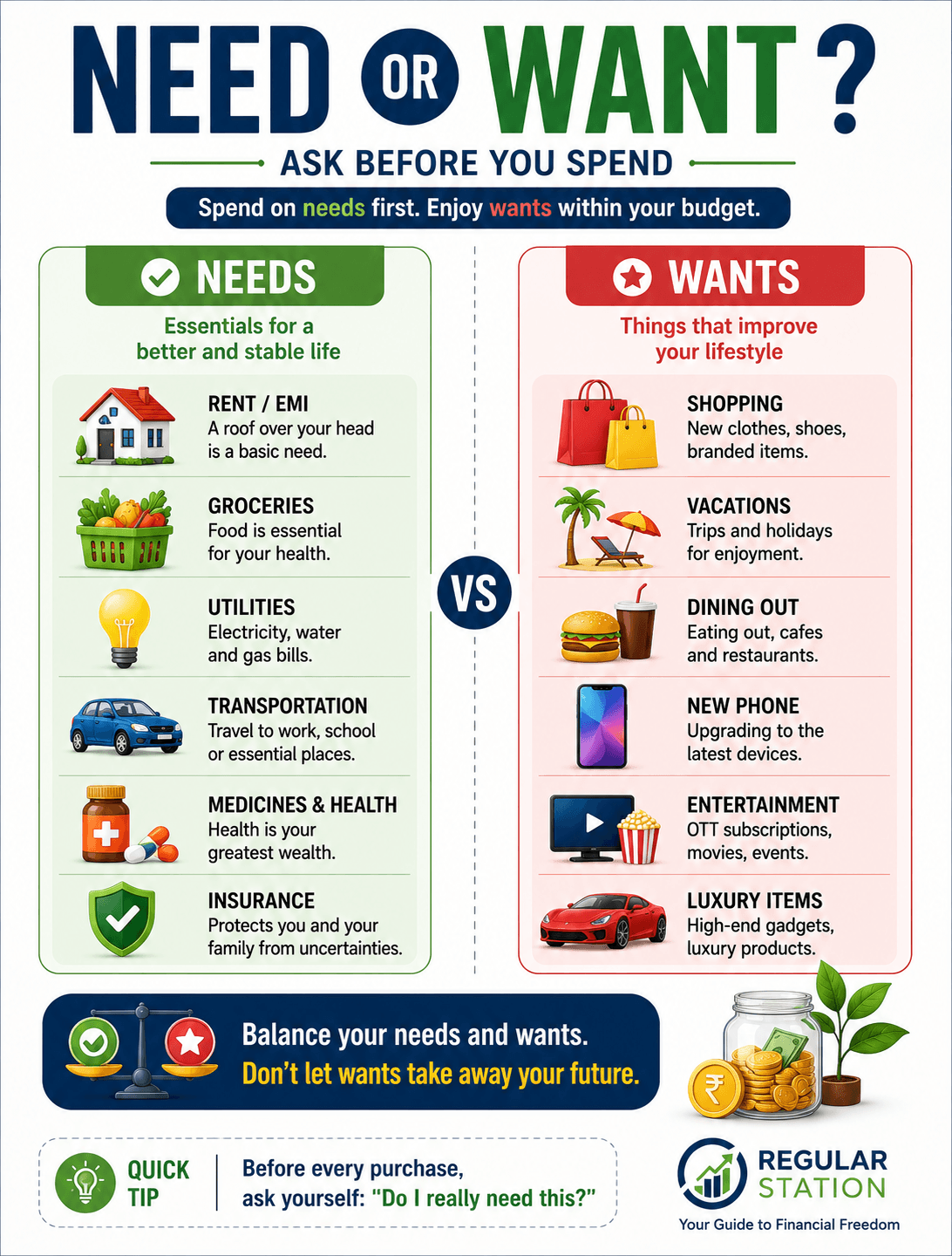
One of the simplest ways to save more money is learning the difference between needs and wants.
Before buying something, ask yourself:
“Is this something I need, or something I simply want?”
Understanding this distinction doesn’t mean you should never spend on enjoyment.
It means making conscious choices.
What Are Needs?
Needs are essential expenses required for daily living and financial stability.
Examples include:
- Rent or home loan EMI
- Groceries
- Electricity and water bills
- Transportation to work
- Health insurance
- Medicines
- School fees
Without these, your basic lifestyle would be affected.
What Are Wants?
Wants improve your lifestyle but are not essential for survival.
Examples include:
- Dining out
- Shopping for luxury brands
- Latest smartphones
- Premium gadgets
- Vacations
- Entertainment subscriptions
- Designer clothing
There’s nothing wrong with spending on wants—as long as they fit comfortably within your budget.
Needs vs Wants Comparison
| Needs | Wants |
|---|---|
| Rent / EMI | Vacation |
| Groceries | Dining Out |
| Electricity | Premium Coffee |
| Medicines | Luxury Clothing |
| Insurance | Latest Smartphone |
| Transportation | Expensive Gadgets |
A simple habit of asking “Need or Want?” before every purchase can dramatically improve your savings.
Related Reading: If you’re unsure how much of your income should go toward essentials and lifestyle spending, explore our 50/30/20 Budget Rule Explained for Beginners in India for a practical budgeting framework.
Try the 30-Day Money Saving Challenge
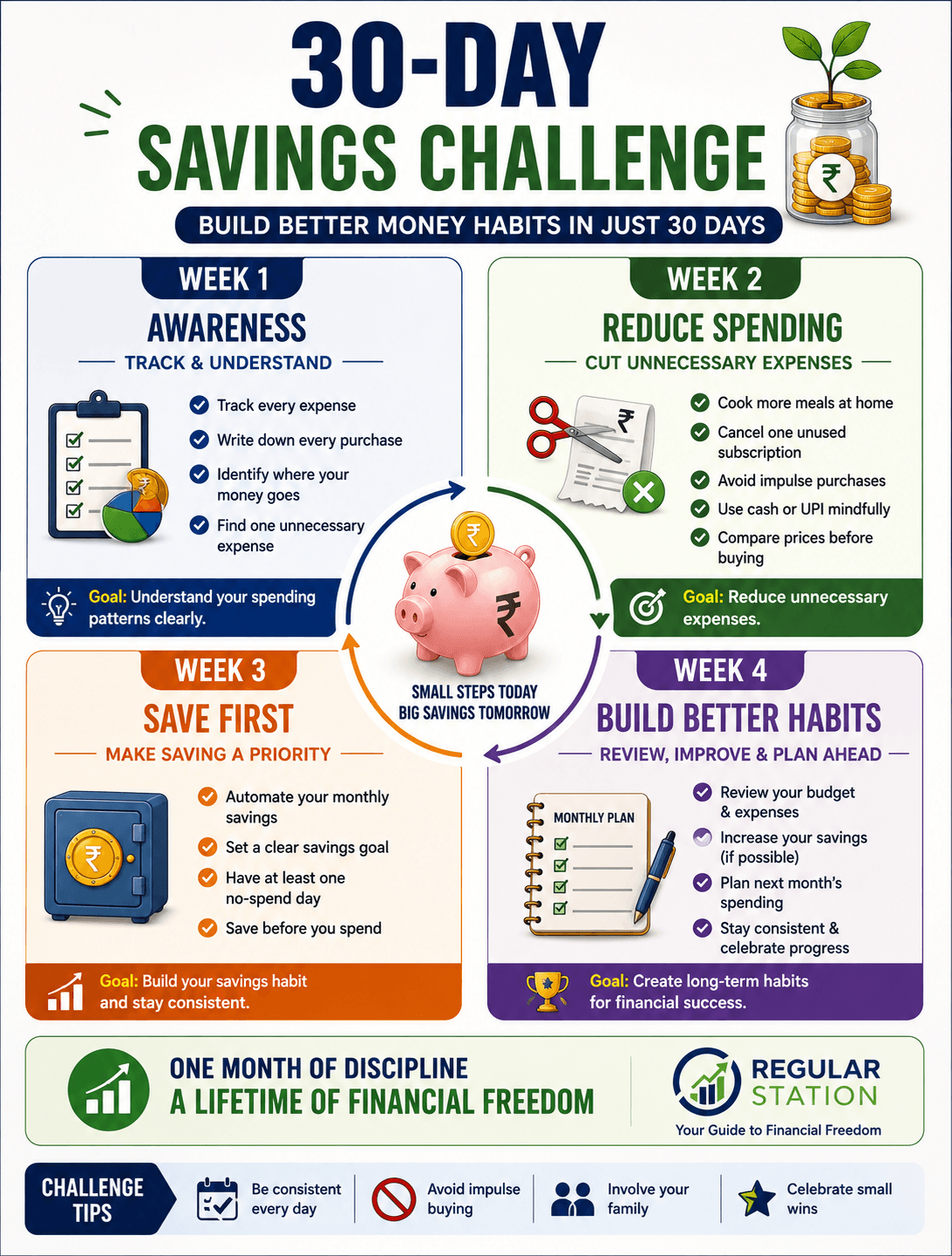
Sometimes the best way to build a saving habit is to turn it into a challenge.
Here’s a simple 30-day plan to help you become more mindful of your spending.
Week 1: Awareness
- Track every expense.
- Write down every purchase.
- Identify one unnecessary expense.
Week 2: Reduce Spending
- Cook more meals at home.
- Cancel one unused subscription.
- Avoid impulse purchases.
Week 3: Save First
- Automate your monthly savings.
- Set a savings goal.
- Have one no-spend day.
Week 4: Build Better Habits
- Review your monthly budget.
- Increase your savings by a small amount.
- Plan next month’s spending in advance.
After 30 days, you’ll likely notice that saving money feels more natural because you’ve built a routine—not just followed temporary tips.
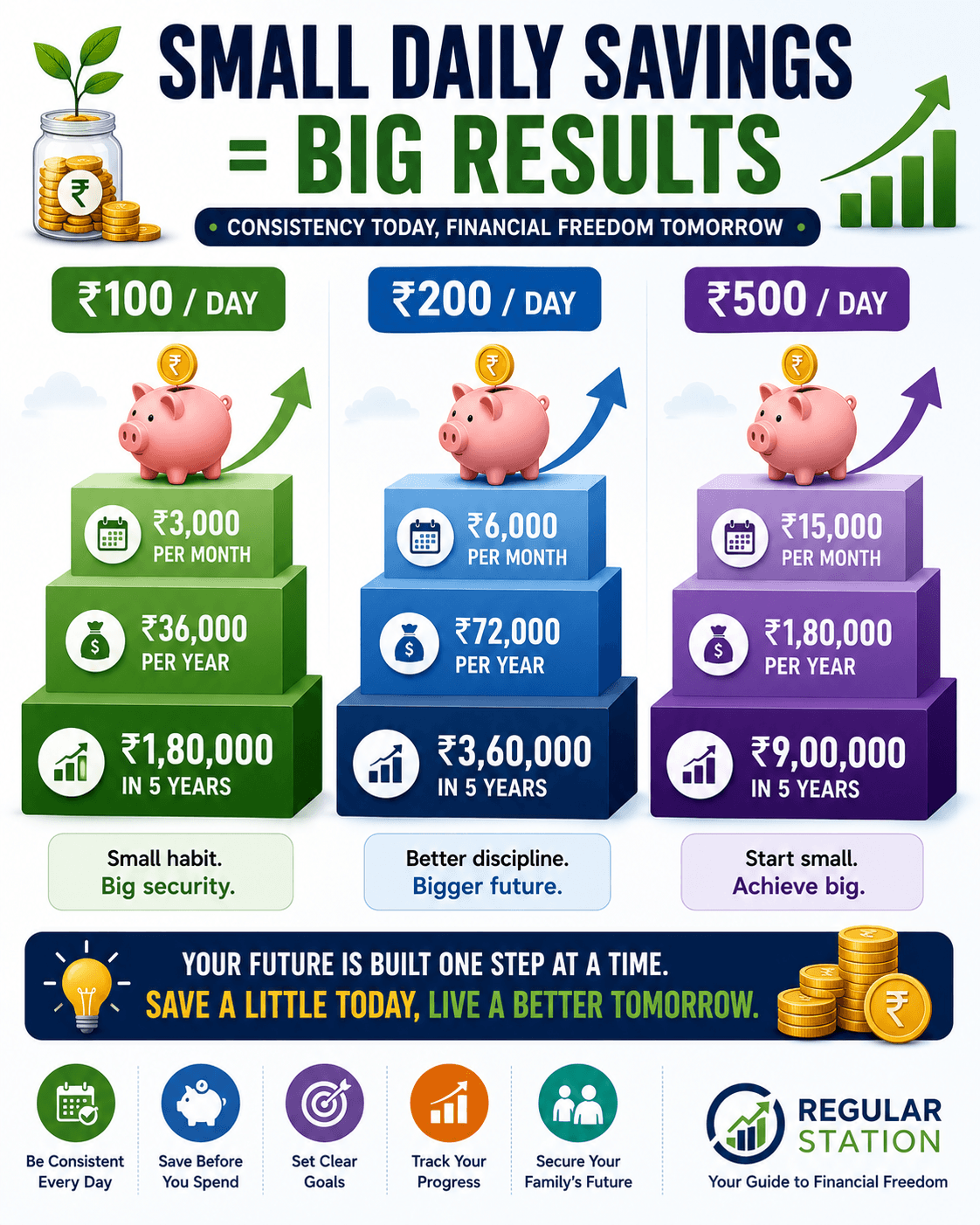
How Much Can Small Savings Grow?
Many people think saving ₹100 or ₹200 a day isn’t worth the effort.
Let’s see how those small amounts add up.
| Daily Saving | Monthly | Yearly | 5 Years* |
|---|---|---|---|
| ₹100 | ₹3,000 | ₹36,000 | ₹1,80,000 |
| ₹200 | ₹6,000 | ₹72,000 | ₹3,60,000 |
| ₹500 | ₹15,000 | ₹1,80,000 | ₹9,00,000 |
*Assumes consistent saving without investment returns.
The lesson is simple:
Small, consistent savings often have a greater long-term impact than occasional large deposits.
Your Monthly Saving Checklist
Before the month ends, ask yourself:
✅ Did I stay within my budget?
✅ Did I track my expenses?
✅ Did I avoid unnecessary purchases?
✅ Did I save before spending?
✅ Did I move closer to my savings goal?
If you can answer “Yes” to most of these questions consistently, you’re building strong financial habits.
Regular Station Pro Tip:
Increasing your income is valuable, but controlling your spending gives you immediate results. The combination of higher earnings and disciplined spending creates the strongest path to long-term financial freedom.
Frequently Asked Questions (FAQs)
These are some of the most common questions people ask about saving money. This section is optimized for FAQ Schema, helping improve your chances of appearing in Google’s rich results while addressing long-tail search queries.
1. How can I save money every month?
The easiest way to save money every month is to:
- Create a monthly budget.
- Track your expenses.
- Automate your savings.
- Reduce unnecessary spending.
- Save before you spend.
Even saving a small fixed amount every month can help you build strong financial habits over time.
2. How much money should I save every month?
There is no single rule that works for everyone.
However, many financial experts recommend saving at least 20% of your monthly take-home income, if your financial situation allows.
If that’s not possible, start with a smaller amount and increase it gradually.
3. Can I save money on a low salary?
Yes.
Saving is more about discipline than income.
Focus on:
- Tracking your spending.
- Reducing unnecessary expenses.
- Saving a fixed amount every month.
Even saving ₹2,000–₹3,000 consistently can make a significant difference over time.
4. What is the 50/30/20 Budget Rule?
The 50/30/20 Budget Rule divides your take-home income into:
- 50% for essential needs.
- 30% for lifestyle wants.
- 20% for savings and investments.
It’s one of the simplest budgeting methods for beginners and helps create a balanced spending plan.
5. Should I save money before investing?
In most cases, yes.
Build an emergency fund first, develop a regular saving habit, and then begin investing for long-term goals.
This approach helps prevent you from withdrawing investments during unexpected emergencies.
6. What is the biggest mistake people make while saving money?
One of the most common mistakes is waiting until the end of the month to save whatever is left.
Instead, save first and spend the remaining amount.
This “pay yourself first” approach makes saving more consistent.
7. How can families save more money?
Families can increase savings by:
- Planning monthly budgets.
- Cooking more meals at home.
- Shopping with a grocery list.
- Reducing unnecessary subscriptions.
- Involving every family member in financial goals.
Small household changes often produce significant long-term savings.
8. How do I stop impulse spending?
Before buying something non-essential:
- Wait at least 24 hours.
- Ask yourself if it’s a need or a want.
- Compare prices.
- Check whether it fits your monthly budget.
This simple pause helps reduce emotional purchases.
9. Is saving ₹100 per day worth it?
Absolutely.
Saving ₹100 every day equals:
- ₹3,000 per month
- ₹36,000 per year
Consistent small savings can create meaningful financial security over time.
10. What is the best way to track expenses?
Choose a method you’ll actually use consistently.
Popular options include:
- Budgeting apps
- Bank expense trackers
- Spreadsheets
- Notebooks
The goal is to understand where your money goes every month.
11. Should I save before paying off debt?
If you have high-interest debt, continue making regular repayments while building a small emergency fund.
Having some savings helps prevent taking on additional debt during unexpected expenses.
12. How often should I review my budget?
Review your budget at least once every month.
A monthly review helps you:
- Identify unnecessary spending.
- Adjust your savings goals.
- Improve your financial habits.
13. What should I do with salary increments?
Instead of increasing your lifestyle immediately, consider:
- Saving part of the increase.
- Investing part of it.
- Using only a small portion for lifestyle improvements.
This habit accelerates long-term wealth creation.
14. Why do I struggle to save money?
Common reasons include:
- No monthly budget.
- Impulse shopping.
- Lifestyle inflation.
- Untracked expenses.
- No clear financial goals.
Improving awareness of your spending is often the first step toward better saving habits.
15. What should I save for first?
A practical order is:
- Emergency fund.
- Short-term financial goals.
- Long-term investments.
- Retirement planning.
Building a strong financial foundation makes every future financial goal easier to achieve.
For general financial awareness and consumer resources, visit the Reserve Bank of India (RBI) website.
Final Thoughts
Saving money every month isn’t about living a life without enjoyment.
It’s about making intentional financial decisions that support both your present needs and your future goals.
You don’t need to earn a huge salary to become a successful saver.
You need a system.
By creating a budget, tracking your expenses, reducing unnecessary spending, and saving consistently, you can gradually build financial security—one month at a time.
Remember, every rupee you save today gives you more freedom tomorrow.
The journey to financial independence begins with a single habit:
Save before you spend.
Whether your goal is buying a home, funding your child’s education, planning for retirement, or simply feeling more confident about your finances, consistent saving is the foundation of every successful financial plan.
Regular Station Pro Tip:
Don’t aim to be perfect with your money. Aim to be consistent. Small financial improvements repeated every month create extraordinary results over time.
Knowing how to save money every month isn’t about cutting all your expenses—it’s about building smarter financial habits.
Continue Your Financial Journey
Saving money is just one part of building a strong financial future.
Explore these beginner-friendly guides on Regular Station to strengthen your financial knowledge.
📘 Start Here
👉 Personal Finance Guide for Beginners in India (Cornerstone Guide)
Learn the fundamentals of:
- Budgeting
- Saving Money
- Investing
- Mutual Funds
- Insurance
- Retirement Planning
- Financial Goal Setting
📗 Related Guides
👉 50/30/20 Budget Rule Explained for Beginners in India
Learn how to divide your income into needs, wants, and savings so you can build a sustainable monthly budget.
👉 Emergency Fund Guide for Beginners in India
Discover how much emergency savings you need, where to keep it safely, and how to build your financial safety net.
Key Takeaways
- Saving money is a habit built through consistency, not income alone.
- Track your expenses to identify unnecessary spending.
- Create a monthly budget and automate your savings.
- Build an emergency fund before making high-risk investments.
- Small daily savings can grow into significant amounts over time.
- Involve your family in financial planning to make saving easier.
- Review your budget every month and adjust as your income and expenses change.
- Every financial goal starts with disciplined saving.
