

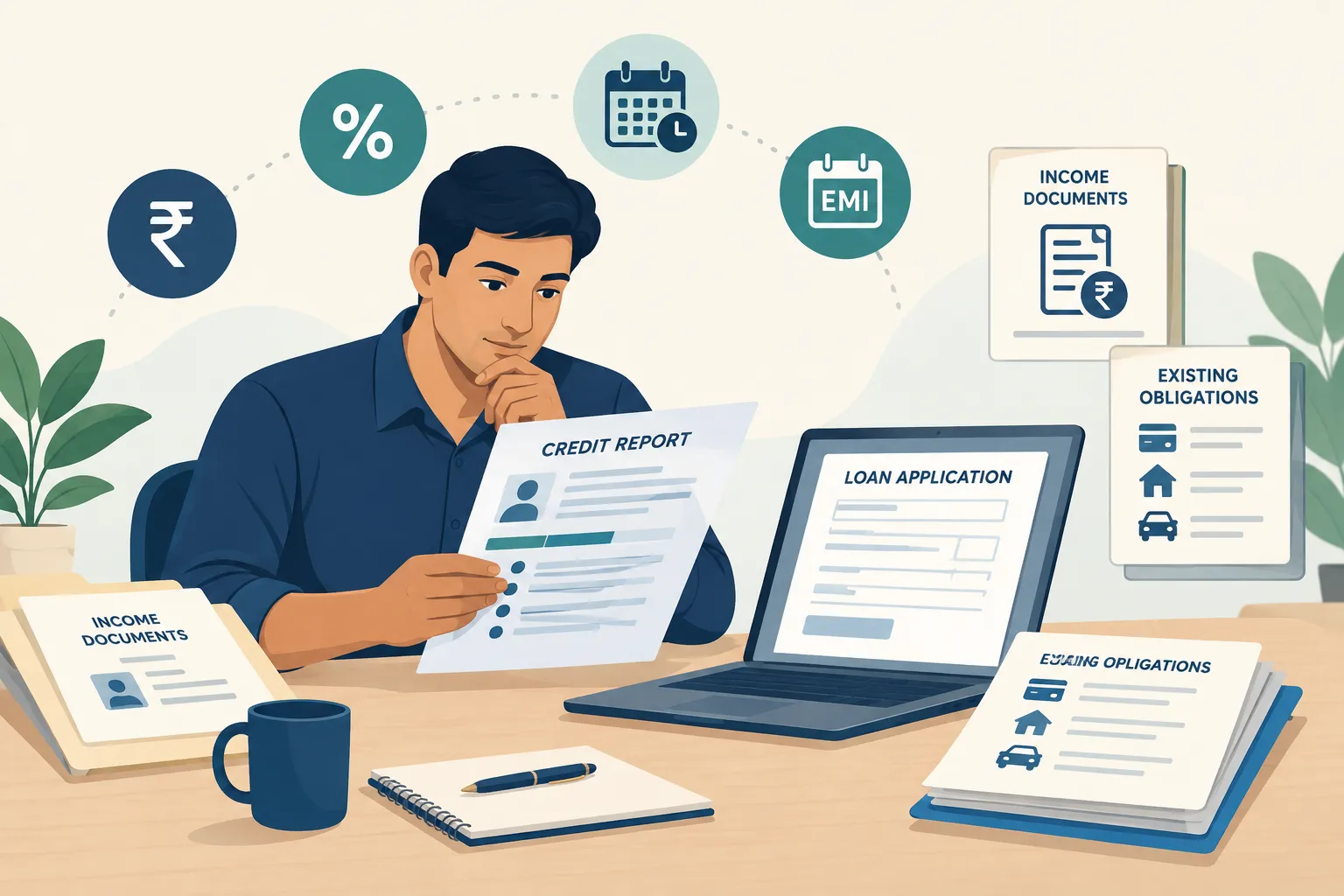
Your credit score may affect whether a lender approves your loan, how much you can borrow, and the interest rate or other terms offered to you.
A stronger credit profile generally shows that you have handled past repayments responsibly. However, a high score does not guarantee approval or a low interest rate. Lenders also assess your income, existing EMIs, employment or business profile, repayment capacity, loan type and their own eligibility rules.
Introduction
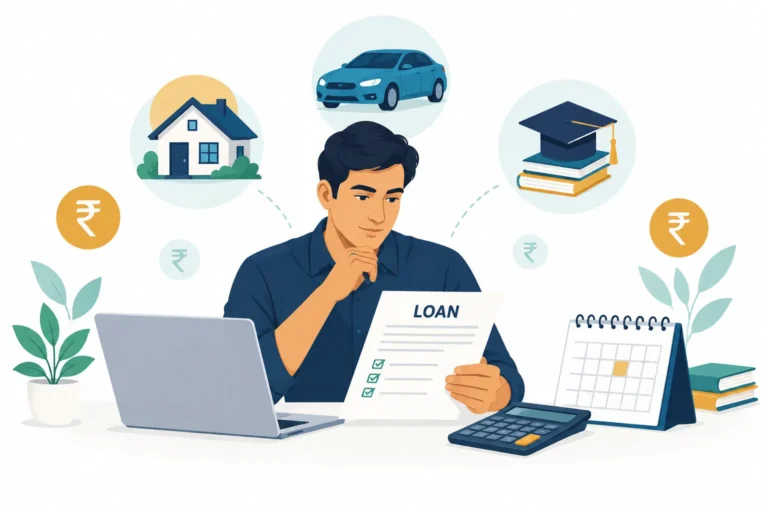
When you apply for a home loan, personal loan, vehicle loan or credit card, the lender needs to judge whether you are likely to repay on time. Your credit report and credit score can help the lender make this assessment.
This is why credit score and loan eligibility are closely connected. A history of timely payments may support your application. Missed payments, high outstanding debt or several recent loan applications may lead to closer checks or less favourable terms.
Credit information is only one part of the loan decision. Understanding it alongside EMIs, interest costs and repayment capacity can help you borrow more carefully. These concepts form an important part of the wider loan journey covered in The Complete Guide to Loans and EMIs in India and What Is an EMI?
What a Credit Score Means for Borrowers in India
What Is a Credit Score?
A credit score is a number calculated from information in your credit report. It gives lenders a quick summary of how you have handled credit in the past.
The score may consider information such as:
- Whether loan EMIs and credit card bills were paid on time
- How much outstanding debt you currently have
- How much of your available credit card limit you use
- How long you have used credit
- The types of loans and credit accounts in your name
- Recent loan or credit card applications
Different credit bureaus and scoring models may calculate scores differently. Therefore, your score may not be identical across every bureau or report.
Credit Score, Credit History and Credit Report: What Is the Difference?
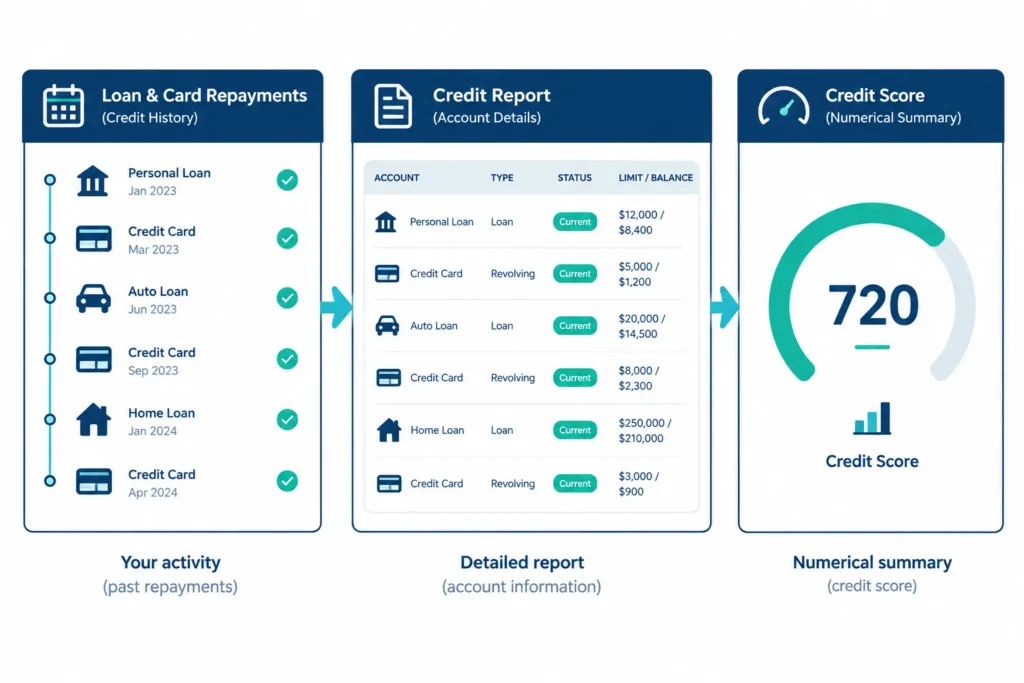
| Term | Simple meaning | Example |
|---|---|---|
| Credit history | Your past record of borrowing and repayment | Home loan EMIs, personal loan payments and credit card bill payments |
| Credit report | A detailed record of your reported credit accounts and repayment activity | Loan balances, payment status, credit limits and recent enquiries |
| Credit score | A numerical summary based on information in the credit report | A lender may use the score as one indicator of repayment behaviour |
These terms are related, but they are not interchangeable. Your credit history is the underlying record. The credit report presents that information in detail. The credit score summarises parts of the report into a number.
Who Provides Credit Reports and Scores in India?
Credit information companies, commonly called credit bureaus, collect credit data reported by participating banks and other lenders. They use this information to prepare credit reports and calculate credit scores.
India has more than one credit information company. TransUnion CIBIL is one of them. Experian, Equifax and CRIF High Mark also provide credit information services in India.
A CIBIL score specifically refers to a score issued by TransUnion CIBIL. People often use “CIBIL score” as a general term for a credit score, but they are not exactly the same. Other credit bureaus also issue their own scores and reports.
A borrower may therefore have reports with multiple bureaus. The information or score shown by each bureau can differ because of reporting dates, available account data and the scoring method used.
What Information May Appear in a Credit Report?
A personal credit report in India may contain:
- Basic identification details reported by lenders
- Active and closed loan accounts
- Credit card accounts and reported limits
- Outstanding balances
- Repayment records and overdue amounts
- Loan settlement, write-off or default-related status, where reported
- Recent enquiries made when you applied for credit
A credit report does not normally show your savings account balance, investments or complete income details. A lender may ask for salary slips, bank statements, income-tax returns or business records separately.
Why Do Lenders Review Credit Information?
Lenders review credit information to understand how an applicant has managed previous borrowing. For example, regular EMI payments may indicate disciplined repayment behaviour. Repeated delays or unpaid dues may indicate higher repayment risk.
A lender may use the report to check:
- Whether previous EMIs and card bills were paid on time
- How many active loans and credit cards the applicant has
- Whether existing debt could make another EMI difficult to manage
- Whether there have been many recent credit applications
- Whether any account shows overdue, settled or written-off amounts
The lender may compare this information with the income and obligations declared in the application. This helps it estimate whether the proposed EMI is affordable.
What If You Have No Credit Score?
A person who has never taken a loan or used a credit card may have limited or no credit history. This does not automatically mean that the person is an unsafe borrower. It means the lender has less past repayment information to assess.
In such cases, the lender may place more emphasis on income, job stability, business records, bank statements, existing obligations, collateral and other eligibility criteria. The outcome depends on the loan product and the lender’s policy.
How Credit Information Fits Into the Loan and EMI Journey
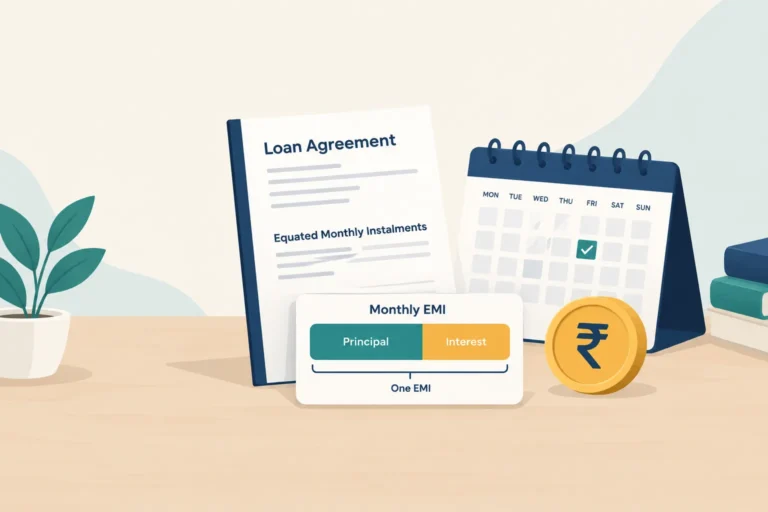
Your credit profile may influence the early stages of borrowing, but you should also examine the full cost of the loan. An EMI is the regular amount paid towards the principal and interest over the chosen repayment period.
Before accepting a loan, consider:
- Whether the EMI fits comfortably within your monthly budget
- The applicable interest rate and how it is calculated
- The total interest payable over the loan period
- Processing fees and other charges
- Whether the rate is fixed, floating or subject to reset
- The consequences of delayed or missed payments
A loan approval is not the same as loan affordability. Even if a lender considers you eligible, the EMI should leave enough room for household expenses, emergencies, insurance and savings.
How Credit Profile May Affect Loan Eligibility and Terms
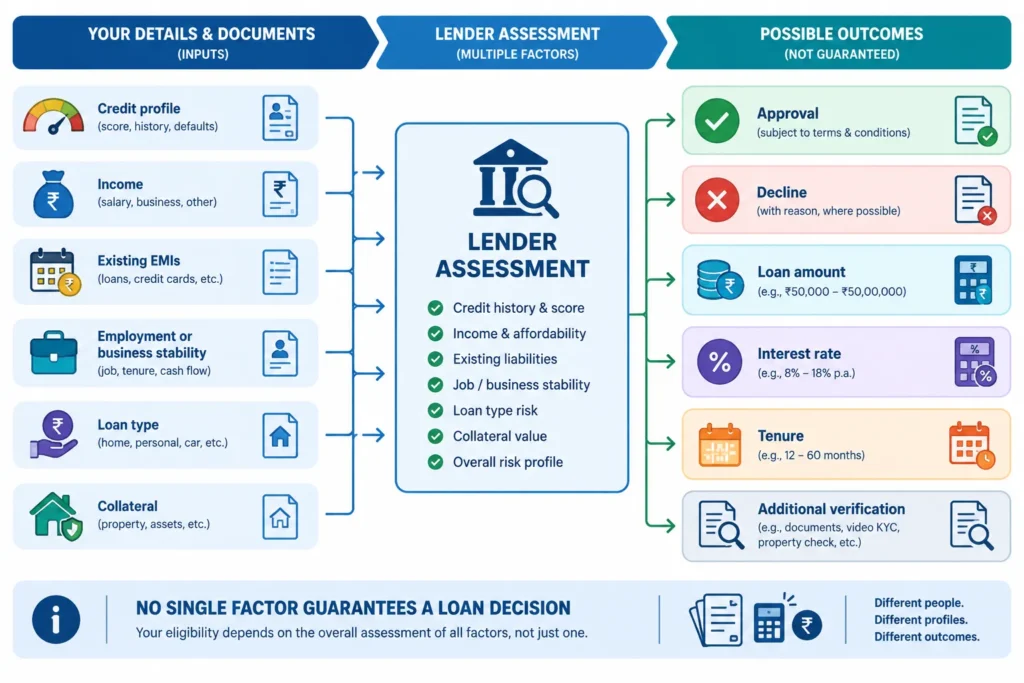
The connection between credit score and loan eligibility is important, but the score is only one part of a lender’s decision.
A stronger credit profile may suggest that you have managed past repayments responsibly. This can support your application. However, no credit score guarantees loan approval, a lower interest rate, or a particular loan amount.
There is also no single minimum score that applies to every bank, non-banking financial company, loan type, or borrower. Each lender follows its own credit and risk policies.
How Credit Score May Affect Loan Approval
When you apply for a loan, the lender may check your credit report to understand your repayment behaviour. It may look for delayed EMIs, unpaid card bills, settled accounts, defaults, and the amount of debt already outstanding.
A record of timely payments may make the application easier to assess. Repeated delays or unpaid dues may lead to closer checks, stricter terms, or rejection.
Even a borrower with a strong score can be rejected if income is not sufficient, documents are incomplete, or existing EMIs are too high. Similarly, a borrower with a limited credit history may still be considered based on income, employment, collateral, or other lender requirements.
How Credit Profile May Affect the Interest Rate
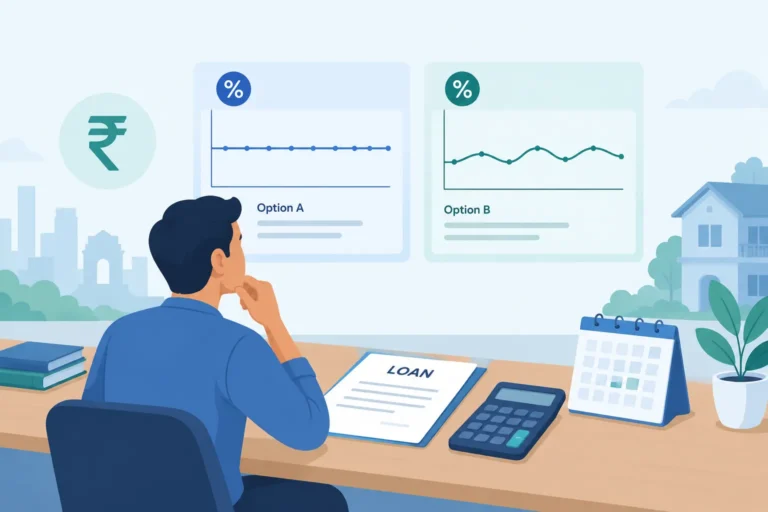
Some lenders use risk-based pricing. This means the interest rate offered may depend partly on the lender’s assessment of the borrower’s repayment risk.
A stronger overall profile may help a borrower receive a more favourable rate. A weaker profile may result in a higher rate because the lender considers the loan riskier. In some cases, the lender may decline the application instead of offering a higher rate.
The final rate may also depend on:
- The type of loan
- The loan amount and repayment period
- Whether the rate is fixed or floating
- The borrower’s income and occupation
- The lender’s internal policies
- Market interest rates at the time of application
- The value and quality of collateral, where applicable
Even a small difference in the interest rate can affect the EMI and total interest paid, especially for a long-term loan such as a home loan. Borrowers should compare the total repayment cost and not focus only on whether the EMI appears affordable.
Effect on Loan Amount, Tenure and Other Terms
Your credit profile may influence more than approval and interest rate. It may also affect the amount, tenure, security requirements, and other conditions offered by the lender.
| Loan term | How the credit profile may matter |
|---|---|
| Eligible loan amount | A strong repayment record may support the application, but the amount will still depend mainly on income, existing obligations and repayment capacity. |
| Interest rate | A lender may offer different rates based on its assessment of the borrower’s risk. A better score does not guarantee the lowest rate. |
| Repayment period | The lender may offer a shorter or longer tenure based on age, income stability, loan type and internal policy. |
| Down payment or margin | For secured loans, the borrower may need to contribute part of the purchase price. The requirement varies by lender and asset. |
| Collateral or guarantor | A lender may ask for security, a co-applicant or a guarantor depending on the loan and the borrower’s overall profile. |
| Processing and verification | A complex credit history may lead to additional documents or closer verification before a decision is made. |
A longer tenure can reduce the monthly EMI, but it generally increases the total interest paid over the full loan period. This is particularly relevant when comparing home loan EMI options.
Loan prepayment may reduce the outstanding principal and future interest, subject to the loan terms. However, prepaying a loan does not automatically remove earlier late-payment records from the credit report. Borrowers should also check applicable prepayment conditions and charges before making a decision.
Factors That Can Affect a Credit Score
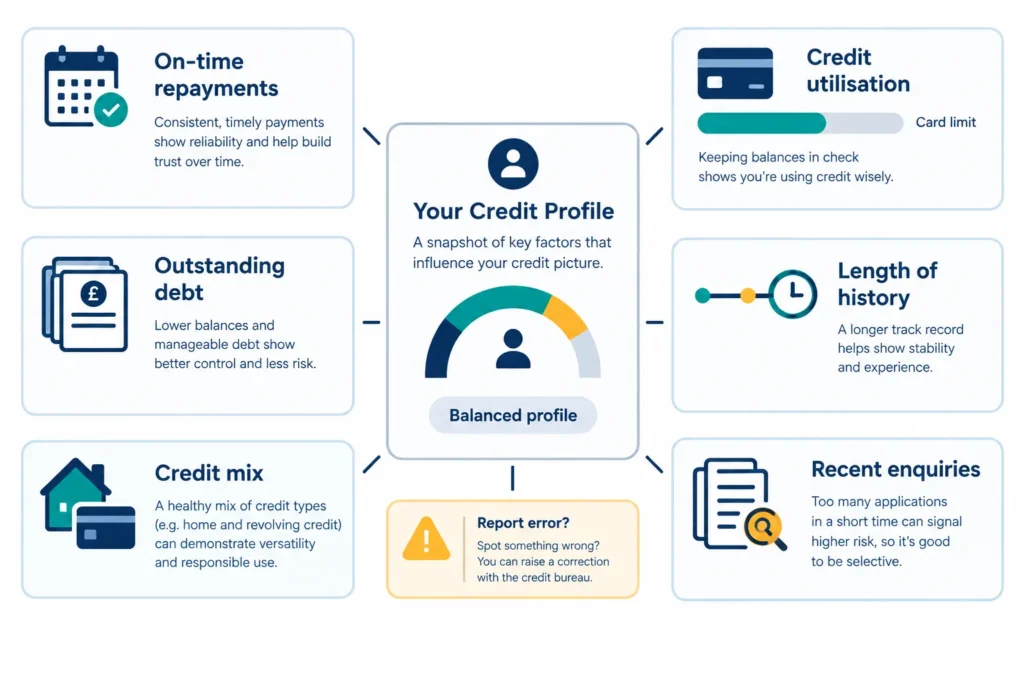
Credit bureaus do not necessarily use identical scoring models. The exact weight of each factor may also differ. The following table explains the main areas that can influence a credit profile without assigning universal weights or guaranteed score changes.
| Factor | What it means | Why it may matter |
|---|---|---|
| Repayment history | Your record of paying loan EMIs and credit card bills on time. | Late payments, defaults or unpaid dues may suggest higher repayment risk. |
| Credit utilisation | The portion of your available credit card limit that you are using. | Regularly using a large part of the available limit may indicate dependence on credit. |
| Outstanding debt | The total amount owed across loans and credit cards. | High existing debt may reduce your capacity to manage another EMI. |
| Length of credit history | How long your credit accounts have been reported. | A longer record may give the lender more information about repayment behaviour. |
| Types of credit accounts | Your mix of secured and unsecured borrowing. | Lenders may review how you have handled different forms of credit, but there is no need to take extra loans only to create a mix. |
| Recent applications or enquiries | Loan or credit card applications made within a period. | Several applications in a short time may suggest an urgent need for credit and can lead to additional scrutiny. |
| Credit report errors | Incorrect personal details, accounts or payment information in the report. | Errors may affect how the credit profile appears and should be raised through the applicable dispute process. |
Other Factors Lenders Assess
A credit score does not show whether your present income is enough for a new EMI. Therefore, lenders usually combine credit information with several other checks.
- Income: The lender may review salary slips, bank statements, income tax returns, or business financial records.
- Existing debt obligations: Current EMIs and card dues reduce the income available for another repayment.
- <strong
Practical Ways to Maintain or Improve Your Credit Profile
There is no instant method to improve a credit score. A stronger credit profile is usually built through consistent repayment habits and responsible borrowing.
The following steps can help you manage your credit score and loan eligibility over time.
Pay EMIs and Credit Card Bills on Time
Late or missed payments may negatively affect your credit history. This applies to personal loan EMIs, home loan EMIs, vehicle loans, credit card bills and other reported credit accounts.
- Set payment reminders before the due date.
- Use auto-debit if you regularly maintain enough money in the bank account.
- Check whether an EMI has been debited successfully.
- Pay at least the required amount by the due date, though paying the full credit card bill is generally better for avoiding interest charges.
You May Also Like:How to Reduce the Total Interest Paid on a Loan →If you are likely to miss a payment, contact the lender promptly. The lender may explain the available options, but any change in repayment terms can have costs and may be reported to credit bureaus.
Manage Credit Card Balances Responsibly
Credit utilisation refers to how much of your available credit card limit you are using. Frequently using a large portion of the available limit may suggest greater dependence on borrowed money.
For example, suppose a card has a limit of ₹1 lakh. A balance of ₹90,000 uses much more of the available limit than a balance of ₹20,000. However, there is no single utilisation level that guarantees a particular score or loan decision.
- Avoid spending merely because a high credit limit is available.
- Repay balances regularly rather than allowing them to grow.
- Do not treat the minimum amount due as a long-term repayment plan.
- Consider your total balances across all cards, not only one card.
Keep Total Borrowing Manageable
A lender may compare your existing EMIs and other financial obligations with your income. Even a borrower with a good credit score may face difficulty if existing repayments already take up a large part of monthly income.
Before applying for another loan, list all current obligations:
- Home, personal, education and vehicle loan EMIs
- Credit card outstanding amounts
- Consumer durable or buy-now-pay-later dues
- Loans for which you are a co-borrower
- Other regular financial commitments
Prepaying a loan may reduce future interest and monthly obligations in some situations. However, first check prepayment charges, loan conditions, emergency savings and the effect on your wider finances.
Avoid Unnecessary Loan Applications
When you formally apply for credit, the lender may access your credit report. Several applications within a short period can make it appear that you are urgently seeking multiple loans.
Compare your needs and likely eligibility before submitting applications. Asking a lender about products or using an eligibility calculator is not always the same as making a formal application, but you should confirm how your information will be checked.
Review Your Credit Reports Regularly
A credit report can contain details of your loans, credit cards, repayment record and enquiries. Reviewing it helps you identify unfamiliar accounts, incorrect balances or repayment entries that have not been updated.
Check details such as:
- Your name and identification information
- Loans and credit cards listed in the report
- Account status and outstanding balances
- Payment history
- Closed accounts still shown as active
- Applications or enquiries you do not recognise
India has more than one credit information company. Reports and scores can differ because lenders may report information at different times or use different bureaus.
Dispute Incorrect Information Through the Applicable Process
If you find an error, collect supporting documents such as repayment receipts, account statements, closure letters or no-dues certificates.
You may need to raise the issue with the lender, the relevant credit bureau, or both. Follow their applicable dispute process and keep copies of your complaint and supporting documents.
A credit bureau generally does not change accurate repayment information simply because it is inconvenient. The reporting lender may need to verify and correct an inaccurate entry.
Be Careful When Closing Old Credit Accounts
Closing an unused credit card may reduce fees or the risk of misuse. However, it can also reduce your total available credit and may affect the length or composition of your credit history.
Do not keep an expensive or unnecessary account open only for the score. Consider annual fees, spending habits, account security and your overall credit profile before deciding.
You May Also Like:EMI Calculator – Calculate Your Monthly Loan EMI →Build Credit Gradually If You Have a Limited History
A person who has never used formal credit may have a limited credit history. This does not automatically mean the person is an unreliable borrower, but lenders may have less repayment information to assess.
If you use a credit product, borrow only what you can repay comfortably. A secured credit card or a small, manageable loan may help create repayment history, subject to the provider’s conditions. Do not take a loan only to chase a higher score.
Monitor Joint and Guaranteed Loans
If you are a co-borrower or guarantor, repayment problems on that loan may affect your credit profile. Do not assume that only the main borrower is responsible.
Review account statements and confirm that payments are being made on time. Understand the legal and financial responsibility before agreeing to support another person’s loan.
Credit Profile Action Checklist
Action Why It Matters Practical Step Pay on time Supports a consistent repayment record Set reminders and verify every debit Control card balances Reduces dependence on available credit Repay regularly and avoid unnecessary spending Limit new applications Avoids multiple recent credit enquiries Apply only after comparing your needs and eligibility Review credit reports Helps identify errors or unfamiliar accounts Check account status, balances and repayment entries Manage total EMIs Protects monthly repayment capacity Assess existing obligations before borrowing again Keep documents Supports correction of inaccurate reporting Retain statements, receipts and closure letters Common Credit Score Mistakes to Avoid
Applying to Many Lenders at the Same Time
Submitting several formal applications may create multiple enquiries. It can also increase the risk of accepting more debt than you can manage.
Paying Only the Minimum Amount Due
Paying the minimum amount may prevent the card account from becoming immediately overdue, subject to the issuer’s terms. However, the remaining balance can continue to attract interest and increase your debt burden.
Ignoring Small or Old Dues
A forgotten charge, unpaid fee or small overdue balance may remain visible in the account history. Check closure statements and obtain confirmation when a loan or card is fully settled or closed.
Assuming a Loan Settlement Is the Same as Full Repayment
A settlement may mean the lender accepted less than the total amount due. It can be reported differently from an account repaid in full and may influence future lending decisions.
Before agreeing to a settlement, understand the reporting, tax, legal and borrowing implications. Seek professional help if the situation is complex.
Closing Every

Comments