

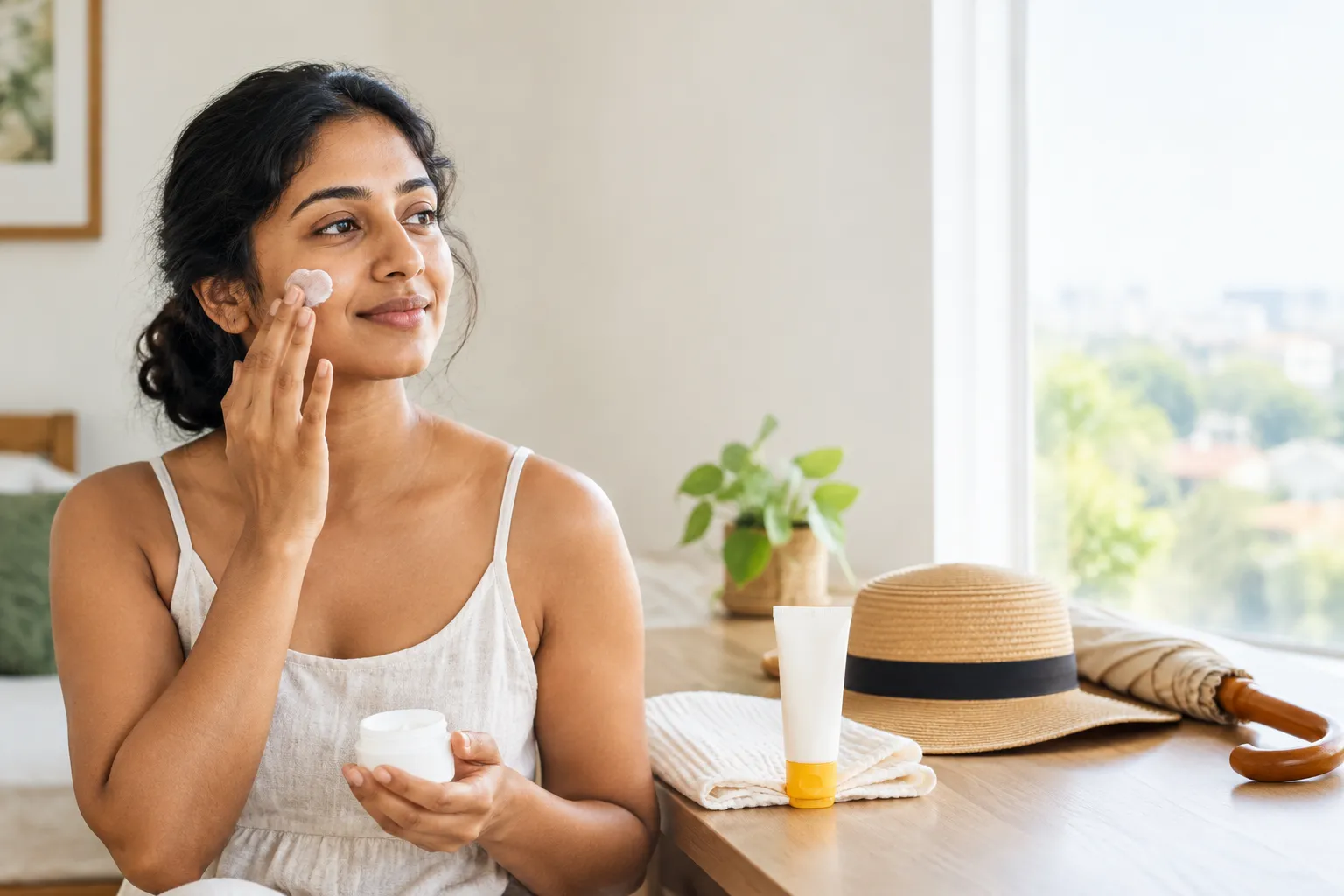
Natural home remedies to remove tan can help soothe sun-exposed skin, reduce dryness and support the skin barrier. However, they cannot instantly remove extra pigment or reverse UV damage. A suntan usually fades gradually as skin cells renew, provided you prevent further sun exposure. Gentle moisturising, cool compresses and consistent sunscreen use are safer than harsh scrubs, lemon juice or bleaching mixtures.
Introduction
A day outdoors can leave your face, arms or neck looking darker than usual. You may notice uneven colour after a beach holiday, a long commute, outdoor sports or even routine travel in strong Indian sunlight. It is natural to want your earlier, even-looking complexion back quickly.
Many kitchen ingredients are promoted as quick fixes for tanning. Gram flour packs, curd, tomato, turmeric, lemon juice and potato are common examples. Some may make the skin feel softer or temporarily brighter because they moisturise the surface or remove loose dead skin. That does not mean they have removed the underlying pigment.
The good news is that most uncomplicated tans fade with time. The more important task is to protect the skin from additional ultraviolet exposure while it recovers. Home care can play a supportive role, but it should be gentle, realistic and suitable for your skin type.
Understanding Suntan and What Home Care Can Realistically Do
What Exactly Is a Suntan?
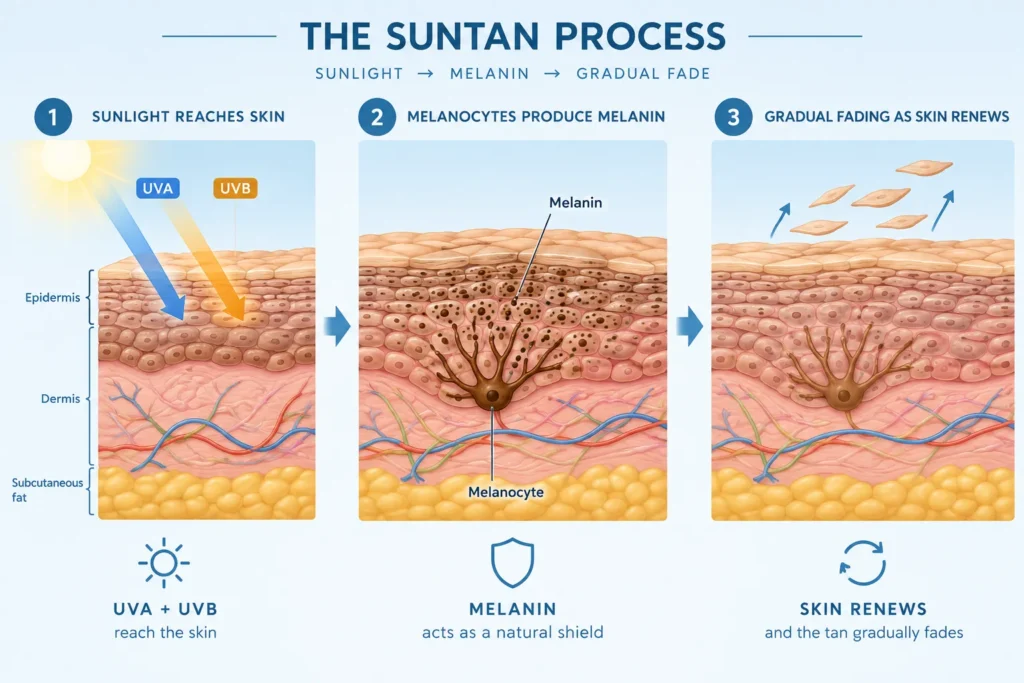
A suntan is the skin’s response to ultraviolet, or UV, radiation. When UV rays reach the skin, they stimulate cells called melanocytes to produce more melanin. Melanin is the natural pigment that gives colour to your skin, hair and eyes.
This increase in melanin is a protective response. The pigment helps absorb some UV radiation, but a tan does not make the skin fully protected from the sun. Tanned skin can still burn and experience further damage.
UV exposure may come from direct sunlight as well as reflected light from water, sand or bright surfaces. It can happen during everyday activities, such as riding a two-wheeler, sitting near a sunny window, walking to the market or travelling at midday. Cloudy weather does not eliminate UV exposure.
A tan may appear within hours or become more visible over the next few days. It can look uneven because different areas receive different amounts of sunlight. The forehead, nose, cheeks, neck, forearms, feet and the area around sandal straps are common places to notice tanning.
Why a Tan Takes Time to Fade
Your skin naturally sheds older surface cells and replaces them with newer ones. As this renewal takes place, extra pigment in the upper layers may gradually become less noticeable. This process is not instant and varies from person to person.
How long a tan remains visible can depend on several factors:
- Your natural skin tone and tendency to tan
- The intensity and duration of UV exposure
- Whether the skin also became sunburned
- Repeated exposure during commuting or outdoor work
- Your age, skin condition and normal rate of skin renewal
- How consistently you protect the area from further sunlight
If you continue getting unprotected sun exposure, new pigment may develop while the older tan is fading. This can make it seem as if a remedy is not working or the tan is permanent. In practice, preventing further tanning is often more useful than repeatedly applying strong homemade packs.
What Home Care May Help With
Supportive home care focuses on keeping the skin calm and comfortable while its natural renewal process continues. It may be useful for mild dryness, warmth or tightness after sun exposure.
Simple measures that may support recovery include:
- Using a cool, damp cloth on warm or mildly irritated skin
- Applying a plain, fragrance-free moisturiser to reduce dryness
- Washing with a gentle cleanser instead of a harsh soap or scrub
- Avoiding very hot showers until the skin feels comfortable
- Wearing full sleeves, a broad-brimmed hat or using an umbrella outdoors
- Applying broad-spectrum sunscreen to exposed skin and reapplying as directed on the product label
These steps do not bleach the skin. Their purpose is to protect the skin barrier and reduce further UV exposure. Healthy, well-moisturised skin may also look smoother and more even because it reflects light better, but this should not be confused with the removal of melanin.
What Home Remedies Cannot Realistically Do
No kitchen remedy is proven to erase a tan immediately. A face pack cannot pull pigment out of the skin, restore a specific shade overnight or undo changes caused by UV radiation. Before-and-after images online may also be affected by lighting, camera settings, makeup or temporary surface hydration.
It is especially important to avoid the idea that stinging or peeling means a remedy is working. Irritation can damage the skin barrier and may lead to redness, sensitivity or post-inflammatory hyperpigmentation. In that situation, the treated area can become darker rather than lighter.
Common DIY ingredients such as undiluted lemon juice, baking soda, toothpaste and bleach can be irritating. Rough sugar, salt or walnut scrubs may cause tiny injuries when rubbed aggressively. Even natural ingredients can trigger an allergy or rash. “Natural” does not automatically mean gentle or safe.
If you try any mild homemade preparation later, first test a small amount on a limited area and wait to see whether irritation develops. Do not apply DIY mixtures to sunburned, broken, peeling or inflamed skin. Stop immediately if you notice burning, itching, swelling or worsening redness.
Supportive Care Is Different From Pigment Treatment
Home care and medical treatment have different goals. Home care can keep the skin moisturised, comfortable and protected. A dermatologist, on the other hand, can assess whether the colour change is an ordinary tan or another condition that needs specific treatment.
Persistent pigmentation may sometimes be related to melasma, post-inflammatory hyperpigmentation, medication, hormonal changes or irritation from skincare products. These conditions may resemble tanning but do not always respond in the same way.
A dermatologist may recommend suitable topical products or procedures after considering your skin type and the cause of pigmentation. Some pigment treatments can irritate the skin if used incorrectly, so prescription creams, strong acids and steroid-containing combination creams should not be used without medical guidance. Products promising rapid fairness or instant tan removal deserve particular caution.
Set a Safer Goal: Healthy, Even-Looking Skin
Your natural skin tone is determined largely by genetics and normal melanin production. It does not need to be made “fairer” to be healthy. A practical goal is to allow a recent tan to fade, prevent additional sun damage and maintain comfortable, even-looking skin.
Seek medical advice if the skin has severe pain, blistering, significant swelling, fever or widespread peeling after sun exposure. You should also consult a dermatologist if dark patches appear without a clear reason, change rapidly, cause itching, or remain despite consistent sun protection and gentle care.
Patience is essential. Think of natural home remedies to remove tan as supportive skincare rather than a guaranteed pigment treatment. Gentle care may help the skin feel and look healthier, while time and reliable sun protection do most of the work in allowing an uncomplicated tan to fade.
Natural Home Remedies to Remove Tan: Gentle Options and Ingredients to Avoid
Many popular natural home remedies to remove tan promise quick results. However, a tan develops when the skin produces more melanin after ultraviolet exposure. No kitchen ingredient can safely remove this pigment overnight.
The skin usually sheds tanned cells gradually. Gentle care can support this process, while harsh treatments may cause irritation and make pigmentation look darker. If your skin feels hot, tight, itchy or sore after sun exposure, soothing it should be the first priority.
Start With a Cool Compress
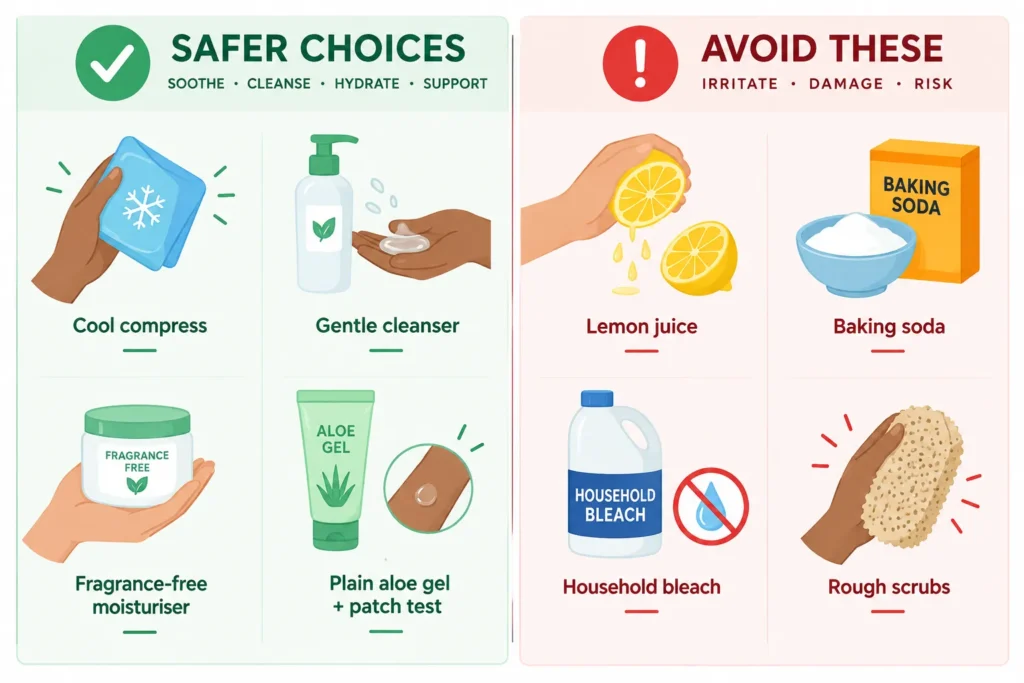
A cool compress can calm skin that feels warm or mildly irritated after being outdoors. It does not remove a tan, but it may reduce discomfort and prevent you from rubbing or scratching the area.
Soak a clean, soft cotton cloth in cool water, squeeze out the excess water and place it on the affected skin for about 10 to 15 minutes. Repeat when needed. Use cool or room-temperature water rather than ice-cold water.
Do not apply ice directly to the face or body. Direct ice contact can irritate or damage sensitive skin. If you have been travelling in strong Indian summer heat, first move indoors, drink water and allow your body to cool down.
Cleanse Without Stripping the Skin
After a humid commute, a beach visit or an afternoon in dusty weather, it can be tempting to scrub the skin until it feels “clean”. This does not lift the tan. It can remove protective oils and weaken the skin barrier.
Use a mild cleanser and lukewarm or cool water. Wash with your fingertips and pat the skin dry using a clean towel. Avoid loofahs, facial brushes and rough washcloths when the skin is warm, red or sensitive.
One proper cleanse is generally enough after coming home. Repeated washing throughout the day may lead to dryness, especially when it is combined with air-conditioning. If your face is sweaty, rinsing with plain water can be gentler than using cleanser every time.
Apply a Fragrance-Free Moisturiser
A simple moisturiser supports the skin barrier and can reduce dryness or tightness. Choose a fragrance-free product, particularly if the skin is irritated. Fragrance and essential oils may sting skin that has recently had too much sun.
Apply moisturiser after cleansing, while the skin is still slightly damp. A light lotion may feel more comfortable during humid weather in Mumbai, Chennai or Kolkata. A creamier product may suit dry skin or cooler conditions in places such as Delhi during winter.
Moisturiser will not bleach the skin or instantly restore its earlier colour. Its role is to keep the skin comfortable while normal cell turnover takes place. Well-moisturised skin may also appear smoother and less dull.
Use Aloe Vera Carefully
Aloe vera gel is commonly used to soothe warm skin. A plain, fragrance-free aloe gel may feel cooling and help with mild dryness or discomfort. You can also choose a moisturiser containing aloe vera instead of using gel directly.
Check the ingredient list before buying a bright green or strongly scented aloe product. Added perfume, colour or alcohol may irritate sensitive skin. “Herbal” or “natural” on the label does not automatically mean that a product is gentle.
If you have an aloe plant at home, using it directly is not always the safest option. The yellow sap near the leaf skin can irritate some people, and homemade preparations may not be hygienic or stable. A properly formulated product is easier to use consistently.
Aloe vera can soothe the skin, but evidence that it removes an established tan is limited. Stop using it if you notice burning, itching, swelling or a rash.
What About Yoghurt, Honey, Cucumber and Gram Flour?
Several Indian home-care traditions use ingredients such as plain yoghurt, honey, cucumber and gram flour or besan. These ingredients may make the skin temporarily feel softer, cooler or cleaner, but there is limited reliable evidence that they can remove a tan.
- Plain yoghurt: It may feel cooling, and it contains lactic acid. However, the strength and acidity are not controlled like they are in a formulated skincare product. It may sting irritated or cracked skin.
- Honey: Honey can help the skin feel moisturised, but it is sticky and may trigger a reaction in some people. It should not be treated as a proven depigmenting ingredient.
- Cucumber: Cool cucumber may provide short-term comfort. The cooling sensation does not mean that it is breaking down or pulling out a tan.
- Gram flour or besan: Besan can absorb oil and is often used in traditional face packs. Rubbing it into the skin, especially after it dries, may cause friction and irritation.
If you decide to try one of these ingredients, keep the approach simple. Do not combine several ingredients into a strong pack, leave it on for a long period or scrub it off aggressively. Avoid applying food-based mixtures to sunburned, broken or infected skin.
Fresh ingredients can also become contaminated, particularly when mixtures are stored in warm kitchens or humid bathrooms. Prepare only a small amount for immediate use and do not keep leftover homemade packs for later.
Patch Test Before Applying Anything Widely
Natural ingredients can still cause allergies and irritation. Before applying a new product or ingredient to your face, test a small amount on an area such as the inner arm or behind the ear.
Leave the test area alone and watch for redness, itching, swelling or burning over the next day or two. A patch test cannot predict every possible reaction, but it can help identify an obvious sensitivity.
If a product burns after application, wash it off gently. Do not assume that stinging means the remedy is working. Burning is a warning sign, not proof of tan removal.
Ingredients and Methods to Avoid
Trying to fade a tan too quickly can lead to inflammation. This is especially important for Indian skin tones, which may develop post-inflammatory hyperpigmentation after irritation. In simple terms, a harsh remedy can leave darker marks than the original tan.
- Lemon juice: Lemon juice is highly acidic and may cause burning, dryness or a reaction after sun exposure. Its strength is unpredictable, so it should not be used as a facial peel.
- Baking soda: Baking soda can disrupt the skin’s natural barrier and cause dryness or irritation. It is not a safe tan-removal treatment.
- Household bleach: Never use cleaning bleach on the skin. Even cosmetic bleach can irritate some people and does not remove the melanin responsible for a tan.
- Harsh scrubs: Sugar, salt, coffee grounds and crushed nut shells can create friction and small injuries, particularly when rubbed forcefully.
- Abrasive mixtures: Combining besan, turmeric, lemon and rough particles does not make a remedy more effective. Multiple irritating ingredients can increase the risk of a reaction.
Avoid Excessive Exfoliation
Exfoliating every day will not make a tan disappear faster. Skin that has recently been exposed to strong sunlight may already have a weakened barrier. Scrubs, peeling products and frequent salon treatments can add further irritation.
For example, someone returning from a Goa holiday should not use a grainy scrub in the morning, an acid product at night and an abrasive ubtan the next day. Give warm or sensitive skin time to settle. Focus on cool compresses, mild cleansing and moisturising instead.
Seek medical advice if the skin develops severe pain, extensive blistering, marked swelling, fever or signs of infection. Also consult a dermatologist if dark patches are uneven, persistent or worsening despite gentle care. A stubborn patch may not be a simple tan and should not be repeatedly treated with home mixtures.
Preventing Further Tanning, Expected Fading Time, and When to Get Help
Home remedies may soothe dry or sun-exposed skin, but preventing further tanning is equally important. Continued ultraviolet exposure can make existing pigmentation darker and slow the return to your usual skin tone.
A tan is a sign that the skin has responded to ultraviolet radiation by producing more melanin. It is not a reliable form of sun protection. Repeated exposure can also contribute to sunburn, uneven pigmentation, premature skin ageing and other forms of skin damage.
Use a Broad-Spectrum Sunscreen Every Day
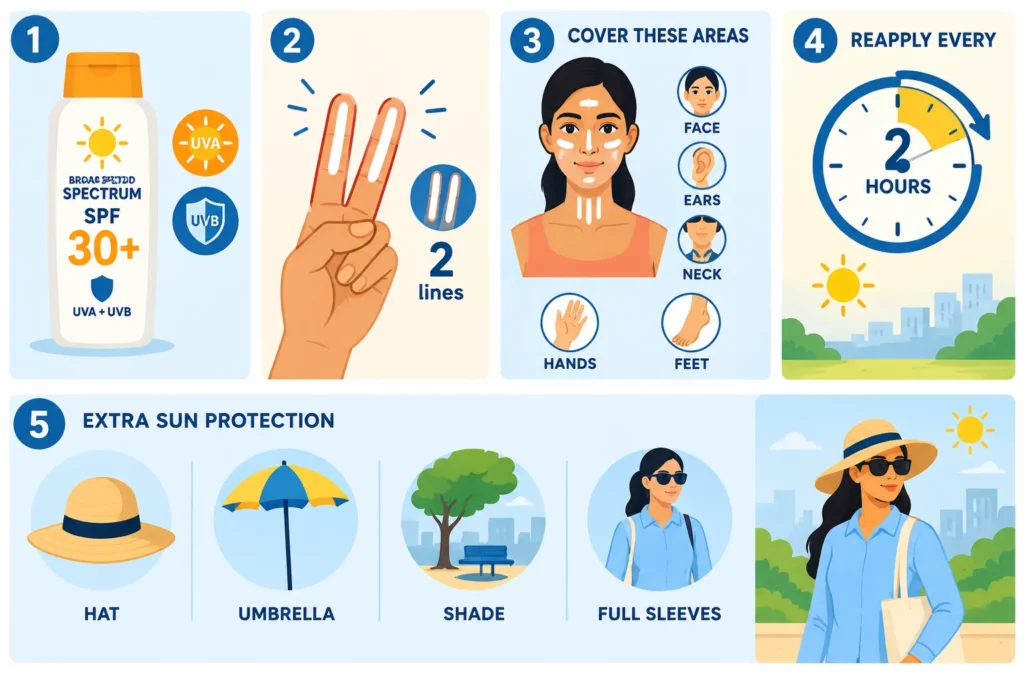
Choose a broad-spectrum sunscreen with SPF 30 or higher. “Broad-spectrum” means that the product protects against both UVA and UVB radiation. UVA contributes to tanning and premature ageing, while UVB is a major cause of sunburn.
Apply sunscreen to all exposed areas, including the face, ears, neck, hands, feet and the back of the arms. Do not forget areas near the hairline or around clothing edges. For the face and neck, the two-finger method can be a practical guide: place two lines of sunscreen along the lengths of your index and middle fingers, then spread it evenly over the face and neck.
Apply sunscreen before going outdoors so that you are not trying to cover exposed skin after sun exposure has already begun. Follow the product instructions, especially when using a medicated, tinted or water-resistant formula.
Reapply sunscreen when you remain outdoors. As a general guide, reapply about every two hours and sooner after heavy sweating, swimming or wiping the skin with a towel. No sunscreen is completely waterproof, and a single morning application may not provide dependable protection throughout a long outdoor day.
People with oily or acne-prone skin may prefer a lightweight gel or non-comedogenic sunscreen. Those with dry or sensitive skin may find a fragrance-free cream more comfortable. The best option is one that suits your skin and that you can apply in an adequate amount consistently.
Sunscreen Prevents More Darkening; It Does Not Erase a Tan
Sunscreen helps reduce additional UV damage and limits further tanning. It does not instantly remove pigment that is already present. Existing colour usually fades as pigmented surface cells are gradually shed and replaced.
This distinction is important when trying natural home remedies to remove tan. A soothing ingredient may make the skin feel softer or look temporarily fresher, but prevention remains necessary. Without sun protection, repeated exposure can replace fading pigment with new pigmentation.
Sunscreen is also useful on cloudy days because ultraviolet radiation can still reach the skin. It may be needed indoors when you spend long periods close to a sunny window, particularly if direct sunlight falls on your skin.
Add Physical Sun Protection
Sunscreen should be one part of your routine rather than the only protective step. Physical barriers reduce the amount of sunlight reaching the skin and can be especially helpful during strong daytime sun.
- Seek shade: Stand under a roof, tree or covered waiting area when possible. Choose the shaded side of the road while walking.
- Use an umbrella: A sun umbrella can provide additional protection during commutes, market visits and school pick-up times.
- Wear a wide-brimmed hat: It offers more coverage for the face, ears and neck than a small cap.
- Choose protective clothing: Full sleeves, long trousers and closely woven fabrics can limit direct exposure. Lightweight cotton or other breathable fabrics may feel more comfortable in Indian summers.
- Plan outdoor tasks: When practical, avoid scheduling long walks, exercise or errands during periods of intense sunlight.
- Protect yourself while travelling: Sunlight can reach the face and arms during journeys on a scooter, bus or in a car. Use sunscreen and suitable clothing rather than relying only on the vehicle for protection.
If you have recently had a sunburn, be particularly gentle. Keep the affected area covered from direct sunlight and avoid scrubs, peels or harsh DIY mixtures until the skin has recovered.
How Long Does a Tan Take to Fade?
There is no single fading time that applies to everyone. A mild, recent tan may gradually become less visible as the skin renews itself. Deeper or repeated tanning can take longer. Persistent pigmentation may remain for weeks or months and may need professional assessment.
The fading time depends on several factors, including the depth of pigmentation, your natural skin tone, how often you are exposed to sunlight and whether the skin has been irritated. Picking, vigorous scrubbing and strong acidic ingredients can inflame the skin. Inflammation may leave additional dark marks, especially in medium to deeper Indian skin tones.
Look for slow, steady improvement rather than overnight lightening. Take care when comparing your skin in photographs because lighting, camera settings and shadows can change how pigmentation appears. If you want to track progress, use similar lighting and avoid checking several times a day.
Do not use bleaching agents, unlabelled fairness products or steroid-containing creams without medical advice. They can cause irritation and other skin problems. If gentle care and consistent sun protection do not help, a dermatologist can check whether the colour is actually a tan or another type of pigmentation.
When to Consult a Dermatologist
Not every dark patch is caused by tanning. Melasma, post-inflammatory pigmentation, certain skin conditions and reactions to products or medicines can also change skin colour. Professional evaluation is sensible when the pattern looks unusual or does not improve.
Consult a dermatologist or another qualified medical professional if you notice:
- Dark patches that are worsening, spreading, sharply different from the surrounding skin or appearing without a clear history of sun exposure.
- Persistent pigmentation that does not improve despite gentle skin care and regular sun protection.
- Severe sunburn, blistering, marked swelling or significant pain.
- Broken skin, discharge or other possible signs of infection.
- A new or changing spot, mole or patch that looks unusual.
- Itching, burning, rash or swelling after applying a home remedy or cosmetic product.
- Skin symptoms accompanied by fever, dizziness, nausea, weakness or confusion after prolonged heat or sun exposure.
Blistering or severe sunburn should not be treated with abrasive home remedies. Seek prompt medical advice, especially when a large area is affected or the person feels unwell.
Frequently Asked Questions
Can a tan be removed naturally at home?
A mild tan may fade naturally over time as the skin renews itself. Gentle moisturising, avoiding irritation and consistent sun protection can support this process. Home care cannot safely strip away pigment immediately, and results vary. Persistent or uneven patches should be assessed by a dermatologist.
Does aloe vera remove tanning?
Aloe vera may cool and moisturise mildly irritated skin, making it feel more comfortable after sun exposure. However, it is not a proven instant tan remover. Use plain aloe vera gel, patch-test it first and stop if it causes itching, burning or a rash. Do not apply it as a substitute for sunscreen or medical treatment for severe sunburn.
Is lemon juice safe for removing tan?
Direct lemon juice is not recommended. It is acidic and may cause stinging, dryness, irritation or inflammation. Citrus juice on the skin followed by sunlight can sometimes trigger a more serious reaction and leave darker pigmentation. Avoid lemon-based DIY treatments, particularly on sensitive, sunburned, recently shaved or broken skin.
How quickly will my natural skin tone return?
The time varies. A light, recent tan may fade gradually, while deeper or repeated pigmentation can take weeks or months. Ongoing sun exposure, irritation and some skin conditions may delay improvement. Seek professional advice if the pigmentation persists, worsens or has an unusual pattern.
Do I need sunscreen while trying home remedies?
Yes. Use a broad-spectrum SPF 30 or higher sunscreen on exposed skin and reapply when outdoors, sweating or swimming, according to the product directions. Sunscreen does not instantly clear an existing tan, but it helps prevent additional UV damage and darkening. Combine it with shade, protective clothing, a hat or an umbrella.
Summary
The safest approach to natural home remedies to remove tan is gentle care combined with reliable sun protection. Use broad-spectrum SPF 30 or higher sunscreen in an adequate amount, reapply it during outdoor exposure and add shade, hats, umbrellas and protective clothing. Remember that sunscreen prevents further damage rather than instantly removing existing pigment.
Allow time for gradual fading and avoid lemon juice, harsh scrubs, bleaching mixtures and unprescribed creams. Pigmentation that worsens, looks unusual or remains for a long time may not be a simple tan. Severe sunburn, blisters, significant pain or general illness requires medical attention.
Health disclaimer: This information is for general education and is not a diagnosis or a substitute for advice from a qualified dermatologist or doctor. Skin reactions and pigmentation have different causes, so seek personalised medical care when symptoms are severe, unusual or persistent.



Comments