

Skin Care: A Complete Guide to Healthy Skin

Learn how to identify your skin type, build a simple daily routine, choose suitable products and manage common skin concerns safely in India.

Skin Care: A Complete Guide to Healthy Skin

A good beginner skin care routine needs only three core steps: gentle cleansing, moisturising and broad-spectrum sunscreen. Choose products that feel comfortable on your skin, introduce them one at a time and use them consistently. Healthy skin does not need to look flawless. It should generally feel comfortable, protected and free from persistent irritation.

Understanding Your Skin and Building a Basic Routine

Skin care can seem complicated when shops and social media present long routines, unfamiliar ingredients and products for every possible concern. However, most beginners do not need many products. A simple routine used regularly is usually a better starting point than an elaborate routine that irritates the skin or is difficult to maintain.

Healthy skin can have pores, marks, uneven colour, occasional pimples and natural texture. The goal is not to create “perfect” skin. A practical goal is to keep your skin clean without stripping it, support its moisture barrier and protect it from sunlight.

Comfort matters too. Burning, persistent itching, swelling, cracking or repeated rashes are not signs that a product is “working”. Stop using a product that causes a significant reaction. Seek advice from a qualified dermatologist if symptoms are severe, keep returning or do not settle.

Why the Skin Barrier Matters

The outermost part of the skin acts as a protective barrier. It helps reduce water loss and limits contact with irritants and other external substances. When this barrier is comfortable and functioning well, the skin is more likely to feel smooth and flexible.

Harsh cleansing, frequent scrubbing, overuse of active ingredients and unsuitable products can disturb this barrier. Possible signs include tightness after washing, flaking, stinging, unusual sensitivity or redness. These signs can occur even if your skin is normally oily.

Indian weather and daily routines can affect how the skin feels. Heat and humidity may increase sweating and make rich products feel heavy. Dust and pollution can collect on exposed skin, but aggressive scrubbing is not necessary to remove them. Long hours in air-conditioned rooms may make some people feel dry or tight.

Seasonal changes matter as well. A light moisturiser that feels comfortable during a humid Mumbai summer may not be enough during a dry Delhi winter. Similarly, a rich cream used in cooler weather may feel greasy during the monsoon. Your routine can change with your environment instead of remaining identical throughout the year.

How to Observe Your Skin Type

Skin type is a useful starting point, not a permanent label or medical diagnosis. Observe how your face feels a few hours after gentle cleansing, before applying heavy products. Consider oiliness, tightness, flaking and sensitivity over several days rather than judging from one morning.

  • Normal skin: Usually feels comfortable, with no persistent excess oiliness, tightness or flaking.
  • Oily skin: Develops noticeable shine or greasiness, often across much of the face. Oily skin still needs moisturiser and can become irritated by harsh products.
  • Dry skin: Often feels tight, rough or flaky. It may be more comfortable with creamy cleansers and richer moisturisers.
  • Combination skin: Has oily and dry areas at the same time. For example, the forehead and nose may become oily while the cheeks feel normal or dry.
  • Sensitive skin: Frequently reacts with stinging, burning, itching or redness. “Sensitive” can describe how skin behaves, but repeated or severe reactions may require medical assessment.

Your skin type can change with age, weather, hormones, medicines and product use. Acne, eczema, rosacea, allergies and infections cannot be reliably identified from a skin-type checklist. Consult a dermatologist if you have painful acne, persistent rashes, unexplained colour changes, wounds that do not heal or symptoms affecting daily life.

A Simple Morning Skin Care Routine
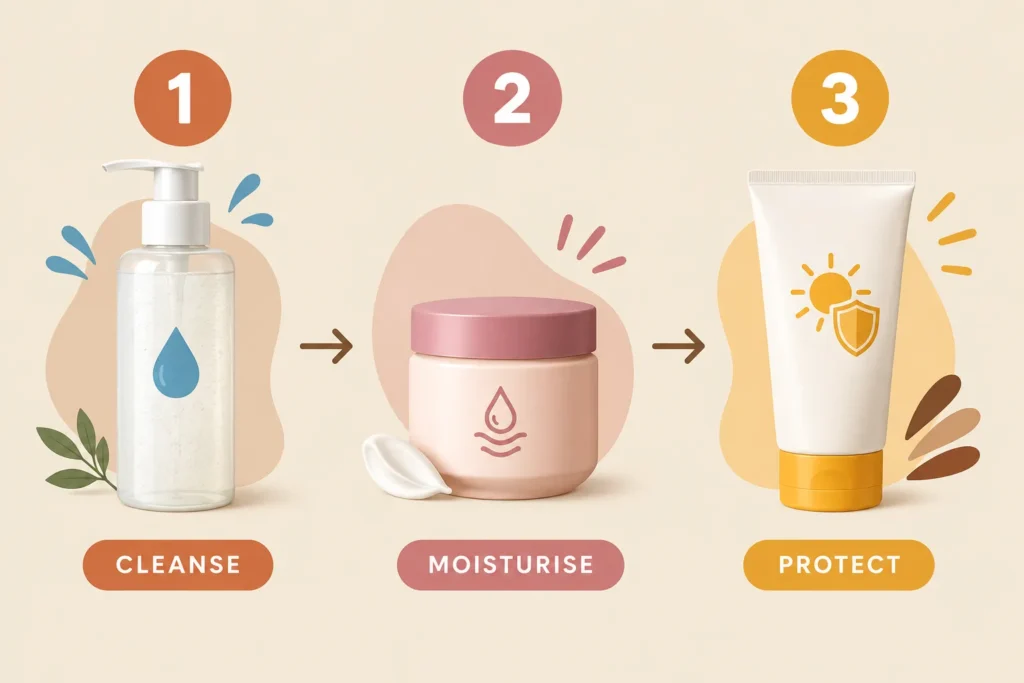
Three-step morning routine showing gentle cleansing, moisturising and broad-spectrum sunscreen.

The morning routine should prepare your skin for the day without leaving it uncomfortable. Beginners can start with cleansing, moisturising and sun protection.

Step 1: Cleanse Gently

Use a gentle facial cleanser and lukewarm or comfortable-temperature water. Massage it lightly with your fingertips, then rinse and pat the skin dry. Avoid rough brushes and vigorous scrubbing.

People with very dry or sensitive skin may find that rinsing with water in the morning is enough, especially if the face does not feel oily. People who sweat heavily or wake with noticeable oil may prefer a mild cleanser. The skin should not feel painfully tight after washing.

When choosing a cleanser, look at its format and how your skin feels after use:

  • Oily or combination skin: A light gel or foaming cleanser may feel comfortable, provided it does not leave the skin tight or irritated.
  • Dry skin: A cream, lotion or non-foaming cleanser may be more comfortable.
  • Sensitive skin: Start with a mild, fragrance-free option and avoid scrubs or strongly scented formulas.
  • Normal skin: Choose a gentle cleanser based on personal comfort rather than marketing labels.

Step 2: Apply Moisturiser

Moisturiser helps reduce water loss and supports the skin barrier. Apply it after cleansing, preferably while the skin is slightly damp but not dripping wet.

Light lotions and gel-creams may suit people who dislike a heavy finish or live in humid conditions. Creams and balms are richer and may be more suitable for dry areas or cooler weather. Combination skin may need a light layer over the whole face and a little more on dry patches.

Do not assume that oily or acne-prone skin must avoid moisturiser. Instead, choose a lightweight product that feels comfortable and does not appear to worsen your concerns. Labels such as “non-comedogenic” can be a useful starting point, but no label can guarantee that a product will suit every person.

Step 3: Use Broad-Spectrum Sunscreen

Sunscreen is the main protective step in a morning routine. Choose a broad-spectrum sunscreen that protects against both UVA and UVB rays. An SPF of at least 30 is a practical everyday starting point.

Apply it generously to exposed skin, including the face, ears and neck. Use it as the final skin care step before makeup. Reapplication is especially relevant when you are outdoors for extended periods, sweating or wiping the face. Follow the directions on the product label.

Texture is important because a sunscreen only helps when you are willing to use it. Gel or fluid formulas may feel lighter in hot, humid weather, while creamier formulas may suit dry skin. Visible white cast can vary by product and skin tone, so you may need to test a few options before finding a comfortable one.

Sunscreen works best as part of broader sun protection. Shade, umbrellas, caps, sunglasses and covering exposed skin can also be useful during strong sunlight.

You May Also Like:Natural Home Remedies to Remove Tan and Restore Your Natural Glow

A Simple Evening Skin Care Routine

The evening routine removes sunscreen, makeup, sweat and daily dirt. It also gives you another opportunity to moisturise.

Step 1: Remove Makeup and Sunscreen

If you wear makeup or water-resistant sunscreen, you may need a cleansing oil, cleansing balm or micellar water before your regular cleanser. This is often called double cleansing. It is optional and should not involve repeated rubbing.

If one gentle cleanser removes the day’s products comfortably, a separate first cleanse may not be necessary. More cleansing is not automatically better.

Step 2: Cleanse Without Scrubbing

Wash with the same gentle cleanser used in the morning, or choose one suited to your evening needs. Focus on removing residue rather than trying to make the skin feel “squeaky clean”. That tight, squeaky feeling may indicate that the cleanser is too harsh for you.

Step 3: Moisturise

Apply moisturiser after cleansing. You can use the same product in the morning and evening. There is no requirement to buy a separate night cream.

If your skin is dry, you may prefer a slightly richer layer at night. If it is oily or the weather is humid, a lighter lotion may be enough. Adjust the amount according to comfort rather than applying a fixed number of layers.

How to Start New Products Safely
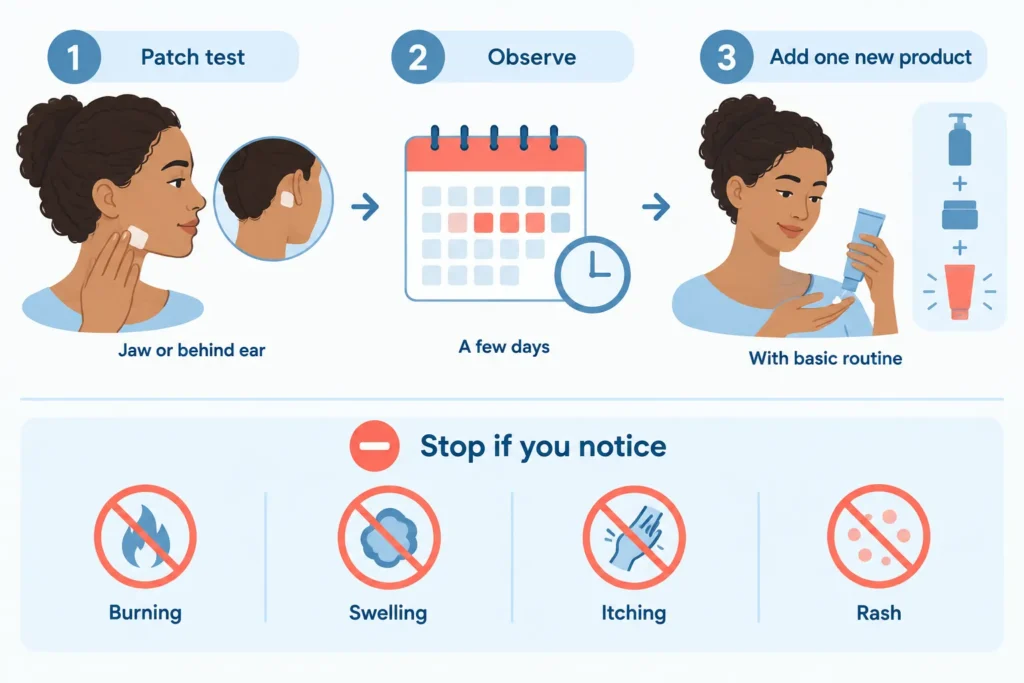
Safety timeline showing patch testing, observing the skin and introducing one new product at a time.

Patch-Test Before Full Use

A patch test cannot predict every reaction, but it can help identify obvious irritation before you apply a product across your face. Place a small amount on a limited area, such as behind the ear or along the jaw. Repeat according to the product directions for several days and watch for itching, burning, swelling or a rash.

Do not continue testing if you develop a significant reaction. Wash the area and stop using the product. Seek urgent medical help for symptoms such as facial swelling, breathing difficulty or a rapidly worsening reaction.

Introduce One Product at a Time

Start with one new product instead of replacing your entire routine on the same day. This makes it easier to identify which product is causing irritation or discomfort. It also prevents beginners from combining several strong ingredients without understanding how their skin responds.

First establish a cleanser, moisturiser and sunscreen that you can use comfortably. Products such as exfoliating acids, retinoids, strong acne treatments and brightening serums can wait. They are not required for a basic routine.

Beginner Skin Care Routine Checklist

  • Morning: Gentle cleanse or rinse, moisturiser and broad-spectrum sunscreen.
  • Evening: Remove makeup or resistant sunscreen if needed, cleanse gently and moisturise.
  • Use lukewarm or comfortable-temperature water and avoid harsh scrubbing.
  • Choose textures according to your skin’s comfort, local weather and season.
  • Patch-test new products and introduce only one at a time.
  • Stop products that cause significant burning, swelling, itching or a persistent rash.
  • Consult a dermatologist for severe, painful, unexplained or continuing symptoms.

Give a basic routine enough time to judge comfort and tolerance. Immediate burning is a reason to stop, but ordinary preferences such as texture and finish may take several uses to assess. Avoid changing products every few days unless there is irritation. Consistent, comfortable care is more useful than chasing flawless skin or instant results.

Sun Protection, Common Concerns and Skincare Ingredients

A practical skin care guide must include sun protection. Sun exposure can affect every skin tone, even when redness or burning is difficult to see. The aim is not to make skin lighter. It is to reduce preventable skin damage and help the skin stay healthy.

You May Also Like:Daily Skincare Routine for Beginners: Morning and Night Guide

How Sun Exposure Affects the Skin

Sunlight contains ultraviolet radiation. UVA rays contribute to premature skin ageing and pigmentation, while UVB rays are a major cause of sunburn. Both can damage the skin, and repeated exposure increases the risk of skin cancer.

Tanning is also a sign that the skin is responding to UV damage. A tan may fade, but this does not mean the exposure was harmless. In Indian skin tones, sun damage may appear as darkening, patchy pigmentation, worsening of acne marks, dryness or uneven tone. Sunburn can cause warmth, tenderness, itching, swelling or peeling, even if obvious redness is not visible.

Long-term exposure may contribute to fine lines, rough texture, loss of firmness and persistent dark spots. Damage can occur during everyday activities such as commuting, shopping, playing outdoor sports or working near strong sunlight.

Practical Sun Protection in Indian Conditions

Layered sun protection using sunscreen, shade, protective clothing, a hat and UV-protective sunglasses.

Sunscreen is useful, but it is only one part of sun protection. India’s strong sunlight, heat, humidity and varied outdoor routines can make a combination of measures more practical.

  • Seek shade: Use covered walkways, trees, umbrellas or shaded waiting areas where possible, particularly when sunlight is intense.
  • Wear protective clothing: Choose comfortable, closely woven clothing that covers more skin. Long sleeves, trousers and dupattas can help when suitable for the weather and activity.
  • Use a hat: A broad-brimmed hat offers more coverage for the face, ears and neck than a cap.
  • Protect the eyes: Wear sunglasses that state they provide UV protection. Large or wraparound frames may offer better coverage.
  • Plan outdoor activity: If practical, avoid unnecessary exposure when UV levels are high. A weather service or UV index can help with planning.

For sunscreen, look for a broad-spectrum product that protects against UVA and UVB radiation. Follow the directions on the label for the amount, application timing and reapplication. Different products have different instructions, and reapplication needs can change with sweating, swimming, towel-drying and time outdoors.

Apply sunscreen to exposed areas that clothing does not cover, including commonly missed places such as the ears, neck and tops of the feet. Water-resistant sunscreen can be helpful for swimming or heavy sweating, but no sunscreen is fully waterproof. Reapply according to its label after these activities.

The best format is one you can use properly and consistently. A light gel may feel comfortable on oily skin, while a cream may suit dry skin. Tinted options may be useful for people concerned about visible-light-related pigmentation. If a product stings, causes a rash or repeatedly worsens breakouts, stop using it and try a suitable alternative or consult a dermatologist.

Acne and Frequent Breakouts

Acne can include blackheads, whiteheads, red bumps, pus-filled spots or deeper painful lumps. It is not simply caused by “dirty” skin. Hormones, excess oil, blocked pores, inflammation, genetics, certain medicines and some hair or cosmetic products may contribute.

Start with gentle cleansing, a non-comedogenic moisturiser and sunscreen. Avoid harsh scrubs, squeezing spots and repeatedly washing the face. These habits can increase irritation and may worsen post-acne marks.

Mild acne treatments need time to work. Trying several strong ingredients together often leads to dryness without producing faster improvement. See a dermatologist if acne is painful, deep, causing scars, affecting confidence, appearing suddenly or not improving with careful over-the-counter use.

Dryness and a Damaged Skin Barrier

Dry skin may feel tight, rough, itchy or flaky. Common triggers include cold weather, air conditioning, hot showers, strong cleansers and overuse of exfoliating products.

Use a gentle cleanser, keep showers comfortably warm rather than very hot, and apply moisturiser after washing. Creams or ointments are often more supportive than very light lotions for severely dry areas. Stop exfoliating temporarily if the skin burns or stings.

Seek medical advice for severe itching, cracking, bleeding, oozing, widespread rashes or dryness that does not improve. Eczema, infections and other conditions may require diagnosis and treatment.

Excess Oil

Oily skin may look shiny or feel greasy, especially around the forehead, nose and chin. Scrubbing or using harsh, drying products can irritate the skin and may not solve the underlying oiliness.

Choose a mild cleanser, a lightweight non-comedogenic moisturiser and a comfortable sunscreen. A targeted ingredient such as salicylic acid or niacinamide may help some people. Introduce it slowly rather than using several oil-control products at once.

Uneven Skin Tone and Dark Marks

Uneven tone may follow acne, irritation, insect bites, eczema or sun exposure. Melasma and other pigmentation conditions can also cause patches. Improvement is usually gradual, and repeated irritation can make pigmentation more noticeable, particularly in deeper skin tones.

Daily sun protection is an important first step. Avoid bleaching mixtures, unlabelled fairness creams and steroid-containing creams unless prescribed for a diagnosed condition. Consult a dermatologist if pigmentation appears suddenly, changes rapidly, affects a single unusual area or does not improve.

Common Skincare Ingredients

Ingredient What it may help with Important cautions
Salicylic acid Helps clear blocked pores and may reduce blackheads and mild acne. Can cause dryness, peeling or stinging. Avoid combining it immediately with several other exfoliants.
Benzoyl peroxide May reduce acne-causing bacteria and inflamed spots. Can irritate dry skin and bleach towels, pillowcases or clothing. Begin cautiously and follow the product label.
Niacinamide May support the skin barrier and help with oiliness, redness or uneven tone. Usually well tolerated, but stronger products can still sting or irritate.
Ceramides Help support the skin barrier and reduce moisture loss. Useful in moisturisers, but they do not treat every cause of persistent dryness or rash.
Hyaluronic acid Acts as a humectant, helping the skin hold water and feel more hydrated. It is not a permanent filler when used in skincare. Apply as directed and use a moisturiser if needed.
Vitamin C May provide antioxidant support and gradually improve some dark marks or dullness. Some formulas are unstable or irritating. Packaging, formulation and consistent use matter.
Retinoids May help acne, uneven texture, fine lines and some pigmentation concerns. Can cause dryness, peeling and increased sensitivity. Retinoids are not suitable for everyone and require particular caution during pregnancy.
Exfoliating acids AHAs such as glycolic or lactic acid may improve rough texture and surface pigmentation. Overuse can cause burns, inflammation and darker marks. Strong peels should not be treated as routine home skincare.
You May Also Like:Mutual Funds and SIP Investing in India: A Complete Beginner’s Guide

Pregnancy and Breastfeeding Cautions

Pregnancy can change acne, pigmentation and skin sensitivity. Do not assume that an over-the-counter product is automatically suitable. Retinoids require special caution and are generally avoided during pregnancy. The suitability of salicylic acid, benzoyl peroxide and other active ingredients may depend on the formulation, strength, area treated and personal medical history.

If you are pregnant, planning pregnancy or breastfeeding, ask a dermatologist, obstetrician or other qualified healthcare professional before starting concern-focused treatments. Do not stop a prescribed medicine without speaking to the prescriber.

Choose One Targeted Product at a Time

Beginners do not need a long routine. Keep a basic foundation of gentle cleansing, moisturising and sun protection. Then select one product for the concern that matters most, such as salicylic acid for blocked pores or ceramides for dryness.

Patch-test when the label recommends it, begin according to the directions and give the skin time to respond. Do not introduce another active product immediately. If you develop persistent burning, swelling, blistering, severe itching or a spreading rash, stop the product and seek medical advice. A simple routine makes it easier to identify what genuinely helps and what causes irritation.

Natural Remedies, Common Mistakes and Healthy Skin Habits

Natural skin care can sound gentle and harmless, but “natural” does not automatically mean safe. Plant extracts, kitchen ingredients and essential oils can irritate the skin or trigger allergies. Evidence also varies widely: a remedy that feels soothing may not treat the cause of acne, pigmentation, eczema or another skin problem.

Be Careful With DIY Skin Remedies

A patch test can help identify some reactions before you use a new product on a larger area. Apply a small amount as directed on a limited patch of skin and observe it for the period stated on the label. However, patch testing cannot rule out every possible reaction. Irritation may develop after repeated use, and facial skin may react differently from skin elsewhere.

Avoid these common DIY practices:

  • Lemon juice: It is acidic and can cause stinging, irritation and increased sensitivity. Citrus on the skin may also contribute to a reaction after sun exposure.
  • Undiluted essential oils: Concentrated oils may cause irritation or allergic contact dermatitis. Do not assume that an oil is safe because it comes from a plant.
  • Toothpaste on pimples: Toothpaste is made for teeth, not facial skin. Its ingredients may dry or irritate a spot without treating acne properly.
  • Baking soda: Its alkaline nature can disturb the skin barrier and cause dryness or irritation.
  • Harsh scrubs: Rough particles and forceful rubbing can damage irritated skin, worsen redness and make inflamed acne more uncomfortable.

If you want a soothing option, keep it simple. A cool compress may temporarily ease mild heat or discomfort. A plain, fragrance-free moisturiser may help support a dry or irritated skin barrier. Colloidal oatmeal products can feel soothing for some people with dry, itchy skin, but they are not suitable for everyone and do not replace medical treatment.

Stop using any remedy or product that causes burning, swelling, persistent redness or worsening symptoms. Do not apply home remedies to broken skin, infected areas or severe rashes.

Skin Care Mistakes to Avoid

A complicated routine is not necessarily a better routine. Beginners often get better consistency from a small number of suitable products used correctly.

  • Over-cleansing: Washing too often or using a strong cleanser can leave skin tight, dry and irritated. Cleanse gently rather than trying to remove every trace of natural oil.
  • Exfoliating too frequently: Using multiple acids, scrubs or peeling products can weaken the skin barrier. Reduce or stop exfoliation if you notice burning, flaking or unusual sensitivity.
  • Picking acne: Squeezing or scratching spots can increase inflammation and the risk of marks or scarring.
  • Changing products too quickly: Starting several products at once makes it difficult to identify what is helping or causing irritation. Introduce products gradually.
  • Sleeping in makeup: Remove makeup gently before bed, especially if it is heavy, long-wearing or water-resistant.
  • Skipping sun protection: Sun exposure can contribute to sunburn, premature skin ageing and uneven pigmentation. It can also increase skin cancer risk.

Healthy Habits That Support Your Skin

Daily habits can support general skin health, but lifestyle changes alone do not cure conditions such as persistent acne, eczema, psoriasis, fungal infections or hormonal pigmentation. These concerns may require a proper diagnosis and targeted care.

  • Sleep regularly: Aim for a practical, consistent sleep schedule. Poor sleep can make it harder to manage stress and maintain daily routines.
  • Drink according to your needs: Stay adequately hydrated, particularly during hot Indian summers or physical activity. Drinking excessive water does not automatically clear acne or erase pigmentation.
  • Eat balanced meals: Include varied sources of protein, vegetables, fruit, whole grains and healthy fats where possible. Avoid extreme “detox” diets marketed as skin cures.
  • Keep personal items clean: Wash pillowcases, face towels and makeup tools regularly. Do not share razors, makeup or towels, especially when an infection may be present.
  • Avoid tobacco: Smoking and other tobacco use harm overall health and can negatively affect skin appearance and healing.
  • Manage sweat gently: After exercise or heavy sweating, change out of damp clothing and cleanse without aggressive scrubbing.
You May Also Like:How to Read Crypto Price Charts

When to Consult a Dermatologist

Self-care has limits. A dermatologist can identify the condition, explain treatment options and help prevent avoidable complications.

Arrange a medical consultation if you have:

  • Severe, deep or painful acne.
  • Acne that is causing scars or significant dark marks.
  • A rash that persists, spreads, repeatedly returns or disrupts sleep.
  • A sudden or unexplained change in your skin, hair or nails.
  • Possible infection signs, such as increasing pain, warmth, swelling, pus, rapidly spreading redness or fever.
  • A mole or spot that is new, changing, irregular, bleeding or not healing.
  • A reaction that continues after stopping a product.
  • A skin concern that is affecting your confidence or daily life.

Seek urgent medical help for difficulty breathing, faintness, throat tightness, or major swelling of the face, lips, tongue or eyes after using a product, medicine or home remedy. These may be signs of a serious allergic reaction.

Medical disclaimer: This skin care guide provides general educational information and is not a diagnosis or a substitute for advice from a qualified doctor or dermatologist. Pregnancy, breastfeeding, allergies, medicines and existing health conditions can affect which products or treatments are appropriate.

These safety principles are consistent with public guidance from reputable organisations including the American Academy of Dermatology, the UK National Health Service, the US Food and Drug Administration, and the World Health Organization. Product labels and advice from your own healthcare professional should take priority because recommendations can vary by condition and individual health needs.

Frequently Asked Questions

What is the correct order for a basic skin care routine?

In the morning, a simple order is cleanser, treatment if prescribed or needed, moisturiser and sunscreen. At night, remove makeup or sunscreen, cleanse, apply treatment if used, and moisturise. Follow the directions for each product because some treatments require a different order.

Do I need sunscreen every day?

Daily sunscreen is a sensible habit, especially when you will be outdoors or near strong daylight. Choose a broad-spectrum sunscreen with suitable SPF protection, apply enough to exposed skin and reapply according to the label, particularly after sweating, swimming or wiping your face. Sunscreen works best with shade, clothing and other sun-protective measures.

How should I test a new skin product?

Follow the manufacturer’s directions and test a small amount on a limited area before wider use. Introduce one new product at a time. A successful patch test reduces uncertainty but cannot guarantee that you will never react.

Does oily skin need moisturiser?

Yes, oily skin can still become dehydrated or irritated. Look for a lightweight, non-comedogenic moisturiser that feels comfortable. Avoid trying to “dry out” the skin with harsh cleansers or frequent exfoliation.

Can home remedies cure acne?

No home remedy can be assumed to cure acne. Mild acne may respond to evidence-based over-the-counter products, while painful, persistent or scarring acne should be assessed by a dermatologist. Avoid squeezing spots or applying toothpaste, lemon juice and other irritating DIY mixtures.

How can I treat uneven skin tone?

Begin with gentle skin care and regular sun protection. Uneven tone can have different causes, including sun exposure, acne marks, irritation or an underlying condition. Persistent or rapidly changing pigmentation needs professional assessment rather than aggressive bleaching, scrubbing or unverified creams.

How long do skin care products take to show results?

Timing depends on the product and concern. Moisturisers may improve comfort quickly, while acne or pigmentation products often need consistent use over a longer period. Do not increase the amount or frequency to force faster results. Stop and seek advice if irritation is significant.

When should a beginner visit a dermatologist?

Visit a dermatologist when symptoms are painful, severe, persistent, scarring, spreading or difficult to identify. You should also seek help for infection signs, suspicious moles, sudden skin changes or reactions that do not settle. Urgent breathing difficulty or major facial swelling requires emergency medical care.

Summary

Safe skin care is usually simple: use gentle products, introduce changes slowly, protect your skin from the sun and avoid irritating DIY remedies. Healthy sleep, balanced food, adequate hydration, clean personal items and avoiding tobacco can support general health, but they cannot replace medical treatment. Pay attention to persistent or severe symptoms and consult a dermatologist when self-care is not enough.


RELATED GUIDES

Explore the supporting guides

Share this article
KEEP READING

Related Articles

View all →

Comments

Leave a Comment

Skin Care: A Complete Guide to Healthy Skin

A good beginner skin care routine needs only three core steps: gentle cleansing, moisturising and broad-spectrum sunscreen. Choose products that feel comfortable on your skin, introduce them one at a time and use them consistently. Healthy skin does not need to look flawless. It should generally feel comfortable, protected and free from persistent irritation.

Understanding Your Skin and Building a Basic Routine

Skin care can seem complicated when shops and social media present long routines, unfamiliar ingredients and products for every possible concern. However, most beginners do not need many products. A simple routine used regularly is usually a better starting point than an elaborate routine that irritates the skin or is difficult to maintain.

Healthy skin can have pores, marks, uneven colour, occasional pimples and natural texture. The goal is not to create “perfect” skin. A practical goal is to keep your skin clean without stripping it, support its moisture barrier and protect it from sunlight.

Comfort matters too. Burning, persistent itching, swelling, cracking or repeated rashes are not signs that a product is “working”. Stop using a product that causes a significant reaction. Seek advice from a qualified dermatologist if symptoms are severe, keep returning or do not settle.

Why the Skin Barrier Matters

The outermost part of the skin acts as a protective barrier. It helps reduce water loss and limits contact with irritants and other external substances. When this barrier is comfortable and functioning well, the skin is more likely to feel smooth and flexible.

Harsh cleansing, frequent scrubbing, overuse of active ingredients and unsuitable products can disturb this barrier. Possible signs include tightness after washing, flaking, stinging, unusual sensitivity or redness. These signs can occur even if your skin is normally oily.

Indian weather and daily routines can affect how the skin feels. Heat and humidity may increase sweating and make rich products feel heavy. Dust and pollution can collect on exposed skin, but aggressive scrubbing is not necessary to remove them. Long hours in air-conditioned rooms may make some people feel dry or tight.

Seasonal changes matter as well. A light moisturiser that feels comfortable during a humid Mumbai summer may not be enough during a dry Delhi winter. Similarly, a rich cream used in cooler weather may feel greasy during the monsoon. Your routine can change with your environment instead of remaining identical throughout the year.

How to Observe Your Skin Type

Skin type is a useful starting point, not a permanent label or medical diagnosis. Observe how your face feels a few hours after gentle cleansing, before applying heavy products. Consider oiliness, tightness, flaking and sensitivity over several days rather than judging from one morning.

  • Normal skin: Usually feels comfortable, with no persistent excess oiliness, tightness or flaking.
  • Oily skin: Develops noticeable shine or greasiness, often across much of the face. Oily skin still needs moisturiser and can become irritated by harsh products.
  • Dry skin: Often feels tight, rough or flaky. It may be more comfortable with creamy cleansers and richer moisturisers.
  • Combination skin: Has oily and dry areas at the same time. For example, the forehead and nose may become oily while the cheeks feel normal or dry.
  • Sensitive skin: Frequently reacts with stinging, burning, itching or redness. “Sensitive” can describe how skin behaves, but repeated or severe reactions may require medical assessment.

Your skin type can change with age, weather, hormones, medicines and product use. Acne, eczema, rosacea, allergies and infections cannot be reliably identified from a skin-type checklist. Consult a dermatologist if you have painful acne, persistent rashes, unexplained colour changes, wounds that do not heal or symptoms affecting daily life.

A Simple Morning Skin Care Routine

Three-step morning routine showing gentle cleansing, moisturising and broad-spectrum sunscreen.

The morning routine should prepare your skin for the day without leaving it uncomfortable. Beginners can start with cleansing, moisturising and sun protection.

Step 1: Cleanse Gently

Use a gentle facial cleanser and lukewarm or comfortable-temperature water. Massage it lightly with your fingertips, then rinse and pat the skin dry. Avoid rough brushes and vigorous scrubbing.

People with very dry or sensitive skin may find that rinsing with water in the morning is enough, especially if the face does not feel oily. People who sweat heavily or wake with noticeable oil may prefer a mild cleanser. The skin should not feel painfully tight after washing.

When choosing a cleanser, look at its format and how your skin feels after use:

  • Oily or combination skin: A light gel or foaming cleanser may feel comfortable, provided it does not leave the skin tight or irritated.
  • Dry skin: A cream, lotion or non-foaming cleanser may be more comfortable.
  • Sensitive skin: Start with a mild, fragrance-free option and avoid scrubs or strongly scented formulas.
  • Normal skin: Choose a gentle cleanser based on personal comfort rather than marketing labels.

Step 2: Apply Moisturiser

Moisturiser helps reduce water loss and supports the skin barrier. Apply it after cleansing, preferably while the skin is slightly damp but not dripping wet.

Light lotions and gel-creams may suit people who dislike a heavy finish or live in humid conditions. Creams and balms are richer and may be more suitable for dry areas or cooler weather. Combination skin may need a light layer over the whole face and a little more on dry patches.

Do not assume that oily or acne-prone skin must avoid moisturiser. Instead, choose a lightweight product that feels comfortable and does not appear to worsen your concerns. Labels such as “non-comedogenic” can be a useful starting point, but no label can guarantee that a product will suit every person.

Step 3: Use Broad-Spectrum Sunscreen

Sunscreen is the main protective step in a morning routine. Choose a broad-spectrum sunscreen that protects against both UVA and UVB rays. An SPF of at least 30 is a practical everyday starting point.

Apply it generously to exposed skin, including the face, ears and neck. Use it as the final skin care step before makeup. Reapplication is especially relevant when you are outdoors for extended periods, sweating or wiping the face. Follow the directions on the product label.

Texture is important because a sunscreen only helps when you are willing to use it. Gel or fluid formulas may feel lighter in hot, humid weather, while creamier formulas may suit dry skin. Visible white cast can vary by product and skin tone, so you may need to test a few options before finding a comfortable one.

Sunscreen works best as part of broader sun protection. Shade, umbrellas, caps, sunglasses and covering exposed skin can also be useful during strong sunlight.

A Simple Evening Skin Care Routine

The evening routine removes sunscreen, makeup, sweat and daily dirt. It also gives you another opportunity to moisturise.

Step 1: Remove Makeup and Sunscreen

If you wear makeup or water-resistant sunscreen, you may need a cleansing oil, cleansing balm or micellar water before your regular cleanser. This is often called double cleansing. It is optional and should not involve repeated rubbing.

If one gentle cleanser removes the day’s products comfortably, a separate first cleanse may not be necessary. More cleansing is not automatically better.

Step 2: Cleanse Without Scrubbing

Wash with the same gentle cleanser used in the morning, or choose one suited to your evening needs. Focus on removing residue rather than trying to make the skin feel “squeaky clean”. That tight, squeaky feeling may indicate that the cleanser is too harsh for you.

Step 3: Moisturise

Apply moisturiser after cleansing. You can use the same product in the morning and evening. There is no requirement to buy a separate night cream.

If your skin is dry, you may prefer a slightly richer layer at night. If it is oily or the weather is humid, a lighter lotion may be enough. Adjust the amount according to comfort rather than applying a fixed number of layers.

How to Start New Products Safely

Safety timeline showing patch testing, observing the skin and introducing one new product at a time.

Patch-Test Before Full Use

A patch test cannot predict every reaction, but it can help identify obvious irritation before you apply a product across your face. Place a small amount on a limited area, such as behind the ear or along the jaw. Repeat according to the product directions for several days and watch for itching, burning, swelling or a rash.

Do not continue testing if you develop a significant reaction. Wash the area and stop using the product. Seek urgent medical help for symptoms such as facial swelling, breathing difficulty or a rapidly worsening reaction.

Introduce One Product at a Time

Start with one new product instead of replacing your entire routine on the same day. This makes it easier to identify which product is causing irritation or discomfort. It also prevents beginners from combining several strong ingredients without understanding how their skin responds.

First establish a cleanser, moisturiser and sunscreen that you can use comfortably. Products such as exfoliating acids, retinoids, strong acne treatments and brightening serums can wait. They are not required for a basic routine.

Beginner Skin Care Routine Checklist

  • Morning: Gentle cleanse or rinse, moisturiser and broad-spectrum sunscreen.
  • Evening: Remove makeup or resistant sunscreen if needed, cleanse gently and moisturise.
  • Use lukewarm or comfortable-temperature water and avoid harsh scrubbing.
  • Choose textures according to your skin’s comfort, local weather and season.
  • Patch-test new products and introduce only one at a time.
  • Stop products that cause significant burning, swelling, itching or a persistent rash.
  • Consult a dermatologist for severe, painful, unexplained or continuing symptoms.

Give a basic routine enough time to judge comfort and tolerance. Immediate burning is a reason to stop, but ordinary preferences such as texture and finish may take several uses to assess. Avoid changing products every few days unless there is irritation. Consistent, comfortable care is more useful than chasing flawless skin or instant results.

Sun Protection, Common Concerns and Skincare Ingredients

A practical skin care guide must include sun protection. Sun exposure can affect every skin tone, even when redness or burning is difficult to see. The aim is not to make skin lighter. It is to reduce preventable skin damage and help the skin stay healthy.

How Sun Exposure Affects the Skin

Sunlight contains ultraviolet radiation. UVA rays contribute to premature skin ageing and pigmentation, while UVB rays are a major cause of sunburn. Both can damage the skin, and repeated exposure increases the risk of skin cancer.

Tanning is also a sign that the skin is responding to UV damage. A tan may fade, but this does not mean the exposure was harmless. In Indian skin tones, sun damage may appear as darkening, patchy pigmentation, worsening of acne marks, dryness or uneven tone. Sunburn can cause warmth, tenderness, itching, swelling or peeling, even if obvious redness is not visible.

Long-term exposure may contribute to fine lines, rough texture, loss of firmness and persistent dark spots. Damage can occur during everyday activities such as commuting, shopping, playing outdoor sports or working near strong sunlight.

Practical Sun Protection in Indian Conditions

Layered sun protection using sunscreen, shade, protective clothing, a hat and UV-protective sunglasses.

Sunscreen is useful, but it is only one part of sun protection. India’s strong sunlight, heat, humidity and varied outdoor routines can make a combination of measures more practical.

  • Seek shade: Use covered walkways, trees, umbrellas or shaded waiting areas where possible, particularly when sunlight is intense.
  • Wear protective clothing: Choose comfortable, closely woven clothing that covers more skin. Long sleeves, trousers and dupattas can help when suitable for the weather and activity.
  • Use a hat: A broad-brimmed hat offers more coverage for the face, ears and neck than a cap.
  • Protect the eyes: Wear sunglasses that state they provide UV protection. Large or wraparound frames may offer better coverage.
  • Plan outdoor activity: If practical, avoid unnecessary exposure when UV levels are high. A weather service or UV index can help with planning.

For sunscreen, look for a broad-spectrum product that protects against UVA and UVB radiation. Follow the directions on the label for the amount, application timing and reapplication. Different products have different instructions, and reapplication needs can change with sweating, swimming, towel-drying and time outdoors.

Apply sunscreen to exposed areas that clothing does not cover, including commonly missed places such as the ears, neck and tops of the feet. Water-resistant sunscreen can be helpful for swimming or heavy sweating, but no sunscreen is fully waterproof. Reapply according to its label after these activities.

The best format is one you can use properly and consistently. A light gel may feel comfortable on oily skin, while a cream may suit dry skin. Tinted options may be useful for people concerned about visible-light-related pigmentation. If a product stings, causes a rash or repeatedly worsens breakouts, stop using it and try a suitable alternative or consult a dermatologist.

Acne and Frequent Breakouts

Acne can include blackheads, whiteheads, red bumps, pus-filled spots or deeper painful lumps. It is not simply caused by “dirty” skin. Hormones, excess oil, blocked pores, inflammation, genetics, certain medicines and some hair or cosmetic products may contribute.

Start with gentle cleansing, a non-comedogenic moisturiser and sunscreen. Avoid harsh scrubs, squeezing spots and repeatedly washing the face. These habits can increase irritation and may worsen post-acne marks.

Mild acne treatments need time to work. Trying several strong ingredients together often leads to dryness without producing faster improvement. See a dermatologist if acne is painful, deep, causing scars, affecting confidence, appearing suddenly or not improving with careful over-the-counter use.

Dryness and a Damaged Skin Barrier

Dry skin may feel tight, rough, itchy or flaky. Common triggers include cold weather, air conditioning, hot showers, strong cleansers and overuse of exfoliating products.

Use a gentle cleanser, keep showers comfortably warm rather than very hot, and apply moisturiser after washing. Creams or ointments are often more supportive than very light lotions for severely dry areas. Stop exfoliating temporarily if the skin burns or stings.

Seek medical advice for severe itching, cracking, bleeding, oozing, widespread rashes or dryness that does not improve. Eczema, infections and other conditions may require diagnosis and treatment.

Excess Oil

Oily skin may look shiny or feel greasy, especially around the forehead, nose and chin. Scrubbing or using harsh, drying products can irritate the skin and may not solve the underlying oiliness.

Choose a mild cleanser, a lightweight non-comedogenic moisturiser and a comfortable sunscreen. A targeted ingredient such as salicylic acid or niacinamide may help some people. Introduce it slowly rather than using several oil-control products at once.

Uneven Skin Tone and Dark Marks

Uneven tone may follow acne, irritation, insect bites, eczema or sun exposure. Melasma and other pigmentation conditions can also cause patches. Improvement is usually gradual, and repeated irritation can make pigmentation more noticeable, particularly in deeper skin tones.

Daily sun protection is an important first step. Avoid bleaching mixtures, unlabelled fairness creams and steroid-containing creams unless prescribed for a diagnosed condition. Consult a dermatologist if pigmentation appears suddenly, changes rapidly, affects a single unusual area or does not improve.

Common Skincare Ingredients

Ingredient What it may help with Important cautions
Salicylic acid Helps clear blocked pores and may reduce blackheads and mild acne. Can cause dryness, peeling or stinging. Avoid combining it immediately with several other exfoliants.
Benzoyl peroxide May reduce acne-causing bacteria and inflamed spots. Can irritate dry skin and bleach towels, pillowcases or clothing. Begin cautiously and follow the product label.
Niacinamide May support the skin barrier and help with oiliness, redness or uneven tone. Usually well tolerated, but stronger products can still sting or irritate.
Ceramides Help support the skin barrier and reduce moisture loss. Useful in moisturisers, but they do not treat every cause of persistent dryness or rash.
Hyaluronic acid Acts as a humectant, helping the skin hold water and feel more hydrated. It is not a permanent filler when used in skincare. Apply as directed and use a moisturiser if needed.
Vitamin C May provide antioxidant support and gradually improve some dark marks or dullness. Some formulas are unstable or irritating. Packaging, formulation and consistent use matter.
Retinoids May help acne, uneven texture, fine lines and some pigmentation concerns. Can cause dryness, peeling and increased sensitivity. Retinoids are not suitable for everyone and require particular caution during pregnancy.
Exfoliating acids AHAs such as glycolic or lactic acid may improve rough texture and surface pigmentation. Overuse can cause burns, inflammation and darker marks. Strong peels should not be treated as routine home skincare.

Pregnancy and Breastfeeding Cautions

Pregnancy can change acne, pigmentation and skin sensitivity. Do not assume that an over-the-counter product is automatically suitable. Retinoids require special caution and are generally avoided during pregnancy. The suitability of salicylic acid, benzoyl peroxide and other active ingredients may depend on the formulation, strength, area treated and personal medical history.

If you are pregnant, planning pregnancy or breastfeeding, ask a dermatologist, obstetrician or other qualified healthcare professional before starting concern-focused treatments. Do not stop a prescribed medicine without speaking to the prescriber.

Choose One Targeted Product at a Time

Beginners do not need a long routine. Keep a basic foundation of gentle cleansing, moisturising and sun protection. Then select one product for the concern that matters most, such as salicylic acid for blocked pores or ceramides for dryness.

Patch-test when the label recommends it, begin according to the directions and give the skin time to respond. Do not introduce another active product immediately. If you develop persistent burning, swelling, blistering, severe itching or a spreading rash, stop the product and seek medical advice. A simple routine makes it easier to identify what genuinely helps and what causes irritation.

Natural Remedies, Common Mistakes and Healthy Skin Habits

Natural skin care can sound gentle and harmless, but “natural” does not automatically mean safe. Plant extracts, kitchen ingredients and essential oils can irritate the skin or trigger allergies. Evidence also varies widely: a remedy that feels soothing may not treat the cause of acne, pigmentation, eczema or another skin problem.

Be Careful With DIY Skin Remedies

A patch test can help identify some reactions before you use a new product on a larger area. Apply a small amount as directed on a limited patch of skin and observe it for the period stated on the label. However, patch testing cannot rule out every possible reaction. Irritation may develop after repeated use, and facial skin may react differently from skin elsewhere.

Avoid these common DIY practices:

  • Lemon juice: It is acidic and can cause stinging, irritation and increased sensitivity. Citrus on the skin may also contribute to a reaction after sun exposure.
  • Undiluted essential oils: Concentrated oils may cause irritation or allergic contact dermatitis. Do not assume that an oil is safe because it comes from a plant.
  • Toothpaste on pimples: Toothpaste is made for teeth, not facial skin. Its ingredients may dry or irritate a spot without treating acne properly.
  • Baking soda: Its alkaline nature can disturb the skin barrier and cause dryness or irritation.
  • Harsh scrubs: Rough particles and forceful rubbing can damage irritated skin, worsen redness and make inflamed acne more uncomfortable.

If you want a soothing option, keep it simple. A cool compress may temporarily ease mild heat or discomfort. A plain, fragrance-free moisturiser may help support a dry or irritated skin barrier. Colloidal oatmeal products can feel soothing for some people with dry, itchy skin, but they are not suitable for everyone and do not replace medical treatment.

Stop using any remedy or product that causes burning, swelling, persistent redness or worsening symptoms. Do not apply home remedies to broken skin, infected areas or severe rashes.

Skin Care Mistakes to Avoid

A complicated routine is not necessarily a better routine. Beginners often get better consistency from a small number of suitable products used correctly.

  • Over-cleansing: Washing too often or using a strong cleanser can leave skin tight, dry and irritated. Cleanse gently rather than trying to remove every trace of natural oil.
  • Exfoliating too frequently: Using multiple acids, scrubs or peeling products can weaken the skin barrier. Reduce or stop exfoliation if you notice burning, flaking or unusual sensitivity.
  • Picking acne: Squeezing or scratching spots can increase inflammation and the risk of marks or scarring.
  • Changing products too quickly: Starting several products at once makes it difficult to identify what is helping or causing irritation. Introduce products gradually.
  • Sleeping in makeup: Remove makeup gently before bed, especially if it is heavy, long-wearing or water-resistant.
  • Skipping sun protection: Sun exposure can contribute to sunburn, premature skin ageing and uneven pigmentation. It can also increase skin cancer risk.

Healthy Habits That Support Your Skin

Daily habits can support general skin health, but lifestyle changes alone do not cure conditions such as persistent acne, eczema, psoriasis, fungal infections or hormonal pigmentation. These concerns may require a proper diagnosis and targeted care.

  • Sleep regularly: Aim for a practical, consistent sleep schedule. Poor sleep can make it harder to manage stress and maintain daily routines.
  • Drink according to your needs: Stay adequately hydrated, particularly during hot Indian summers or physical activity. Drinking excessive water does not automatically clear acne or erase pigmentation.
  • Eat balanced meals: Include varied sources of protein, vegetables, fruit, whole grains and healthy fats where possible. Avoid extreme “detox” diets marketed as skin cures.
  • Keep personal items clean: Wash pillowcases, face towels and makeup tools regularly. Do not share razors, makeup or towels, especially when an infection may be present.
  • Avoid tobacco: Smoking and other tobacco use harm overall health and can negatively affect skin appearance and healing.
  • Manage sweat gently: After exercise or heavy sweating, change out of damp clothing and cleanse without aggressive scrubbing.

When to Consult a Dermatologist

Self-care has limits. A dermatologist can identify the condition, explain treatment options and help prevent avoidable complications.

Arrange a medical consultation if you have:

  • Severe, deep or painful acne.
  • Acne that is causing scars or significant dark marks.
  • A rash that persists, spreads, repeatedly returns or disrupts sleep.
  • A sudden or unexplained change in your skin, hair or nails.
  • Possible infection signs, such as increasing pain, warmth, swelling, pus, rapidly spreading redness or fever.
  • A mole or spot that is new, changing, irregular, bleeding or not healing.
  • A reaction that continues after stopping a product.
  • A skin concern that is affecting your confidence or daily life.

Seek urgent medical help for difficulty breathing, faintness, throat tightness, or major swelling of the face, lips, tongue or eyes after using a product, medicine or home remedy. These may be signs of a serious allergic reaction.

Medical disclaimer: This skin care guide provides general educational information and is not a diagnosis or a substitute for advice from a qualified doctor or dermatologist. Pregnancy, breastfeeding, allergies, medicines and existing health conditions can affect which products or treatments are appropriate.

These safety principles are consistent with public guidance from reputable organisations including the American Academy of Dermatology, the UK National Health Service, the US Food and Drug Administration, and the World Health Organization. Product labels and advice from your own healthcare professional should take priority because recommendations can vary by condition and individual health needs.

Frequently Asked Questions

What is the correct order for a basic skin care routine?

In the morning, a simple order is cleanser, treatment if prescribed or needed, moisturiser and sunscreen. At night, remove makeup or sunscreen, cleanse, apply treatment if used, and moisturise. Follow the directions for each product because some treatments require a different order.

Do I need sunscreen every day?

Daily sunscreen is a sensible habit, especially when you will be outdoors or near strong daylight. Choose a broad-spectrum sunscreen with suitable SPF protection, apply enough to exposed skin and reapply according to the label, particularly after sweating, swimming or wiping your face. Sunscreen works best with shade, clothing and other sun-protective measures.

How should I test a new skin product?

Follow the manufacturer’s directions and test a small amount on a limited area before wider use. Introduce one new product at a time. A successful patch test reduces uncertainty but cannot guarantee that you will never react.

Does oily skin need moisturiser?

Yes, oily skin can still become dehydrated or irritated. Look for a lightweight, non-comedogenic moisturiser that feels comfortable. Avoid trying to “dry out” the skin with harsh cleansers or frequent exfoliation.

Can home remedies cure acne?

No home remedy can be assumed to cure acne. Mild acne may respond to evidence-based over-the-counter products, while painful, persistent or scarring acne should be assessed by a dermatologist. Avoid squeezing spots or applying toothpaste, lemon juice and other irritating DIY mixtures.

How can I treat uneven skin tone?

Begin with gentle skin care and regular sun protection. Uneven tone can have different causes, including sun exposure, acne marks, irritation or an underlying condition. Persistent or rapidly changing pigmentation needs professional assessment rather than aggressive bleaching, scrubbing or unverified creams.

How long do skin care products take to show results?

Timing depends on the product and concern. Moisturisers may improve comfort quickly, while acne or pigmentation products often need consistent use over a longer period. Do not increase the amount or frequency to force faster results. Stop and seek advice if irritation is significant.

When should a beginner visit a dermatologist?

Visit a dermatologist when symptoms are painful, severe, persistent, scarring, spreading or difficult to identify. You should also seek help for infection signs, suspicious moles, sudden skin changes or reactions that do not settle. Urgent breathing difficulty or major facial swelling requires emergency medical care.

Summary

Safe skin care is usually simple: use gentle products, introduce changes slowly, protect your skin from the sun and avoid irritating DIY remedies. Healthy sleep, balanced food, adequate hydration, clean personal items and avoiding tobacco can support general health, but they cannot replace medical treatment. Pay attention to persistent or severe symptoms and consult a dermatologist when self-care is not enough.

Leave a Comment