

Health Benefits of Eating Pomegranate Daily: Nutrition, Evidence and Safety

Pomegranate provides fibre, vitamins, minerals and polyphenols, but it is not a cure for disease. This evidence-based guide explains its possible benefits, practical uses, limitations and safety considerations.

Health Benefits of Eating Pomegranate Daily: Nutrition, Evidence and Safety

Quick answer

The health benefits of eating pomegranate daily mainly come from its fibre, vitamins, minerals and naturally occurring plant compounds called polyphenols. Eating the edible seeds, known as arils, can support a balanced diet and may contribute to digestive and heart health.

Research has also examined whether pomegranate juice or extracts may affect blood pressure and other cardiovascular markers. Some findings are encouraging, but the evidence is limited and results are not guaranteed. Pomegranate does not prevent or treat heart disease, diabetes, cancer or any other medical condition.

Introduction

Pomegranate, or anar, is widely available across India. It can be eaten on its own, added to fruit chaat, mixed into curd or sprinkled over salads. Its sweet-tart arils make it an easy alternative to biscuits, sweets and other highly processed snacks.

However, claims about pomegranate often go much further than the evidence. Social media posts may describe it as a “superfood” that cleans the blood, removes toxins or cures serious diseases. These statements are misleading. No single fruit can compensate for an unhealthy diet or replace medical treatment.

A better way to understand pomegranate is to separate three things: its established nutritional value, early scientific findings and benefits supported by stronger clinical evidence. This distinction matters because a result found in a laboratory does not automatically mean that eating the fruit will produce the same result in the human body.

Pomegranate Nutrition and What the Evidence Shows
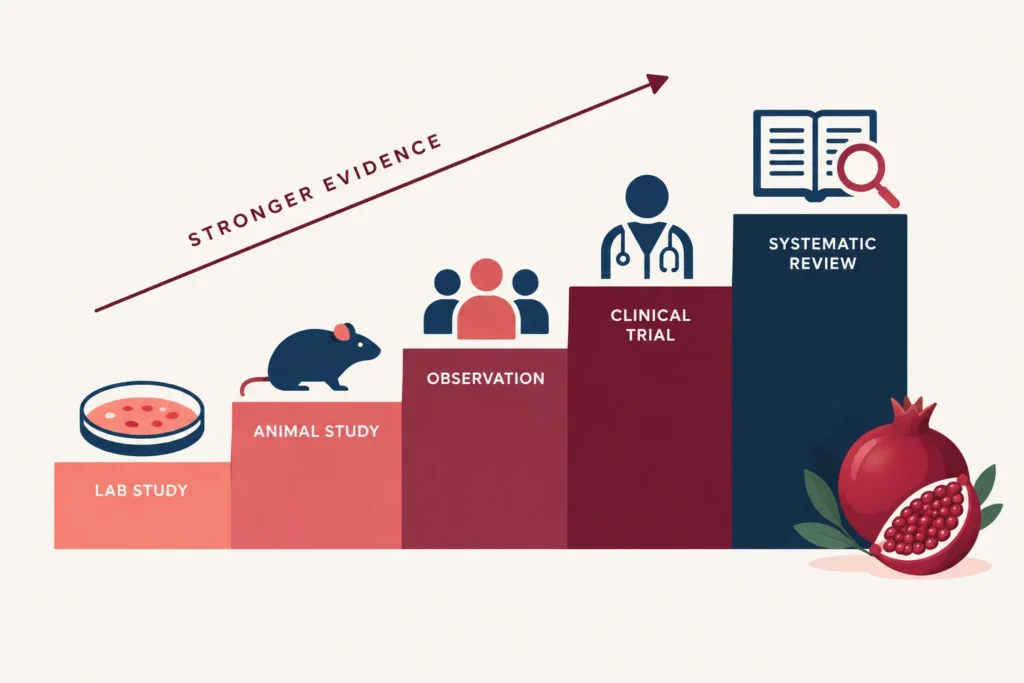
Evidence ladder comparing laboratory studies, animal studies, observational research, clinical trials and systematic reviews.

Which part of a pomegranate do we eat?

When a pomegranate is opened, it reveals many juice-filled arils. Each aril contains a small seed surrounded by red or pink flesh. The entire aril is edible, including the seed.

Eating whole arils provides fibre because the seed and surrounding plant structure remain intact. Pomegranate juice contains many of the fruit’s plant compounds, but usually has much less fibre. It can also be easier to consume a large amount of natural sugar quickly when the fruit is taken as juice.

The white membrane and outer rind are not normally eaten as part of the fruit. Supplements and extracts made from different parts of the plant are not nutritionally equivalent to a serving of fresh arils.

What nutrients does pomegranate provide?

According to nutrient data maintained by the US Department of Agriculture, 100 grams of raw pomegranate arils provide approximately:

Nutrient Approximate amount per 100 grams
Energy 83 kcal
Carbohydrate 18.7 grams
Dietary fibre 4 grams
Protein 1.7 grams
Potassium 236 milligrams
Vitamin C 10.2 milligrams
Folate 38 micrograms
Vitamin K 16.4 micrograms

Exact values can vary with the fruit’s variety, growing conditions, ripeness and storage. Serving size also matters. A small bowl of arils will not necessarily weigh 100 grams.

The fibre in whole arils adds bulk to the diet and supports normal bowel function. Fibre-containing foods can also help a meal or snack feel more satisfying. Pomegranate should still be one of several fibre sources, alongside vegetables, dals, beans, whole grains, nuts, seeds and other fruits.

Potassium is involved in normal nerve, muscle and heart function. Vitamin C supports normal immune function and helps the body form collagen. Folate is needed for cell division and the formation of genetic material, while vitamin K contributes to normal blood clotting and bone health.

These are established functions of the nutrients, not proof that pomegranate alone will produce a particular health outcome. The fruit contributes some of each nutrient, but it is not the only source and may not provide an entire day’s requirement.

You May Also Like:Natural Drinks to Reduce Liver Fat: What Does the Evidence Say?

What are pomegranate polyphenols?

Pomegranate contains naturally occurring polyphenols, including anthocyanins and ellagitannins. Anthocyanins help give the arils their red colour. These compounds are often described as antioxidants.

To understand that term, it helps to know about oxidation. Normal processes such as producing energy and responding to infection can create unstable molecules commonly called free radicals. External factors, including tobacco smoke and air pollution, can also contribute.

The body has its own systems for controlling these molecules. Antioxidants are substances that can take part in reactions that limit or neutralise some oxidative activity. However, the process is complex. Eating an “antioxidant-rich” food does not mean it directly removes all harmful molecules or protects a person from disease.

Researchers can test antioxidant activity in a laboratory dish, but the human body is different. Polyphenols may be broken down during digestion, transformed by gut bacteria and absorbed in varying amounts. A strong laboratory effect may therefore be weaker, different or absent in people.

How strong is the research?

Evidence about pomegranate comes from several types of studies, and they do not carry equal weight.

  • Laboratory studies examine cells or chemical reactions under controlled conditions. They can identify possible mechanisms but cannot establish that eating pomegranate prevents disease.
  • Animal studies help researchers explore biological effects. Their results may not apply to humans because doses, metabolism and study conditions differ.
  • Observational studies look for patterns among people. They can show an association, but they cannot easily separate pomegranate intake from other habits such as exercise, income, smoking or the overall diet.
  • Human clinical trials assign an intervention and measure outcomes. Larger, well-designed and independently repeated trials generally provide stronger evidence than small or short studies.
  • Systematic reviews and meta-analyses combine relevant trials. Their conclusions are only as reliable as the included studies and may remain uncertain when products, doses or participants differ greatly.

Many pomegranate studies have used juice, concentrated extracts or supplements rather than ordinary servings of fresh arils. This makes it difficult to apply every finding to someone eating a small bowl of anar each day.

Possible effects on blood pressure and heart-health markers

Some human trials and reviews have reported modest reductions in blood pressure after consuming pomegranate juice or related products. Researchers have proposed that polyphenols may influence blood-vessel function and processes linked with oxidation.

However, studies have varied in duration, serving size, product type and participant health. Some have included relatively few people, and not all results have been consistent. It is therefore not possible to promise that daily pomegranate will lower an individual’s blood pressure.

Research has also examined cholesterol, triglycerides, blood-vessel function and markers of inflammation. Findings remain mixed or insufficient for pomegranate to be recommended as a treatment. Changes in laboratory markers also do not automatically prove that a food prevents heart attacks or strokes.

For heart health, established measures remain more important: avoiding tobacco, staying physically active, sleeping adequately, managing stress where possible, and eating a varied diet with vegetables, fruits, pulses, whole grains and suitable sources of protein. People with high blood pressure or abnormal cholesterol should continue medicines and follow-up care prescribed by their clinician.

What can be said with confidence?

Pomegranate arils are a nutritious whole-fruit choice. They provide dietary fibre, potassium, vitamin C, folate, vitamin K and polyphenols. Choosing them instead of a highly processed snack can improve the overall quality and variety of a person’s diet.

It is not established that eating pomegranate every day prevents or treats heart disease, diabetes, cancer or another medical condition. Early laboratory findings and small clinical trials are useful for guiding further research, but they should not be presented as medical proof.

The most balanced conclusion is simple: pomegranate can be part of a healthy eating pattern, but it is not a cure. Its value comes from being a nutrient-containing fruit within the wider diet, not from any guaranteed or extraordinary effect.

Digestion, Fruit Versus Juice and Everyday Use

One of the practical health benefits of eating pomegranate daily is that the whole fruit can contribute fibre to your diet. However, the form in which you consume pomegranate matters. Eating the arils is different from drinking a glass of juice, especially when it comes to fibre, portion size and sugar concentration.

How Pomegranate Arils Support Digestion

Pomegranate arils are the juicy red coverings around the seeds. When you eat the arils, including the edible seeds, you get dietary fibre. Fibre supports normal bowel movement and helps food move through the digestive system.

Fibre also adds bulk to meals and may help you feel satisfied after eating. This can make whole pomegranate a useful addition to breakfast, a snack or a balanced meal. Its effect still depends on the rest of your diet. Eating pomegranate cannot make up for meals that regularly lack vegetables, pulses, whole grains and other fibre-rich foods.

If your current diet contains very little fibre, increase fibre-rich foods gradually. A sudden large increase may cause temporary gas, bloating or abdominal discomfort in some people. Drinking enough water is also important when increasing dietary fibre.

People with digestive conditions may need individual guidance. For example, a doctor or registered dietitian may temporarily recommend lower-fibre foods in certain medical situations. In such cases, general advice about eating whole fruit every day may not be appropriate.

You May Also Like:Portfolio Diversification Explained: Benefits, Asset Allocation and Common Mistakes

Whole Pomegranate Versus Pomegranate Juice

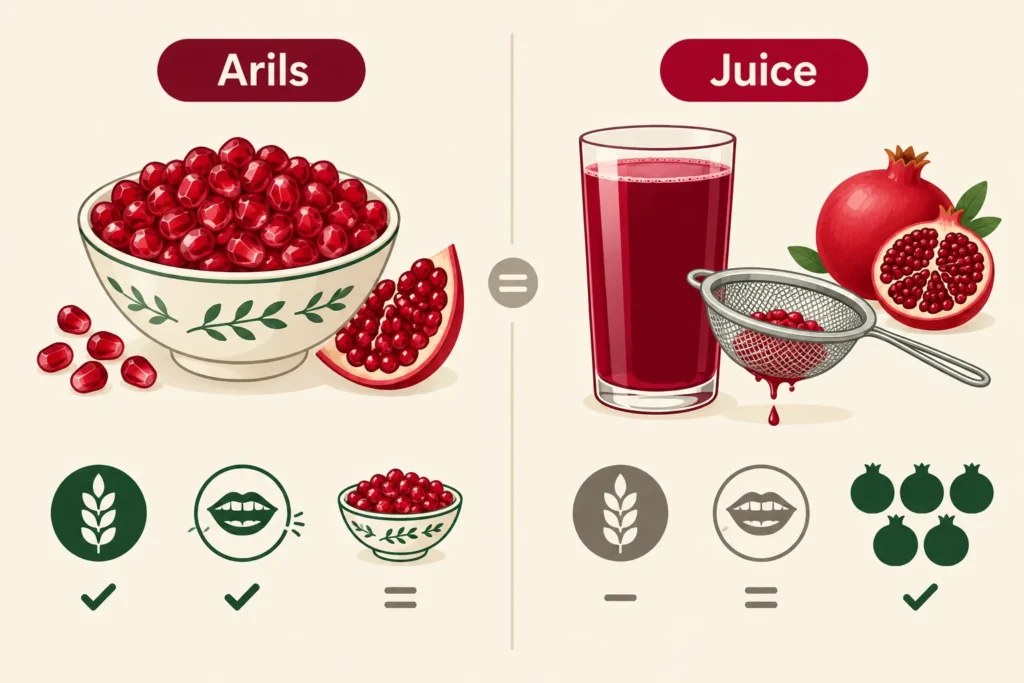
Visual comparison of whole pomegranate arils and juice, highlighting fibre and portion awareness.

Whole arils and juice may come from the same fruit, but they are not nutritionally identical. The main difference is fibre. When pomegranate is juiced and strained, much of the fibrous material is removed. Some juice may retain a little pulp, but it usually provides less fibre than eating the arils.

Form Fibre Portion awareness Points to check
Whole arils Retain the edible seeds and fibre Chewing makes the portion easier to notice Include as part of total daily fruit intake
Freshly prepared juice Usually lower, especially if strained Several fruits may be used for one glass Keep the serving moderate and avoid adding sugar
Packaged juice Often contains little fibre Large bottles or packs can encourage bigger servings Read the label for added sugar, serving size and ingredients

Juice is also easier to consume quickly. You may drink the juice made from more fruit than you would normally sit down and eat. This can concentrate the fruit’s natural sugars and energy into one serving without providing the same fullness as whole arils.

This does not mean that pomegranate juice must always be avoided. A modest amount can fit into some diets. However, it should not automatically replace whole fruit. If digestive fibre and fullness are your priorities, whole arils are generally the more useful choice.

Packaged Juice and Added Sugar

Packaged products vary widely. A bottle with a pomegranate image may be pure juice, a blend of several fruit juices, a juice drink or a sweetened beverage containing only a limited amount of fruit. The front of the pack does not always tell the full story.

Check the ingredient list and nutrition label. Look for added sugar, syrup or other sweetening ingredients. Also check whether the product is entirely pomegranate juice or a mixed drink. “No added sugar” does not mean “sugar-free” because fruit juice naturally contains sugar.

Serving size also matters. The nutrition information may apply to one small serving even when the bottle contains two or more servings. Drinking the entire pack can therefore provide more sugar and energy than expected.

Fresh juice prepared at home or by a juice vendor can avoid packaged additives, but it is still low in fibre if it is heavily strained. Adding sugar, sugar syrup or sweetened masala also changes its nutritional value. “Fresh” does not automatically mean that portion size is irrelevant.

Simple Ways to Eat Pomegranate in Indian Meals

Pomegranate arils have a mildly sweet and tangy taste, so they work in both sweet and savoury dishes. They do not need complicated recipes or special health-food products.

  • With plain curd: Add a spoonful or two of arils to unsweetened curd. You can include roasted jeera powder or a little chopped mint for flavour.
  • On poha: Use arils as a topping after cooking. They add colour and texture without the need for a sweet chutney.
  • In a salad: Mix them with cucumber, tomato, carrot or sprouts. Avoid turning the salad into a high-salt or heavily sweetened dish.
  • In a fruit bowl: Combine pomegranate with seasonal fruits such as papaya, guava, apple or orange. Keep the overall quantity suited to your appetite.
  • As a simple snack: Eat the arils on their own instead of drinking them as juice. Preparing them in advance can make this more convenient.

Be mindful of what is added to the fruit. Large amounts of sugar, sweetened yoghurt, cream or syrup may work against the reason you chose a fruit-based snack. A little chaat masala may improve taste, but people limiting sodium should use salty seasonings carefully.

There Is No Universal Daily Portion

It is tempting to look for one ideal quantity of pomegranate that everyone should eat. In reality, an appropriate portion depends on appetite, total fruit consumption, energy needs, activity level and the rest of the day’s meals.

For example, someone who has already eaten several servings of fruit may not need a large bowl of pomegranate as well. A person with higher energy needs may comfortably include more. A smaller serving may suit someone who wants the flavour as part of curd, poha or salad rather than as a separate snack.

Portion awareness becomes especially important with juice because it is easy to drink quickly and may contain the equivalent of more fruit than expected. Whole arils require chewing and usually make the amount being consumed more visible.

People managing diabetes, kidney disease, digestive disorders or another medical condition should follow dietary advice from their treating professional. Blood sugar response can differ according to portion size, the form of the fruit and what is eaten with it. Do not replace prescribed treatment or a personalised food plan with general claims about pomegranate.

Common Claims That Need Caution

Daily pomegranate can be part of a balanced diet, but it does not guarantee weight loss. Body weight is influenced by overall food intake, activity, sleep, health conditions and many other factors. Adding pomegranate without considering the rest of the diet will not automatically reduce weight. Large servings of sweetened juice may also add more energy than expected.

Claims that pomegranate will definitely improve circulation should also be treated carefully. The fruit contains nutrients and plant compounds, but eating it cannot guarantee a particular change in blood flow or replace medical assessment for symptoms such as chest pain, leg pain, dizziness or breathlessness.

Pomegranate does not “detox” the body in the way many advertisements suggest. The liver, kidneys, lungs and digestive system already perform the body’s normal waste-processing functions. No single fruit or juice cleanses the body after overeating, alcohol consumption or an unhealthy routine.

Most importantly, pomegranate does not cure disease. It should not replace medicines, medical tests or treatment for diabetes, high blood pressure, heart disease, cancer or any other condition. Its sensible role is simpler: whole arils can add fibre, flavour and variety to an overall balanced diet, while juice requires closer attention to processing, added sugar and portion size.

Section 3: Safety, FAQs and Medical Disclaimer

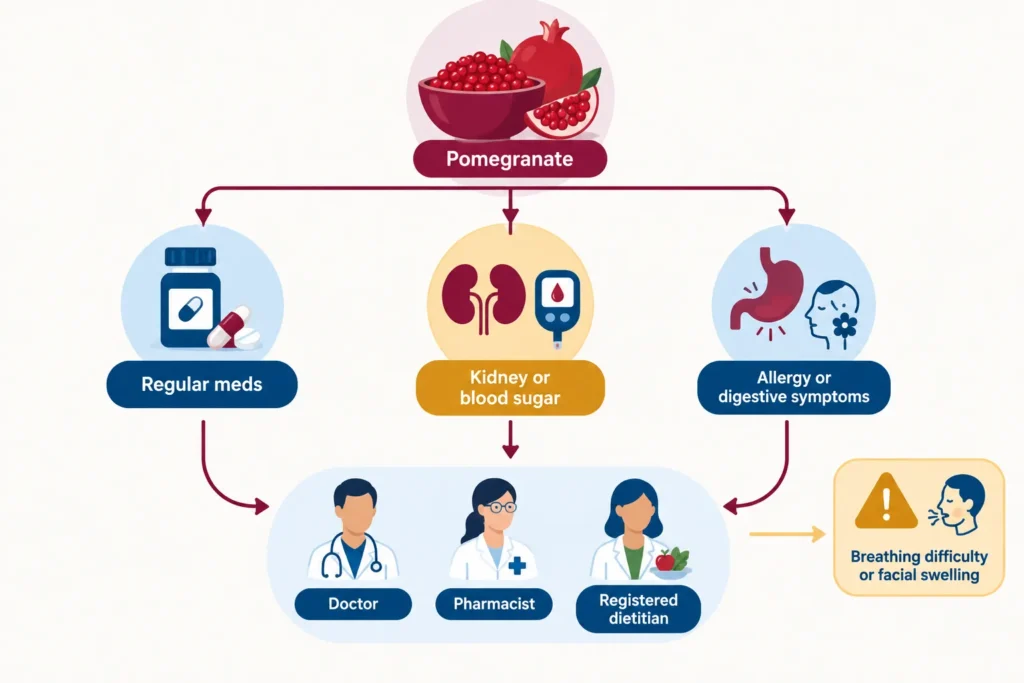
Safety flowchart advising people with medicines, medical conditions or allergy symptoms to seek professional guidance.

For most healthy adults, pomegranate can be included in a balanced diet. However, eating it daily may not suit everyone. The right quantity depends on your total diet, health conditions, medicines and digestive tolerance.

Whole pomegranate arils provide fibre, natural sugars and several plant compounds. Nutrition information in recognised databases such as the US Department of Agriculture FoodData Central also shows that the fruit supplies nutrients including vitamin C, vitamin K, folate and potassium. The exact amount varies with the variety, serving size and ripeness.

You May Also Like:How to Maximize Your Savings Account Benefits in India

Possible allergy and digestive discomfort

Pomegranate allergy appears to be uncommon, but it is possible. Stop eating the fruit and seek medical advice if you develop itching, hives, swelling, wheezing or repeated vomiting after consuming it.

Difficulty breathing or swelling of the lips, tongue or throat may indicate a serious allergic reaction. Such symptoms require urgent medical care.

Some people may experience bloating, abdominal discomfort, loose stools or acidity after eating a large portion. The fibre in the arils and the fruit’s natural acidity may contribute to these symptoms. Starting with a small serving and observing your response may help.

If you have irritable bowel syndrome, frequent acidity or another digestive condition, ask a qualified professional whether pomegranate is suitable for you. Individual tolerance can differ considerably.

Whole fruit, juice and concentrated products are not the same

A bowl of pomegranate arils is different from a large glass of juice. Whole arils retain dietary fibre, which can make them more filling and slow down how quickly the fruit is eaten.

Juice contains less fibre and is easier to consume in a large quantity. Packaged products may also contain added sugar, so check the ingredient list and nutrition label. A drink labelled as a “pomegranate beverage” may contain water, sugar or other fruit juices rather than only pomegranate juice.

Concentrated juice, extracts and supplements can provide larger amounts of certain compounds than an ordinary serving of fruit. They should not automatically be treated as equivalent to fresh pomegranate.

Pomegranate and medicines

Pomegranate foods and extracts may interact with some medicines, although evidence in humans is limited and not equally strong for every proposed interaction. The US National Center for Complementary and Integrative Health advises people to discuss pomegranate products with a healthcare professional when they take medicines.

Extra caution is sensible if you use medicines for blood pressure, blood clotting, cholesterol or another long-term condition. This does not mean everyone taking these medicines must avoid pomegranate. It means your doctor or pharmacist should consider the specific medicine, dose, product and quantity you intend to consume.

Do not stop or reduce a prescribed medicine because you have started eating pomegranate. Fruit, juice and supplements cannot replace treatment for high blood pressure, diabetes, high cholesterol or heart disease.

Before making pomegranate juice, extracts or supplements a routine, seek professional guidance if you:

  • take prescription or regular over-the-counter medicines;
  • use blood thinners or medicines that affect clotting;
  • take treatment for high or low blood pressure;
  • have diabetes or need to monitor carbohydrate intake;
  • have kidney disease or have been told to limit potassium;
  • have a known fruit allergy or a history of serious allergic reactions;
  • are pregnant, breastfeeding or planning a procedure or surgery; or
  • are following a medically prescribed diet.

A doctor, pharmacist or registered dietitian can help you decide whether fresh fruit, juice or a concentrated product is appropriate. In India, look for a qualified professional rather than relying only on advice from product sellers or social media posts.

Frequently Asked Questions

Can pomegranate be eaten every day?

Many healthy people can eat pomegranate regularly as part of a varied diet. There is no single daily portion that is ideal for everyone. A modest bowl of arils can be used as a fruit serving, depending on your appetite, calorie needs and the rest of your meals.

For example, you might add the arils to curd, oats, poha or a fruit bowl. Pomegranate does not need to be eaten daily to be beneficial, and it should not displace other fruits, vegetables, pulses, nuts and whole grains.

Is whole pomegranate better than pomegranate juice?

Whole arils are usually the more practical everyday choice because they retain fibre and require chewing. They are also easier to portion than juice.

Unsweetened juice can still fit into some diets, but it is less filling and can deliver natural sugar quickly. If you choose packaged juice, check for added sugar and note the serving size. People managing diabetes should consider the total carbohydrate content and follow guidance from their doctor or dietitian.

You May Also Like:Home Loan Balance Transfer in India: Benefits, Charges and When to Switch

Are pomegranate seeds edible?

Yes. The juicy arils and the small crunchy seeds inside them are edible. Eating them together provides the fibre found in the whole arils.

Some people prefer to chew the arils and discard the harder inner seed because of personal preference or dental discomfort. Young children should be supervised while eating pomegranate, as the arils may present a choking risk depending on the child’s age and eating ability.

Does pomegranate support heart health?

Pomegranate contains polyphenols and other plant compounds studied for their possible effects on cardiovascular health. Peer-reviewed human studies and systematic reviews have examined outcomes such as blood pressure and blood lipids, but findings are not consistent enough to treat pomegranate as a therapy.

Heart health depends much more on the overall pattern: eating vegetables, fruits, pulses and whole grains; limiting excess salt and highly processed food; staying active; avoiding tobacco; sleeping adequately; and taking prescribed medicines correctly. Pomegranate may be one fruit within that pattern, not a cure for heart disease.

Does eating pomegranate cause weight loss?

Pomegranate does not directly cause weight loss. No single food can guarantee fat loss. Whole arils may support a balanced eating plan because their fibre and chewing can help with fullness, but body weight is influenced by total energy intake, activity, sleep, health conditions and other factors.

Adding a large glass of juice on top of regular meals may increase calorie intake without providing the fullness of whole fruit. For weight management, portion size and the overall diet matter more than labelling pomegranate as a “fat-burning” food.

Who should seek professional advice before eating it regularly?

Speak to a doctor, pharmacist or registered dietitian if you take regular medication, have kidney disease, need to control blood sugar or potassium, experience recurring digestive symptoms, or have had an allergic reaction to fruit. Advice is also appropriate before using concentrated pomegranate extracts or supplements.

If you have a medical condition, the professional can assess your full diet and treatment plan. This is safer than making decisions based on a general list of possible benefits.

Summary

The health benefits of eating pomegranate daily should be viewed in the context of the complete diet. Pomegranate arils provide fibre, nutrients and plant compounds, but they are not a medicine and do not guarantee protection from disease.

For most people, whole arils are a better routine option than sweetened juice or concentrated products. Eat a comfortable portion, vary your fruit choices and pay attention to digestive symptoms. Anyone taking regular medicines or managing a medical condition should obtain individual advice before making pomegranate juice, extracts or supplements a daily habit.

Indian dietary guidance, including recommendations from the National Institute of Nutrition, supports eating a varied selection of fruits and vegetables rather than depending on one “superfood.” Pomegranate can be one optional and enjoyable part of that varied pattern.

Medical Disclaimer

This article is for general educational purposes only. It is not intended to diagnose, treat, cure or prevent any disease, and it is not a substitute for personalised medical, nutrition or pharmaceutical advice. Consult a qualified doctor, pharmacist or registered dietitian about your symptoms, medicines, medical conditions and dietary needs. Seek urgent medical help for breathing difficulty, facial or throat swelling, or other signs of a severe allergic reaction.

Share this article
KEEP READING

Related Articles

View all →

Comments

Leave a Comment

Health Benefits of Eating Pomegranate Daily: Nutrition, Evidence and Safety

Quick answer

The health benefits of eating pomegranate daily mainly come from its fibre, vitamins, minerals and naturally occurring plant compounds called polyphenols. Eating the edible seeds, known as arils, can support a balanced diet and may contribute to digestive and heart health.

Research has also examined whether pomegranate juice or extracts may affect blood pressure and other cardiovascular markers. Some findings are encouraging, but the evidence is limited and results are not guaranteed. Pomegranate does not prevent or treat heart disease, diabetes, cancer or any other medical condition.

Introduction

Pomegranate, or anar, is widely available across India. It can be eaten on its own, added to fruit chaat, mixed into curd or sprinkled over salads. Its sweet-tart arils make it an easy alternative to biscuits, sweets and other highly processed snacks.

However, claims about pomegranate often go much further than the evidence. Social media posts may describe it as a “superfood” that cleans the blood, removes toxins or cures serious diseases. These statements are misleading. No single fruit can compensate for an unhealthy diet or replace medical treatment.

A better way to understand pomegranate is to separate three things: its established nutritional value, early scientific findings and benefits supported by stronger clinical evidence. This distinction matters because a result found in a laboratory does not automatically mean that eating the fruit will produce the same result in the human body.

Pomegranate Nutrition and What the Evidence Shows

Evidence ladder comparing laboratory studies, animal studies, observational research, clinical trials and systematic reviews.

Which part of a pomegranate do we eat?

When a pomegranate is opened, it reveals many juice-filled arils. Each aril contains a small seed surrounded by red or pink flesh. The entire aril is edible, including the seed.

Eating whole arils provides fibre because the seed and surrounding plant structure remain intact. Pomegranate juice contains many of the fruit’s plant compounds, but usually has much less fibre. It can also be easier to consume a large amount of natural sugar quickly when the fruit is taken as juice.

The white membrane and outer rind are not normally eaten as part of the fruit. Supplements and extracts made from different parts of the plant are not nutritionally equivalent to a serving of fresh arils.

What nutrients does pomegranate provide?

According to nutrient data maintained by the US Department of Agriculture, 100 grams of raw pomegranate arils provide approximately:

Nutrient Approximate amount per 100 grams
Energy 83 kcal
Carbohydrate 18.7 grams
Dietary fibre 4 grams
Protein 1.7 grams
Potassium 236 milligrams
Vitamin C 10.2 milligrams
Folate 38 micrograms
Vitamin K 16.4 micrograms

Exact values can vary with the fruit’s variety, growing conditions, ripeness and storage. Serving size also matters. A small bowl of arils will not necessarily weigh 100 grams.

The fibre in whole arils adds bulk to the diet and supports normal bowel function. Fibre-containing foods can also help a meal or snack feel more satisfying. Pomegranate should still be one of several fibre sources, alongside vegetables, dals, beans, whole grains, nuts, seeds and other fruits.

Potassium is involved in normal nerve, muscle and heart function. Vitamin C supports normal immune function and helps the body form collagen. Folate is needed for cell division and the formation of genetic material, while vitamin K contributes to normal blood clotting and bone health.

These are established functions of the nutrients, not proof that pomegranate alone will produce a particular health outcome. The fruit contributes some of each nutrient, but it is not the only source and may not provide an entire day’s requirement.

What are pomegranate polyphenols?

Pomegranate contains naturally occurring polyphenols, including anthocyanins and ellagitannins. Anthocyanins help give the arils their red colour. These compounds are often described as antioxidants.

To understand that term, it helps to know about oxidation. Normal processes such as producing energy and responding to infection can create unstable molecules commonly called free radicals. External factors, including tobacco smoke and air pollution, can also contribute.

The body has its own systems for controlling these molecules. Antioxidants are substances that can take part in reactions that limit or neutralise some oxidative activity. However, the process is complex. Eating an “antioxidant-rich” food does not mean it directly removes all harmful molecules or protects a person from disease.

Researchers can test antioxidant activity in a laboratory dish, but the human body is different. Polyphenols may be broken down during digestion, transformed by gut bacteria and absorbed in varying amounts. A strong laboratory effect may therefore be weaker, different or absent in people.

How strong is the research?

Evidence about pomegranate comes from several types of studies, and they do not carry equal weight.

  • Laboratory studies examine cells or chemical reactions under controlled conditions. They can identify possible mechanisms but cannot establish that eating pomegranate prevents disease.
  • Animal studies help researchers explore biological effects. Their results may not apply to humans because doses, metabolism and study conditions differ.
  • Observational studies look for patterns among people. They can show an association, but they cannot easily separate pomegranate intake from other habits such as exercise, income, smoking or the overall diet.
  • Human clinical trials assign an intervention and measure outcomes. Larger, well-designed and independently repeated trials generally provide stronger evidence than small or short studies.
  • Systematic reviews and meta-analyses combine relevant trials. Their conclusions are only as reliable as the included studies and may remain uncertain when products, doses or participants differ greatly.

Many pomegranate studies have used juice, concentrated extracts or supplements rather than ordinary servings of fresh arils. This makes it difficult to apply every finding to someone eating a small bowl of anar each day.

Possible effects on blood pressure and heart-health markers

Some human trials and reviews have reported modest reductions in blood pressure after consuming pomegranate juice or related products. Researchers have proposed that polyphenols may influence blood-vessel function and processes linked with oxidation.

However, studies have varied in duration, serving size, product type and participant health. Some have included relatively few people, and not all results have been consistent. It is therefore not possible to promise that daily pomegranate will lower an individual’s blood pressure.

Research has also examined cholesterol, triglycerides, blood-vessel function and markers of inflammation. Findings remain mixed or insufficient for pomegranate to be recommended as a treatment. Changes in laboratory markers also do not automatically prove that a food prevents heart attacks or strokes.

For heart health, established measures remain more important: avoiding tobacco, staying physically active, sleeping adequately, managing stress where possible, and eating a varied diet with vegetables, fruits, pulses, whole grains and suitable sources of protein. People with high blood pressure or abnormal cholesterol should continue medicines and follow-up care prescribed by their clinician.

What can be said with confidence?

Pomegranate arils are a nutritious whole-fruit choice. They provide dietary fibre, potassium, vitamin C, folate, vitamin K and polyphenols. Choosing them instead of a highly processed snack can improve the overall quality and variety of a person’s diet.

It is not established that eating pomegranate every day prevents or treats heart disease, diabetes, cancer or another medical condition. Early laboratory findings and small clinical trials are useful for guiding further research, but they should not be presented as medical proof.

The most balanced conclusion is simple: pomegranate can be part of a healthy eating pattern, but it is not a cure. Its value comes from being a nutrient-containing fruit within the wider diet, not from any guaranteed or extraordinary effect.

Digestion, Fruit Versus Juice and Everyday Use

One of the practical health benefits of eating pomegranate daily is that the whole fruit can contribute fibre to your diet. However, the form in which you consume pomegranate matters. Eating the arils is different from drinking a glass of juice, especially when it comes to fibre, portion size and sugar concentration.

How Pomegranate Arils Support Digestion

Pomegranate arils are the juicy red coverings around the seeds. When you eat the arils, including the edible seeds, you get dietary fibre. Fibre supports normal bowel movement and helps food move through the digestive system.

Fibre also adds bulk to meals and may help you feel satisfied after eating. This can make whole pomegranate a useful addition to breakfast, a snack or a balanced meal. Its effect still depends on the rest of your diet. Eating pomegranate cannot make up for meals that regularly lack vegetables, pulses, whole grains and other fibre-rich foods.

If your current diet contains very little fibre, increase fibre-rich foods gradually. A sudden large increase may cause temporary gas, bloating or abdominal discomfort in some people. Drinking enough water is also important when increasing dietary fibre.

People with digestive conditions may need individual guidance. For example, a doctor or registered dietitian may temporarily recommend lower-fibre foods in certain medical situations. In such cases, general advice about eating whole fruit every day may not be appropriate.

Whole Pomegranate Versus Pomegranate Juice
Visual comparison of whole pomegranate arils and juice, highlighting fibre and portion awareness.

Whole arils and juice may come from the same fruit, but they are not nutritionally identical. The main difference is fibre. When pomegranate is juiced and strained, much of the fibrous material is removed. Some juice may retain a little pulp, but it usually provides less fibre than eating the arils.

Form Fibre Portion awareness Points to check
Whole arils Retain the edible seeds and fibre Chewing makes the portion easier to notice Include as part of total daily fruit intake
Freshly prepared juice Usually lower, especially if strained Several fruits may be used for one glass Keep the serving moderate and avoid adding sugar
Packaged juice Often contains little fibre Large bottles or packs can encourage bigger servings Read the label for added sugar, serving size and ingredients

Juice is also easier to consume quickly. You may drink the juice made from more fruit than you would normally sit down and eat. This can concentrate the fruit’s natural sugars and energy into one serving without providing the same fullness as whole arils.

This does not mean that pomegranate juice must always be avoided. A modest amount can fit into some diets. However, it should not automatically replace whole fruit. If digestive fibre and fullness are your priorities, whole arils are generally the more useful choice.

Packaged Juice and Added Sugar

Packaged products vary widely. A bottle with a pomegranate image may be pure juice, a blend of several fruit juices, a juice drink or a sweetened beverage containing only a limited amount of fruit. The front of the pack does not always tell the full story.

Check the ingredient list and nutrition label. Look for added sugar, syrup or other sweetening ingredients. Also check whether the product is entirely pomegranate juice or a mixed drink. “No added sugar” does not mean “sugar-free” because fruit juice naturally contains sugar.

Serving size also matters. The nutrition information may apply to one small serving even when the bottle contains two or more servings. Drinking the entire pack can therefore provide more sugar and energy than expected.

Fresh juice prepared at home or by a juice vendor can avoid packaged additives, but it is still low in fibre if it is heavily strained. Adding sugar, sugar syrup or sweetened masala also changes its nutritional value. “Fresh” does not automatically mean that portion size is irrelevant.

Simple Ways to Eat Pomegranate in Indian Meals

Pomegranate arils have a mildly sweet and tangy taste, so they work in both sweet and savoury dishes. They do not need complicated recipes or special health-food products.

  • With plain curd: Add a spoonful or two of arils to unsweetened curd. You can include roasted jeera powder or a little chopped mint for flavour.
  • On poha: Use arils as a topping after cooking. They add colour and texture without the need for a sweet chutney.
  • In a salad: Mix them with cucumber, tomato, carrot or sprouts. Avoid turning the salad into a high-salt or heavily sweetened dish.
  • In a fruit bowl: Combine pomegranate with seasonal fruits such as papaya, guava, apple or orange. Keep the overall quantity suited to your appetite.
  • As a simple snack: Eat the arils on their own instead of drinking them as juice. Preparing them in advance can make this more convenient.

Be mindful of what is added to the fruit. Large amounts of sugar, sweetened yoghurt, cream or syrup may work against the reason you chose a fruit-based snack. A little chaat masala may improve taste, but people limiting sodium should use salty seasonings carefully.

There Is No Universal Daily Portion

It is tempting to look for one ideal quantity of pomegranate that everyone should eat. In reality, an appropriate portion depends on appetite, total fruit consumption, energy needs, activity level and the rest of the day’s meals.

For example, someone who has already eaten several servings of fruit may not need a large bowl of pomegranate as well. A person with higher energy needs may comfortably include more. A smaller serving may suit someone who wants the flavour as part of curd, poha or salad rather than as a separate snack.

Portion awareness becomes especially important with juice because it is easy to drink quickly and may contain the equivalent of more fruit than expected. Whole arils require chewing and usually make the amount being consumed more visible.

People managing diabetes, kidney disease, digestive disorders or another medical condition should follow dietary advice from their treating professional. Blood sugar response can differ according to portion size, the form of the fruit and what is eaten with it. Do not replace prescribed treatment or a personalised food plan with general claims about pomegranate.

Common Claims That Need Caution

Daily pomegranate can be part of a balanced diet, but it does not guarantee weight loss. Body weight is influenced by overall food intake, activity, sleep, health conditions and many other factors. Adding pomegranate without considering the rest of the diet will not automatically reduce weight. Large servings of sweetened juice may also add more energy than expected.

Claims that pomegranate will definitely improve circulation should also be treated carefully. The fruit contains nutrients and plant compounds, but eating it cannot guarantee a particular change in blood flow or replace medical assessment for symptoms such as chest pain, leg pain, dizziness or breathlessness.

Pomegranate does not “detox” the body in the way many advertisements suggest. The liver, kidneys, lungs and digestive system already perform the body’s normal waste-processing functions. No single fruit or juice cleanses the body after overeating, alcohol consumption or an unhealthy routine.

Most importantly, pomegranate does not cure disease. It should not replace medicines, medical tests or treatment for diabetes, high blood pressure, heart disease, cancer or any other condition. Its sensible role is simpler: whole arils can add fibre, flavour and variety to an overall balanced diet, while juice requires closer attention to processing, added sugar and portion size.

Section 3: Safety, FAQs and Medical Disclaimer
Safety flowchart advising people with medicines, medical conditions or allergy symptoms to seek professional guidance.

For most healthy adults, pomegranate can be included in a balanced diet. However, eating it daily may not suit everyone. The right quantity depends on your total diet, health conditions, medicines and digestive tolerance.

Whole pomegranate arils provide fibre, natural sugars and several plant compounds. Nutrition information in recognised databases such as the US Department of Agriculture FoodData Central also shows that the fruit supplies nutrients including vitamin C, vitamin K, folate and potassium. The exact amount varies with the variety, serving size and ripeness.

Possible allergy and digestive discomfort

Pomegranate allergy appears to be uncommon, but it is possible. Stop eating the fruit and seek medical advice if you develop itching, hives, swelling, wheezing or repeated vomiting after consuming it.

Difficulty breathing or swelling of the lips, tongue or throat may indicate a serious allergic reaction. Such symptoms require urgent medical care.

Some people may experience bloating, abdominal discomfort, loose stools or acidity after eating a large portion. The fibre in the arils and the fruit’s natural acidity may contribute to these symptoms. Starting with a small serving and observing your response may help.

If you have irritable bowel syndrome, frequent acidity or another digestive condition, ask a qualified professional whether pomegranate is suitable for you. Individual tolerance can differ considerably.

Whole fruit, juice and concentrated products are not the same

A bowl of pomegranate arils is different from a large glass of juice. Whole arils retain dietary fibre, which can make them more filling and slow down how quickly the fruit is eaten.

Juice contains less fibre and is easier to consume in a large quantity. Packaged products may also contain added sugar, so check the ingredient list and nutrition label. A drink labelled as a “pomegranate beverage” may contain water, sugar or other fruit juices rather than only pomegranate juice.

Concentrated juice, extracts and supplements can provide larger amounts of certain compounds than an ordinary serving of fruit. They should not automatically be treated as equivalent to fresh pomegranate.

Pomegranate and medicines

Pomegranate foods and extracts may interact with some medicines, although evidence in humans is limited and not equally strong for every proposed interaction. The US National Center for Complementary and Integrative Health advises people to discuss pomegranate products with a healthcare professional when they take medicines.

Extra caution is sensible if you use medicines for blood pressure, blood clotting, cholesterol or another long-term condition. This does not mean everyone taking these medicines must avoid pomegranate. It means your doctor or pharmacist should consider the specific medicine, dose, product and quantity you intend to consume.

Do not stop or reduce a prescribed medicine because you have started eating pomegranate. Fruit, juice and supplements cannot replace treatment for high blood pressure, diabetes, high cholesterol or heart disease.

Before making pomegranate juice, extracts or supplements a routine, seek professional guidance if you:

  • take prescription or regular over-the-counter medicines;
  • use blood thinners or medicines that affect clotting;
  • take treatment for high or low blood pressure;
  • have diabetes or need to monitor carbohydrate intake;
  • have kidney disease or have been told to limit potassium;
  • have a known fruit allergy or a history of serious allergic reactions;
  • are pregnant, breastfeeding or planning a procedure or surgery; or
  • are following a medically prescribed diet.

A doctor, pharmacist or registered dietitian can help you decide whether fresh fruit, juice or a concentrated product is appropriate. In India, look for a qualified professional rather than relying only on advice from product sellers or social media posts.

Frequently Asked Questions

Can pomegranate be eaten every day?

Many healthy people can eat pomegranate regularly as part of a varied diet. There is no single daily portion that is ideal for everyone. A modest bowl of arils can be used as a fruit serving, depending on your appetite, calorie needs and the rest of your meals.

For example, you might add the arils to curd, oats, poha or a fruit bowl. Pomegranate does not need to be eaten daily to be beneficial, and it should not displace other fruits, vegetables, pulses, nuts and whole grains.

Is whole pomegranate better than pomegranate juice?

Whole arils are usually the more practical everyday choice because they retain fibre and require chewing. They are also easier to portion than juice.

Unsweetened juice can still fit into some diets, but it is less filling and can deliver natural sugar quickly. If you choose packaged juice, check for added sugar and note the serving size. People managing diabetes should consider the total carbohydrate content and follow guidance from their doctor or dietitian.

Are pomegranate seeds edible?

Yes. The juicy arils and the small crunchy seeds inside them are edible. Eating them together provides the fibre found in the whole arils.

Some people prefer to chew the arils and discard the harder inner seed because of personal preference or dental discomfort. Young children should be supervised while eating pomegranate, as the arils may present a choking risk depending on the child’s age and eating ability.

Does pomegranate support heart health?

Pomegranate contains polyphenols and other plant compounds studied for their possible effects on cardiovascular health. Peer-reviewed human studies and systematic reviews have examined outcomes such as blood pressure and blood lipids, but findings are not consistent enough to treat pomegranate as a therapy.

Heart health depends much more on the overall pattern: eating vegetables, fruits, pulses and whole grains; limiting excess salt and highly processed food; staying active; avoiding tobacco; sleeping adequately; and taking prescribed medicines correctly. Pomegranate may be one fruit within that pattern, not a cure for heart disease.

Does eating pomegranate cause weight loss?

Pomegranate does not directly cause weight loss. No single food can guarantee fat loss. Whole arils may support a balanced eating plan because their fibre and chewing can help with fullness, but body weight is influenced by total energy intake, activity, sleep, health conditions and other factors.

Adding a large glass of juice on top of regular meals may increase calorie intake without providing the fullness of whole fruit. For weight management, portion size and the overall diet matter more than labelling pomegranate as a “fat-burning” food.

Who should seek professional advice before eating it regularly?

Speak to a doctor, pharmacist or registered dietitian if you take regular medication, have kidney disease, need to control blood sugar or potassium, experience recurring digestive symptoms, or have had an allergic reaction to fruit. Advice is also appropriate before using concentrated pomegranate extracts or supplements.

If you have a medical condition, the professional can assess your full diet and treatment plan. This is safer than making decisions based on a general list of possible benefits.

Summary

The health benefits of eating pomegranate daily should be viewed in the context of the complete diet. Pomegranate arils provide fibre, nutrients and plant compounds, but they are not a medicine and do not guarantee protection from disease.

For most people, whole arils are a better routine option than sweetened juice or concentrated products. Eat a comfortable portion, vary your fruit choices and pay attention to digestive symptoms. Anyone taking regular medicines or managing a medical condition should obtain individual advice before making pomegranate juice, extracts or supplements a daily habit.

Indian dietary guidance, including recommendations from the National Institute of Nutrition, supports eating a varied selection of fruits and vegetables rather than depending on one “superfood.” Pomegranate can be one optional and enjoyable part of that varied pattern.

Medical Disclaimer

This article is for general educational purposes only. It is not intended to diagnose, treat, cure or prevent any disease, and it is not a substitute for personalised medical, nutrition or pharmaceutical advice. Consult a qualified doctor, pharmacist or registered dietitian about your symptoms, medicines, medical conditions and dietary needs. Seek urgent medical help for breathing difficulty, facial or throat swelling, or other signs of a severe allergic reaction.


Leave a Comment