

What Is Web3?
Web3 is a broad term for internet services that use technologies such as blockchain networks, crypto tokens, digital wallets and decentralized protocols. Its central idea is that users may be able to hold digital assets, make payments or interact with online services without depending entirely on one company’s database.
However, Web3 has no universally accepted definition. Different projects use the term in different ways. A service calling itself “Web3” does not automatically mean that it is decentralized, secure or controlled by its users.
Understanding Web3 and the Internet’s Evolution
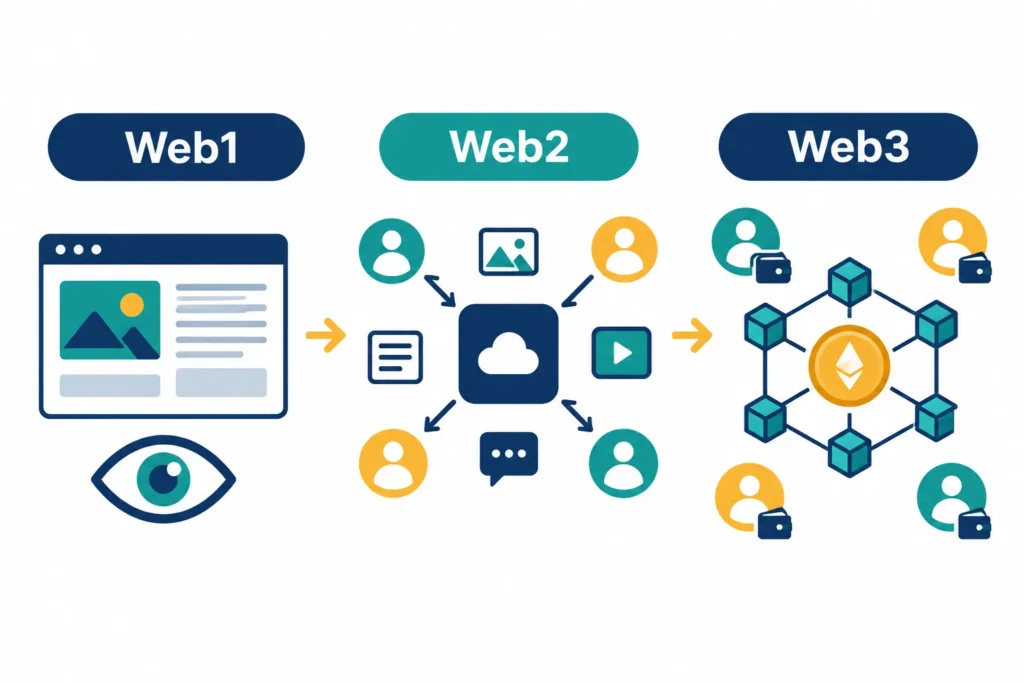
To understand what Web3 is, it helps to look at a simplified version of how the internet has evolved. This evolution is often described in three stages: Web1, Web2 and Web3.
These are not strict technical eras with clear start and end dates. Web1 websites still exist, Web2 remains the dominant model, and Web3 technologies can operate alongside both. The labels are mainly used to explain changing ideas about how people publish, interact and control digital assets online.
Web1: The Mostly Read-Only Internet
Web1 generally refers to the early public internet, when many websites were simple pages created by businesses, institutions or individuals. Visitors could read the information, but they had limited ways to contribute.
For example, an early financial website might have displayed company information, market updates or contact details. A visitor could read the content but might not have been able to create a profile, post a comment or make a payment directly through the website.
This is why Web1 is often described as the “read-only” internet. That description is simplified because interactive services did exist, but publishing was usually more difficult and participation was limited compared with today.
Web2: The Read-and-Write Internet
Web2 describes the interactive internet most people use every day. Users can read content and also write, upload, comment, shop, pay, stream and communicate.
Social media platforms, online marketplaces, food delivery apps, video services and digital payment apps are familiar Web2 examples. A user creates an account, and the company operating the service usually manages the account details, transaction records and platform rules.
Consider an Indian shopper using an e-commerce app. The shopper may have a profile, saved addresses, reward points and an order history. These records are normally stored in databases controlled by the company or its technology providers. The company can decide how reward points work, whether they can be transferred and when they expire.
Web2 made the internet far more useful and participative. At the same time, it placed substantial control in the hands of platform operators. A company may control access to accounts, decide what content is permitted, change service terms and maintain the central database.
This central control is not automatically bad. It can make services faster, simpler and easier to support. It can also provide users with familiar options such as password recovery, customer care and transaction reversal. However, users must generally trust the platform to maintain accurate records and apply its rules fairly.
Web3: The Idea of Read, Write and Own
Web3 is often presented as a “read, write and own” version of the internet. In this model, selected digital records or assets can be maintained through blockchain networks rather than only inside a company’s private database.
The word “own” needs careful explanation. In a Web3 service, ownership may mean that a user controls a token through a digital wallet. It may also mean that the token can be sent to another compatible wallet or used across services that choose to support it.
For instance, a person may control a blockchain-based game item represented by a token. The wallet’s private key can allow the person to transfer that token without asking the game company to edit its internal database.
But holding a token does not necessarily mean that the user owns part of the company, the platform or its underlying software. It does not automatically provide copyright over an image, control over personal data, voting rights or any other legal right. Those rights depend on the project’s terms, the token design and applicable law.
A token can also remain in a wallet even if the associated website closes, but that does not guarantee that the token will remain valuable or useful. If no working service recognises it, practical use may be limited.
Web2 and Web3: A Practical Comparison
Web2 and Web3 use different methods to manage accounts, assets and online activity. Neither model is automatically better in every situation.
| Area | Typical Web2 approach | Possible Web3 approach |
|---|---|---|
| Account access | Email, mobile number and password managed by a platform | A digital wallet may be used to sign in and approve actions |
| Identity | Identity is usually linked to a company-controlled account | A wallet address or blockchain-based credential may be used |
| Storage | Records are generally kept in company-managed databases | Selected records may be stored on a blockchain, while other data remains off-chain |
| Payments | Cards, bank transfers, UPI or platform balances may be used | Crypto tokens may be transferred through a blockchain network |
| Governance | The company generally sets and changes the rules | Rules may be built into software or influenced by token-based voting |
| Control | The platform can often restrict accounts and edit internal records | Users may directly control wallet-held assets, although interfaces and developers may retain influence |
These are broad patterns, not fixed rules. A Web2 service can offer user-friendly protections and transparent governance. A Web3 service can still depend heavily on one company, founder or development team.
Example: A Conventional Online Game and a Blockchain Game
Imagine a conventional online game in which a player buys a special cricket bat for an in-game character. The player’s account and the item are recorded in the gaming company’s database.
The company decides whether the item can be sold, transferred or used in another game. If the player loses access to the account, customer support may help restore it. If the company closes the game, the item may stop working entirely.
Now consider a blockchain-based version. A selected game item might be represented by a token held in the player’s digital wallet. The blockchain records which wallet controls the token. The player may be able to transfer it to another wallet or use it in another compatible service.
Even then, the whole game is unlikely to exist on the blockchain. The website interface, graphics, videos, customer support, player messages and some gameplay data may remain on conventional servers. The company may also control updates, decide which tokens the game recognises or stop maintaining the application.
This distinction is important because decentralization can exist at one level but not at every level. A blockchain protocol may operate through many independent computers, while the main website is hosted by one provider. The underlying token may be transferable, while one development team controls the most popular app used to access it.
Similarly, a project may publish automated rules through smart contracts but retain special administrative powers. Users should therefore look beyond the Web3 label and ask what is actually decentralized, who can change the rules, where important data is stored and what happens if the main company disappears.
Web3 is closely connected to crypto assets and blockchain technology, but the terms are not identical. For broader context on tokens, wallets and crypto risks, see Cryptocurrency in India: A Complete Beginner’s Guide to Crypto. To understand the shared digital records behind many Web3 services, see What Is Blockchain Technology? How It Works and Its Real-World Uses.
How Web3 Works: Blockchains, Wallets, dApps and Tokens
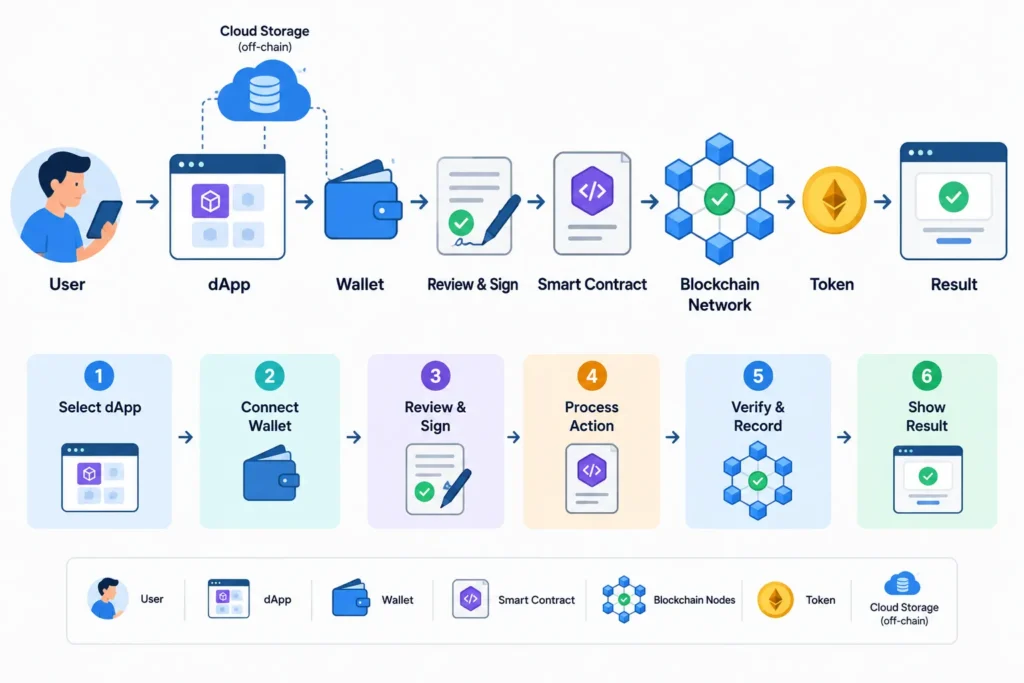
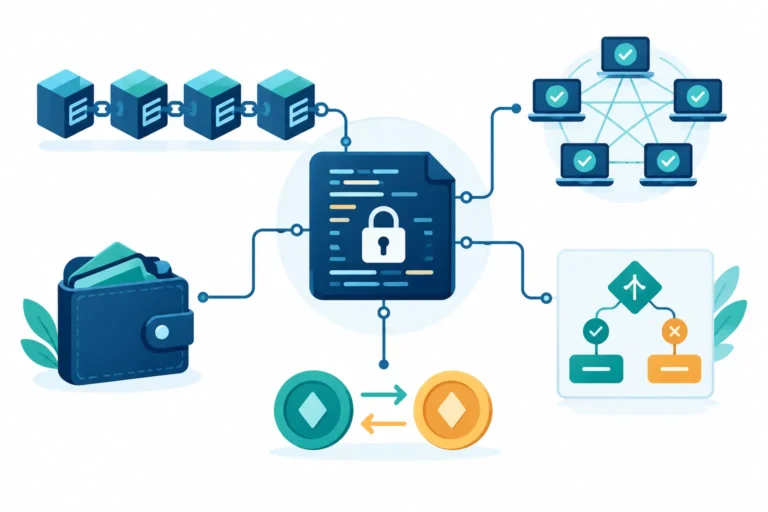
To understand what is Web3, it helps to look at its main building blocks. These include blockchain networks, crypto wallets, decentralized applications, smart contracts and digital tokens.
These parts can work together, but Web3 is not one single system. Different networks use different rules, fees, technologies and governance models. Ethereum is a common example because many Web3 applications have been built on it, but Web3 is not limited to Ethereum.
Blockchain Networks Maintain Shared Records
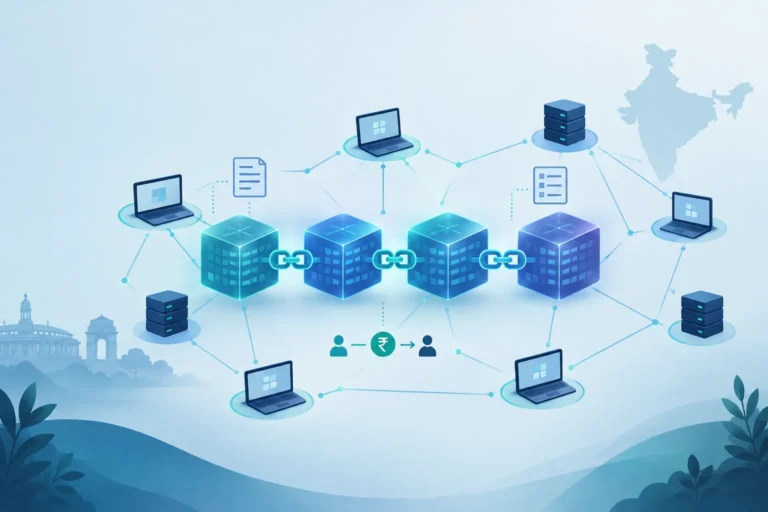
A blockchain is a shared digital record maintained by a network of computers. Instead of one company keeping the only official database, multiple participants store or verify the record according to the network’s rules.
When someone requests a transaction, the network checks whether it follows those rules. A valid transaction may then be added to a block or otherwise recorded in the network’s transaction history. The exact process differs between blockchains.
For example, if a person sends cryptocurrency to another public address, the blockchain can record the amount sent, the sending address, the receiving address and other transaction details. Public blockchains generally allow anyone to view this activity, although a public address does not always reveal the owner’s real name.
Blockchain records can be difficult to change after confirmation. However, this does not mean every Web3 application is fully decentralised, private or free from manipulation. A project may still depend on a company-controlled website, a small developer team, external data providers or centralised cloud services.
What Cryptocurrency Does in Web3
Cryptocurrency can serve different purposes within a Web3 network or application. Its role depends on the project design.
- Paying network fees: Users may need to pay a fee when sending assets or interacting with a smart contract.
- Transferring value: A token may be sent directly between compatible wallet addresses.
- Using an application: Some applications require tokens for access, purchases, collateral or other functions.
- Supporting incentives: A network or application may reward certain users, validators, developers or service providers with tokens.
- Participating in governance: Some projects allow token holders to vote on selected proposals.
These functions are not universal. A token that pays fees on one blockchain may have no role on another. Holding a token also does not guarantee profit, income, voting power or legal rights.
Wallets and Public Addresses
A crypto wallet is a tool used to interact with blockchain networks. It may be a mobile app, browser extension, desktop program or dedicated hardware device.
A wallet does not usually hold cryptocurrency in the same way that a physical wallet holds cash. The assets are recorded on the blockchain. The wallet manages the cryptographic information needed to control an address and authorise actions.
Each wallet can have one or more public addresses. A public address works somewhat like an account identifier that other people can use to send compatible assets. It is generally safe to share an address when needed, but anyone may be able to examine its public transaction history.
The private key or recovery phrase is different. It can provide control over the wallet and must be protected. Anyone who obtains this information may be able to transfer the assets. A genuine application generally does not need a user’s recovery phrase merely to connect a wallet.
For a fuller explanation of custody, software wallets, hardware wallets and recovery phrases, readers can refer to Crypto Wallets in India: Types, How They Work and How to Choose One.
Connecting a Wallet Is Not the Same as Making a Payment
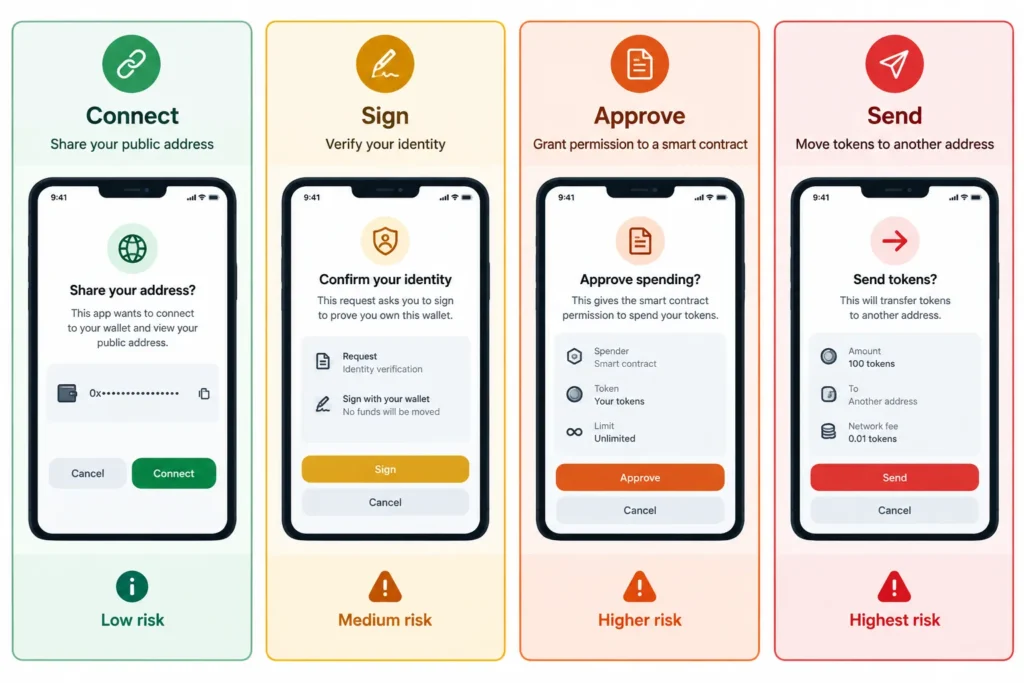
A Web3 application may ask a user to connect a wallet. In many cases, the initial connection only allows the application to view the selected public address and publicly available blockchain data linked to it. Connecting alone does not normally transfer funds.
However, the next request may have a different effect. Users should read each wallet prompt carefully.
- Connecting: Usually shares a public address with the application.
- Signing a message: Can prove that the user controls an address or approve login terms. A signature should not be treated as harmless without checking the message and website.
- Approving token access: May give a smart contract permission to use a specified token, sometimes up to a set limit.
- Submitting a transaction: Can transfer assets, interact with a smart contract or change blockchain data, usually with a network fee.
A malicious or misleading approval can expose funds even if the user never shares the recovery phrase. Users should check the application, requested permission, token amount, receiving address and network before confirming an action.
Wallet-Based Identity and Authentication
Web3 applications can use a wallet as a form of digital identity. Instead of creating a password, a user may sign a message to show control of a public address.
The application can verify the signature using cryptography. This may allow the user to log in without sending a private key to the application. The public address becomes the identifier, while the signature acts as proof of control.
This approach can reduce dependence on conventional passwords, but it creates a different responsibility. If users lose their recovery information and have no backup method, they may lose access. If another person gains control of the wallet, that person may be able to appear as the wallet owner.
What Is a Decentralized Application?
A decentralized application, commonly called a dApp, is an application that uses a blockchain or smart contracts for at least part of its operation.
A dApp often has a familiar website or mobile interface. Behind that interface, it may use several components:
- Smart contracts that define and process certain actions
- Blockchain data showing balances, ownership or transaction history
- A wallet for identity, signatures and transaction approval
- Conventional servers or databases for features that are not stored on-chain
- Cloud or distributed storage for images, documents and other large files
Therefore, calling an application a dApp does not necessarily mean every part is decentralised. Its website may go offline even if its smart contracts remain on the blockchain. A development team may also retain control over updates, fees or important administrative settings.
How Smart Contracts Process Actions
A smart contract is code deployed on a blockchain. It processes defined actions when users or other contracts interact with it.
For example, a smart contract might exchange one token for another, record an in-game item, distribute funds according to fixed rules or count votes on a proposal. Once a user submits a transaction, the network executes the contract according to its code and current data.
Smart contracts are not automatically intelligent, fair or legally enforceable. They can contain programming errors, unsuitable assumptions or hidden administrative powers. They may also behave unexpectedly when market conditions or external data change.
Blockchain transactions can be difficult or impossible to reverse. A bug may therefore cause serious consequences before developers can respond. The separate guide Smart Contracts Explained: How They Work, Uses and Risks examines these issues in more detail.
Network Fees and Crypto Payments
Blockchain activity often requires a network fee. The fee pays for the computing and network resources used to process a transaction. It may apply when sending cryptocurrency, buying a digital item, exchanging tokens or interacting with a smart contract.
Fees can change depending on the network, the complexity of the action and current demand. A failed transaction may also consume a fee on some networks because computers still performed work while processing it.
Before approving a payment, users should check both the amount being transferred and the estimated fee. They should also confirm that the recipient supports the correct token and blockchain. Sending an asset through an incompatible network can result in loss or a difficult recovery process.
NFTs: Identifiable Digital Tokens
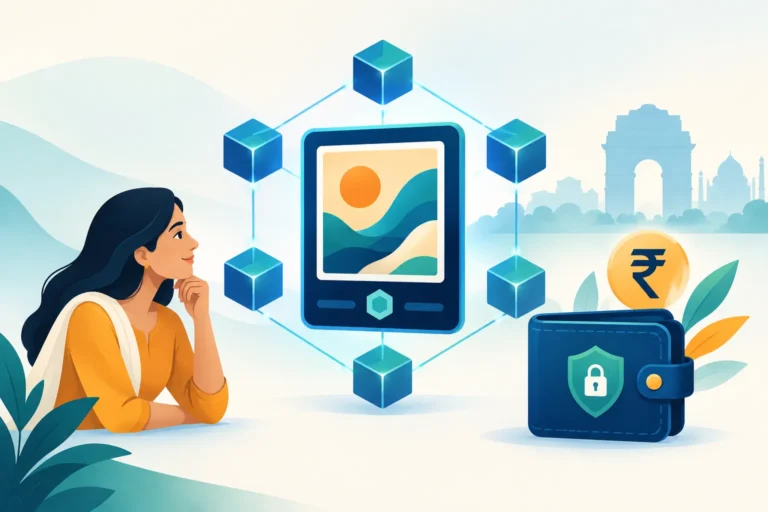
A non-fungible token, or NFT, is a unique or separately identifiable token recorded on a blockchain. An NFT may represent access to a service, a digital collectible, an in-game item, a membership feature or another project-defined benefit.
Owning an NFT does not automatically provide copyright over an image or other work connected to it. It also does not automatically provide company shares, ownership of a physical asset or a legally enforceable claim.
The holder’s rights depend on the project’s terms, technical design, governing documents and applicable law. The linked file may also be stored outside the blockchain and could become unavailable. These distinctions are covered further in NFTs Explained: What They Are, How They Work and Their Risks.
DeFi and DAOs
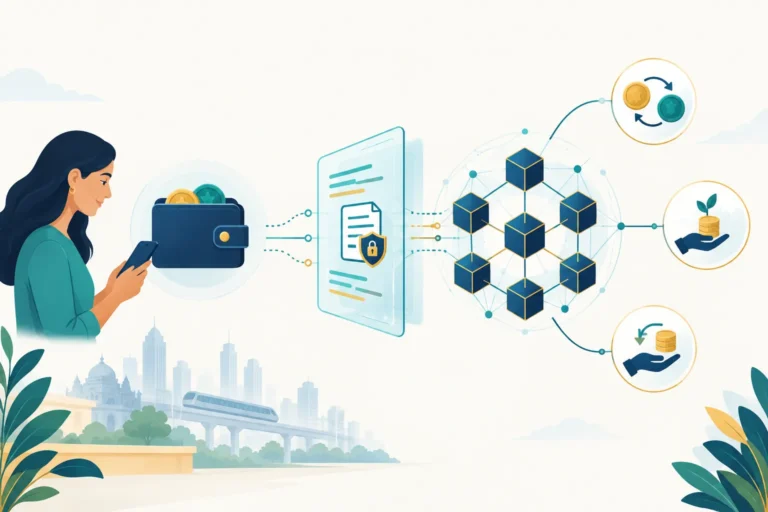
Decentralized finance, or DeFi, refers to blockchain-based financial applications. Depending on the application, users may be able to exchange tokens, provide assets to a liquidity pool, borrow against collateral or use other financial functions through smart contracts.
DeFi can involve smart-contract failures, volatile assets, complex fees, liquidation risk and misleading token incentives. Beginners can explore the subject separately in What Is DeFi? Decentralized Finance Explained for Beginners.
A decentralized autonomous organisation, or DAO, is a group that may coordinate decisions through published rules, proposals and voting. Voting power may be based on token holdings, membership or another system.
The name does not guarantee equal or decentralised control. A small number of founders, large token holders, developers or administrators may still have substantial influence. Legal status and member rights can also be unclear.
Where These Building Blocks May Be Used
Web3 tools may be used in financial applications, games, digital collectibles, community governance and wallet-based digital identity. One application may combine several uses, such as a game that uses NFTs for items, tokens for rewards and a DAO for selected community decisions.
The important point is that each project makes its own choices. Users should examine what is actually stored on the blockchain, who controls the application, what permissions a wallet request creates and what rights a token genuinely provides.
Benefits, Limitations, Safety and Web3 FAQs
Web3 may change how people hold digital assets and interact with online applications. However, it also introduces new costs, responsibilities and risks. Understanding both sides is essential before connecting a wallet or approving a transaction.
Potential Benefits of Web3
Some Web3 systems allow users to control wallet-held assets directly. For example, a person may hold a token in a self-custody wallet instead of leaving it with an exchange or platform. The wallet holder can generally transfer the asset without asking that platform for permission, provided the relevant blockchain remains available.
This control is not absolute ownership in every situation. The token may depend on a smart contract, administrator, issuer, website or external data provider. Its legal status may also be uncertain. Control of a wallet key is therefore important, but it does not remove every dependency.
Another potential benefit is auditability. Activity recorded on a public blockchain can often be viewed and checked by anyone. Users may inspect wallet transfers, contract activity and token supply information. This can make certain actions more transparent than records held only in a private company database.
Public records do not guarantee that an application is honest or financially sound. A blockchain may accurately show that tokens moved, but it cannot automatically prove that marketing claims are true or that the people behind a project are trustworthy.
Web3 applications can also be composable. This means one application may be able to interact with another application or use an existing smart contract. Developers can combine blockchain-based tools in ways that resemble building with common software components.
Some systems may reduce reliance on a particular intermediary. For instance, a smart contract may perform a defined exchange or transfer without a bank or marketplace processing each step. Even then, users may still depend on wallet software, internet access, blockchain validators, websites, hosting providers and other services.
Practical Limitations
Web3 can be difficult for beginners. Wallet addresses are long, interfaces may use unfamiliar terms, and a simple mistake can have serious consequences. Users may be asked to select a network, estimate transaction fees or approve a smart-contract interaction without fully understanding what will happen.
Common limitations include:
- Transaction fees: Users may need to pay a network fee, sometimes called a gas fee. The amount can change with network demand.
- Congestion: Busy blockchains may become slower or more expensive to use.
- Scalability limits: Some networks cannot process large numbers of transactions quickly without additional systems or trade-offs.
- Public transaction histories: Transfers may remain visible permanently. If a wallet address is connected to a person’s identity, their activity may be easier to trace.
- Limited recovery: A mistaken transfer or lost recovery phrase may be difficult or impossible to fix.
- Technical vulnerabilities: Smart contracts can contain coding errors or flawed economic designs.
- Accessibility problems: Services may be hard to use for people with limited technical knowledge, unsuitable devices or unreliable internet access.
- Centralized dependencies: A supposedly decentralized service may still rely on an exchange, website, administrator, hosting provider or external data feed.
Web3 is not automatically private. A wallet address may be pseudonymous, but its transactions can be public. Information from exchanges, social media, payments or other sources may connect that address to a real person.
It is also not automatically secure, democratic or user-owned. A small group may control contract upgrades, governance votes or important infrastructure. Token-based voting can give greater influence to holders with more tokens. A project’s use of blockchain technology does not by itself make its rules fair.
Scams and Security Risks
Web3 users are frequent targets for scams because wallet transactions may be irreversible. Criminals often create urgency, promise rewards or imitate trusted services to make a user sign a harmful request.
Major risks include phishing messages, copied websites, fake decentralised applications, deceptive tokens and malicious wallet approvals. A compromised website interface may also display a harmful transaction even if the underlying project was previously legitimate.
An approval can be especially dangerous. Some approvals allow a smart contract to spend a particular token from the user’s wallet. If the approval is unlimited or granted to a malicious contract, the attacker may be able to remove more tokens later.
No genuine wallet support service needs your recovery phrase or seed phrase. Anyone who obtains it may be able to control the wallet and transfer its assets. Do not type it into a website, send it through a message or share it during a support call.
Blockchain transactions can be difficult or impossible to reverse. There may be no bank or customer-care team with the power to cancel a completed transfer. Vulnerable contracts, harmful permissions and transfers to the wrong address can therefore result in permanent loss.
Checklist Before Connecting a Wallet or Signing
- Confirm the application: Check that you are using the intended service, not a copied website or advertisement leading to an imitation.
- Understand the request: Identify whether you are signing in, approving token access, making a transfer or interacting with a contract.
- Check the wallet account: Make sure the selected account is the one you intend to use.
- Verify the network: Confirm whether the transaction is on Ethereum or another network supported by the application.
- Review the recipient and amount: Compare wallet addresses carefully and consider using a small test transfer when appropriate.
- Inspect the fee: Check the estimated network fee and ensure you understand the total cost.
- Limit permissions: Avoid unlimited token approvals where a smaller allowance is possible.
- Protect the recovery phrase: Never disclose it to an application, support agent, friend or caller.
- Stop if unclear: Reject the request if you cannot understand what the signature or transaction will do.
A wallet warning is helpful, but it cannot identify every dangerous transaction. Beginners should treat signatures with the same care as financial instructions. For a broader safety discussion, see Cryptocurrency Risks: Common Dangers and How to Invest Safely.
Web3 Adoption and the Indian Context
Web3 adoption is still evolving. There are active applications for payments, trading, games, digital collectibles, identity experiments and online communities. There are also many early-stage projects that may not attract lasting use.
Usability, transaction costs, scalability, consumer protection and regulation remain developing areas. It is not certain that every online service will move to Web3 or that blockchain-based applications will replace Web2 platforms. In practice, many products may continue to combine centralized and decentralized components.
Indian users must also consider current legal, regulatory and tax requirements. These rules can change, and the treatment of one activity may differ from another. Do not rely on a project’s general claims about decentralisation or global access. Check current information from authoritative Indian sources or consult a qualified tax, legal or financial professional for your circumstances.
Frequently Asked Questions
What is Web3?
Web3 is a broad term for internet services that use blockchains, digital wallets, tokens and smart contracts. The aim is often to let users interact with shared networks or hold certain digital assets directly, but there is no single official definition.
How is Web3 different from Web2?
Web2 mainly relies on company-controlled platforms, accounts and databases. Web3 applications may record assets or actions on blockchains and use wallets for access. However, many Web3 services still depend on centralized websites, companies and infrastructure.
Does Web3 require cryptocurrency?
Many Web3 applications require a blockchain’s native cryptocurrency to pay transaction fees. Some also use tokens for access, payments or governance. Other applications may hide these steps from users, so cryptocurrency is common but not always visible.
What is a dApp?
A dApp, or decentralised application, is an application that uses one or more smart contracts or blockchain networks for part of its operation. Its website and other supporting services may still be centrally managed.
Is Web3 safe?
Web3 is not automatically safe. Security depends on the blockchain, smart contracts, wallet, interface and the user’s actions. Scams, coding flaws, malicious approvals and lost recovery phrases can lead to asset loss.
Do users truly own their digital assets?
Users may directly control assets held through their wallet keys, but control is not always the same as complete legal or practical ownership. Assets may depend on an issuer, smart contract, administrator, external file or platform. Losing wallet access can also make them unusable.
Summary
Web3 can provide direct wallet control, auditable blockchain records, composable applications and less reliance on certain intermediaries. It also brings difficult interfaces, variable fees, public transaction histories, technical vulnerabilities and limited recovery options.
Before using a Web3 application, verify the service, understand every permission, review the network, recipient, amount and fee, and never reveal your recovery phrase. Web3 remains an evolving mix of working applications, experiments and supporting infrastructure—not an automatic guarantee of privacy, security, decentralisation or ownership.
Comments