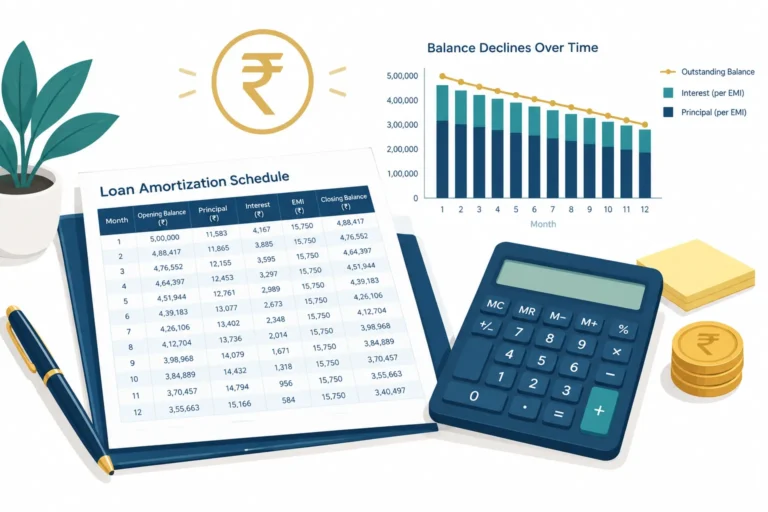
What Happens When You Miss an EMI in India?

Missing an EMI can lead to charges, credit reporting and lender follow-up, but the outcome depends on your loan and the length of the delay. This guide explains what may happen and what to do…

What Happens When You Miss an EMI in India?

Understanding the Immediate Consequences of a Missed EMI

Missing an EMI can make your loan account overdue. The lender may contact you, attempt another debit, and apply charges or additional interest according to the loan agreement and applicable rules. The missed payment may also be reported to credit information companies and could affect your credit history. The exact missed EMI consequences depend on why the payment failed, how long it remains unpaid, the type of loan, your lender’s policies, and your previous repayment record.

A missed EMI can be worrying, especially when it happens because of a temporary cash shortage, a salary delay, or a technical problem with the bank mandate. However, one failed debit does not mean that every borrower will face the same outcome.

The first step is to find out whether the EMI is still unpaid or whether it was paid shortly after the due date. You should also check messages from the lender, your bank statement, the loan agreement, and the lender’s official payment channels.

Do not ignore the issue even if you expect money to arrive soon. Contacting the lender early can help you understand the amount due, available payment methods, applicable charges, and the current status of your loan account.

What Does It Mean to Miss an EMI?

An EMI is considered missed when the instalment due under the loan agreement is not received by the lender on the scheduled date. The account may then show the instalment as overdue until the required payment is received and adjusted.

However, a failed automatic debit and an unpaid EMI are not always exactly the same thing.

For example, an EMI debit may fail because:

  • There was not enough money in the linked bank account.
  • The standing instruction, NACH mandate, or auto-debit mandate was inactive or had expired.
  • The borrower changed bank accounts without updating the lender.
  • The bank or lender experienced a technical issue.
  • The account was frozen, closed, or subject to a transaction restriction.
  • The borrower paid through another channel, but the payment was not yet reflected in the loan account.

If the debit fails but you make the payment promptly through an approved method, the delay may be limited. Even then, charges may apply under the loan agreement, and the lender’s records may still show that the EMI was not received on the original due date.

If no payment is made after the debit failure, the EMI remains unpaid. The amount continues to be overdue, and the consequences can become more serious as the delay continues.

It is also important to distinguish a missed EMI from a partial payment. Paying only part of the amount due may not regularise the loan account. Depending on how the lender applies the payment, an outstanding balance may remain overdue.

Always ask for confirmation after making a late or alternative payment. A bank debit entry alone may not prove that the lender has correctly credited the money to your loan account.

What Happens Immediately After a Missed EMI?
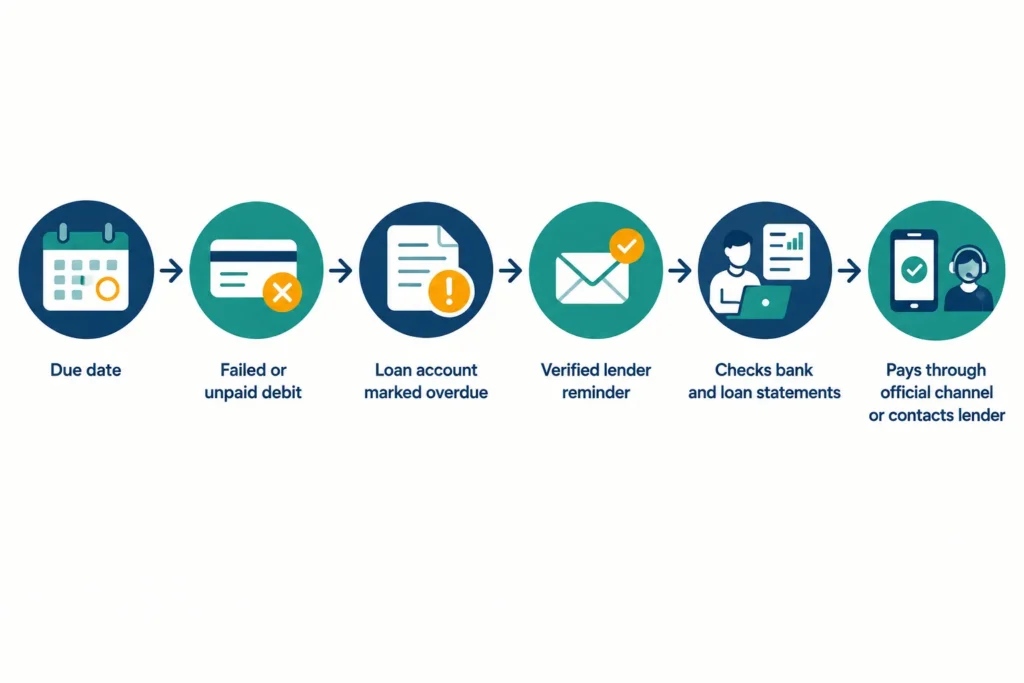
Flowchart of the typical steps after an EMI is missed, from failed debit to payment or lender contact

When an EMI is not received, the lender’s system may mark the installment as overdue. This is an account status showing that a scheduled payment remains outstanding. It does not automatically mean that the lender will take severe recovery action immediately.

The lender may send a reminder through SMS, email, an app notification, a phone call, or another communication channel registered with the account. The message may ask you to maintain sufficient balance, pay through an authorised channel, or contact customer service.

Some lenders may attempt the automatic debit again, while others may require the borrower to make a separate payment. There is no single re-debit process that applies to every lender or every loan. Repeated debit attempts may also create separate bank-side consequences if the account continues to have insufficient funds.

The practical steps after receiving a missed-payment alert are:

  1. Check whether the EMI was actually debited from your bank account.
  2. Check the loan statement or lender’s app to see whether the payment was credited.
  3. Confirm the overdue amount and the accepted payment method with the lender.
  4. Keep enough money available if the lender confirms that another debit will be attempted.
  5. Save the receipt, transaction reference, and written communication.

Be careful about payment requests received through unknown numbers or personal bank accounts. Use the lender’s official app, website, branch, customer service channel, or another verified payment facility.

If you cannot pay the full EMI, tell the lender instead of avoiding calls. The lender may explain the account status and any options that are actually available under its policy. Such options are not automatic, and asking for help does not guarantee a waiver, extension, or restructuring.

Late Payment Charges and Additional Interest
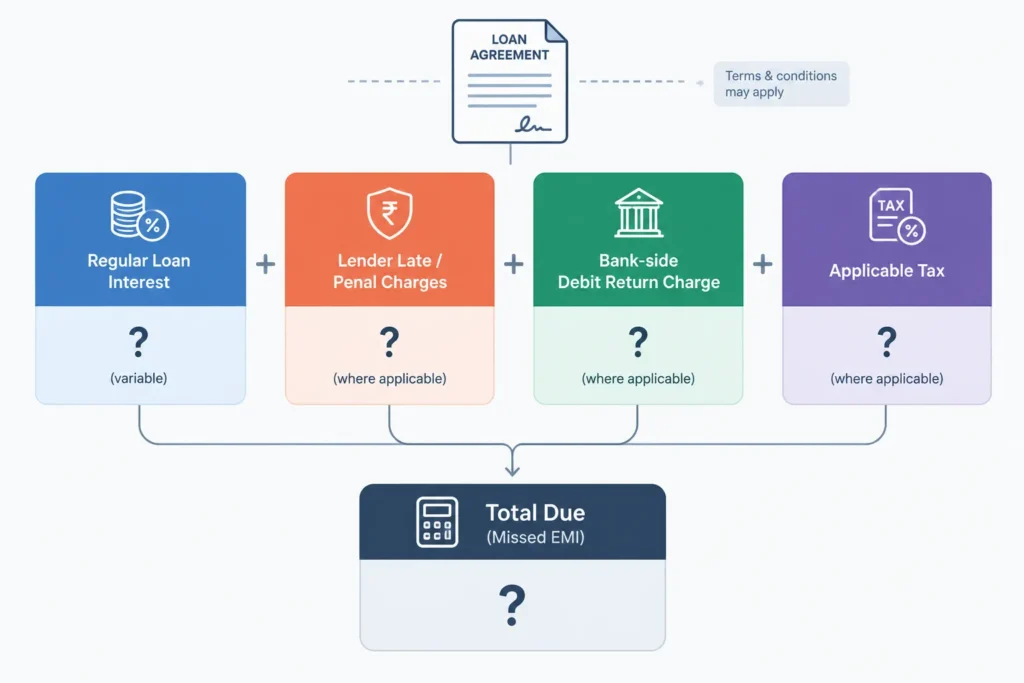
Illustration separating regular interest, lender charges, bank charges and tax after a missed EMI

The cost of a missed EMI can include different components. These should not be treated as one combined “fine” because they arise for different reasons.

You May Also Like:How to Reduce the Total Interest Paid on a Loan

Regular interest under the loan agreement

Regular interest is the interest charged on the loan according to the agreed interest rate and repayment terms. Depending on the loan structure and the way payments are adjusted, the outstanding balance may continue to carry regular interest even when an EMI is overdue.

This interest is part of the original cost of borrowing. Missing a payment does not automatically replace regular interest with a late fee.

Late payment or payment-failure charges

The loan agreement or schedule of charges may provide for a charge when an EMI is not paid on time. A lender may also have a charge connected with a failed electronic mandate or dishonored payment instruction, where permitted and applicable.

Your bank may separately charge for a failed standing instruction or insufficient balance. A bank charge and a lender charge are not necessarily the same charge, even if both arise from the same failed debit.

Penal charges

Where applicable, a lender may impose penal charges for non-compliance with material terms of the loan agreement, such as failure to pay an installment on time. Such charges must follow the applicable regulatory framework and the terms disclosed to the borrower.

Penal charges are different from the regular interest rate on the loan. Borrowers should examine the loan agreement, key facts statement where applicable, sanction letter, and schedule of charges to understand how the lender treats delayed payments.

Do not assume that every lender uses the same charge, formula, or grace period. The amount payable can vary based on the loan product, contract, duration of delay, outstanding amount, and applicable policy.

Hypothetical Indian example

Example: Suppose Meera has a personal loan with an EMI due on the fifth of each month. Her salary is delayed, and the linked account does not have enough balance on the due date. The automatic debit fails.

Meera’s EMI remains unpaid until she pays through an approved channel or a successful re-debit takes place. Her bank may apply a payment-failure charge, and the lender may apply charges permitted under the loan agreement. Regular interest may continue according to the loan terms. If she leaves the EMI unpaid, the account may remain overdue and could later be reflected in information reported by the lender.

This example is only illustrative. The actual treatment would depend on Meera’s loan agreement, the lender’s policy, the bank’s terms, the length of the delay, and applicable rules.

How a Missed EMI Can Affect Your Credit Report

Banks and other eligible lenders may report borrowers’ loan and repayment information to credit information companies. A payment that remains overdue may therefore appear in the borrower’s credit history, depending on the reporting cycle, lender practices, account status, and the facts of the case.

A missed EMI does not come with a universal or guaranteed credit-score reduction. Credit scores are calculated using the credit information available and the credit information company’s own model. The effect may depend on factors such as how late the payment was, whether it was later cleared, whether other payments were also missed, and the borrower’s broader credit record.

A continuing or repeated delay can generally be more concerning than an isolated issue resolved quickly. Repeated missed payments may suggest repayment stress and can make future lenders more cautious when considering a new personal loan, home loan, vehicle loan, or credit card application.

If the EMI failed because of a technical or mandate issue, do not assume that the credit record will correct itself automatically. Pay the amount due, obtain confirmation from the lender, and review your loan statement. You can also check your credit report later to ensure that the account information is accurate.

If you find information that appears incorrect, first collect supporting records such as bank statements, payment receipts, complaint numbers, and messages from the lender. Raise the issue through the lender’s official grievance process and, where appropriate, use the dispute process offered by the relevant credit information company.

Paying the overdue EMI is important, but it may not erase an accurate record of the earlier delay. The account may instead be updated to show the later payment or current status. This is why prompt action, proper documentation, and confirmation from the lender matter when dealing with missed EMI consequences.

What Happens If You Miss Multiple EMIs?

A single delayed EMI and repeated non-payment are not the same. If one payment fails because of a temporary bank balance issue, you may be able to clear it soon after noticing the problem. However, if several EMIs remain unpaid, the financial and practical consequences can become more serious.

Repeated missed EMI consequences may include a growing overdue balance. Apart from the unpaid installments, the lender may apply late payment charges, penal charges, cheque-bounce charges or auto-debit return charges, depending on the loan agreement and applicable rules. Your bank may also levy a charge for a failed debit.

For example, suppose a borrower misses a personal loan EMI and does not clear it before the next due date. The following month, the borrower may need to manage two unpaid instalments along with any applicable charges. This can make it harder to bring the account back on track.

The lender may also increase its follow-up. Initial reminders could be sent through SMS, email, app notifications or phone calls. If the account continues to remain overdue, the matter may be handled by a collections team or an authorised recovery agency.

Multiple missed payments can also affect your credit history. Lenders generally report loan repayment information to credit bureaus. Delays or defaults recorded in your credit report may reduce your chances of getting another loan or credit card on favourable terms. The actual effect depends on factors such as the length and pattern of delay, your wider credit history and how the lender reports the account.

Prolonged non-payment may lead the lender to classify or manage the loan differently under its internal processes and applicable regulatory requirements. There is no single outcome that applies to every borrower. The next steps depend on the loan type, how long the amount has remained unpaid, the contract terms and whether the loan is secured by an asset.

You May Also Like:Loan Prepayment: Benefits, Charges and Things to Consider

Yes, a lender may consider recovery, enforcement or legal action when dues remain unpaid. However, this does not mean that every missed EMI immediately results in a court case or seizure of an asset. The lender’s options and procedures depend on the facts of the case, the loan agreement and applicable Indian laws and regulations.

For an unsecured loan, such as many personal loans, there may be no specific asset pledged as security. The lender may send reminders, issue formal notices, use authorised recovery channels or pursue remedies available under the contract and law. The exact process can vary between lenders and cases.

For a secured loan, such as a home loan or vehicle loan, the lender has an interest in the asset given as security. Continued non-payment may eventually lead to enforcement action against that security, subject to the contract, required notices, applicable law and prescribed procedure. Missing one EMI does not automatically mean that your house or vehicle will be taken away.

A guarantor may also be contacted where the loan has one. Depending on the guarantee terms and applicable law, the lender may ask the guarantor to meet the borrower’s obligations. Borrowers and guarantors should read the relevant documents carefully instead of relying only on verbal explanations.

Recovery activity must follow applicable Indian rules and fair-practice requirements. Borrowers should not assume that harassment, threats, public humiliation or inappropriate contact is acceptable. If you believe a lender or recovery representative has acted improperly, record the relevant details and use the lender’s official grievance process. Further escalation options may depend on the type of regulated entity and the circumstances.

At the same time, avoiding calls or refusing to acknowledge formal notices can make resolution more difficult. If you receive a legal or enforcement notice, read it promptly. Consider taking independent professional advice if you do not understand its meaning or need guidance based on your specific situation.

What Should You Do After Missing an EMI?
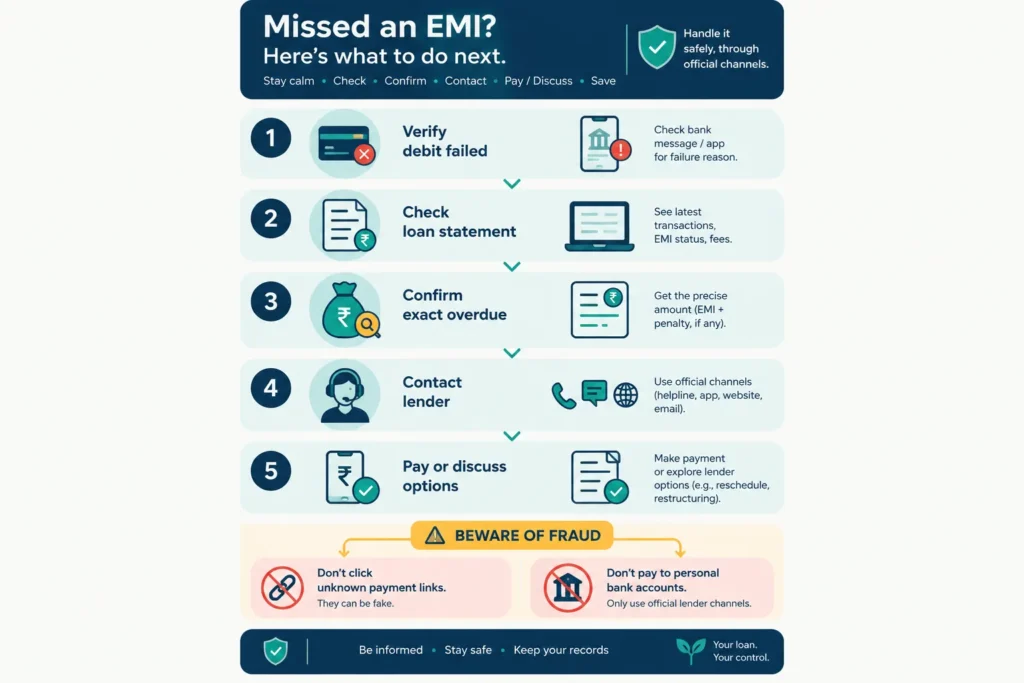
Five-step checklist for verifying, resolving and documenting a missed EMI

Acting early is usually more useful than waiting for the next due date. The following steps can help you understand the problem and discuss a realistic solution.

  1. Confirm whether the payment actually failed. Check your bank account, lender app and recent messages. An auto-debit may fail because of insufficient balance, a technical error, an inactive mandate or incorrect account details. Do not make a second payment until you confirm whether the first one was processed.
  2. Check your loan account statement. Identify the unpaid EMI, current overdue amount and any charges shown. If a charge is unclear, ask the lender for an explanation. Do not assume that the original EMI amount is the full amount now payable.
  3. Read the loan agreement. Look for clauses dealing with late payments, penal charges, failed debits, default, security enforcement and communication. This helps you compare the lender’s demand with the agreed terms.
  4. Work out what you can currently afford. List essential monthly costs such as rent, food, school fees, utilities and medical expenses. Then estimate whether you can clear the entire overdue amount, make a partial payment or resume regular EMIs from a particular date.
  5. Contact the lender promptly. Use an official branch, customer-care number, email address or in-app support channel. Explain the reason for the missed payment and provide a realistic repayment proposal.
  6. Ask for details in writing. Request a statement showing overdue instalments, applicable charges, total amount due and available payment methods. If a revised arrangement is offered, ask for its terms, costs and impact on the loan to be confirmed in writing.
  7. Keep records. Save emails, complaint numbers, receipts, screenshots and copies of letters. Note the date, time and name of any representative you speak with. These records can help if there is a later disagreement.

Do not ignore lender communications because you feel embarrassed or do not have the full amount. A clear explanation does not guarantee relief, but it can help both sides understand the situation. If you can make only a partial payment, first ask how it will be adjusted. It may not automatically bring the account up to date.

Also be cautious about taking another expensive loan simply to pay the overdue EMI. A loan app advance, credit card cash withdrawal or high-cost informal borrowing may shift the problem rather than solve it. Before borrowing again, check the total repayment amount and whether your monthly budget can support both obligations.

How to Contact Your Lender and Discuss Repayment Options

Prepare before speaking with the lender. Keep your loan account number, recent statement, bank details and a simple monthly budget ready. Be specific about what caused the delay, whether the problem is temporary and when you expect your finances to improve.

You can ask whether any suitable assistance is available. Depending on lender policy, eligibility, loan type and applicable rules, possible discussions may include a changed payment date, revised repayment arrangement, temporary support or restructuring. These options are not automatic, and a lender is not required to approve every request.

Ask how any proposed arrangement will affect future EMIs, loan tenure, total interest or other costs. A lower EMI may appear helpful but could extend the repayment period and increase the total amount paid. Request a revised repayment schedule before accepting a change.

Do not rely only on a verbal promise from a customer-care or recovery representative. Ask for written confirmation from an authorised lender channel. Check the amount, payment dates, charges, conditions and consequences of missing the revised plan before giving consent or making payment.

If you disagree with the outstanding amount, raise a written query instead of simply withholding all communication. Mention the disputed entry, attach supporting records and request a clear response. Continue to monitor your loan statement and bank account while the issue is reviewed.

Finally, communicate honestly and propose an amount you can realistically maintain. Promising an unaffordable payment may lead to another default. Prompt contact, accurate records and a practical budget give you a better basis for discussing the next steps, even though approval of any repayment assistance remains the lender’s decision.

Can You Improve Your Credit History After a Missed EMI?

A missed EMI can affect your credit history, but it does not mean that your financial record can never improve. Credit bureaus consider your wider repayment behaviour, including how you manage payments over time.

The first step is to clear the overdue amount as soon as possible. Ask the lender for the exact amount payable because it may include the unpaid EMI, late payment charges, penal charges and applicable taxes. After paying, keep the receipt, bank statement or transaction reference.

You can gradually build stronger payment habits in the following ways:

  • Pay future EMIs on time: Regular and timely payments may help demonstrate responsible repayment behaviour.
  • Keep borrowing manageable: Avoid taking more loans or using more credit than your income can comfortably support.
  • Maintain accurate records: Check loan statements and credit reports to confirm that payments and outstanding balances are shown correctly.
  • Correct genuine reporting errors: If an EMI was paid on time but appears overdue, raise a dispute with the lender and the relevant credit bureau. Provide bank statements, receipts or other supporting documents.
  • Do not apply repeatedly for credit: Several loan or credit card applications within a short period may make your financial position appear stressed.

There is no guaranteed number of points by which a credit score will rise. There is also no fixed recovery period that applies to everyone. The effect depends on factors such as the length of the delay, the number of missed payments, other credit accounts and the lender’s reporting cycle.

After clearing the overdue amount, review your next loan statement. You may also check your credit report after the lender has had time to update its records. A payment made today may not appear in a credit report immediately.

You May Also Like:Personal Loan Eligibility: Factors Lenders Consider in India

How to Avoid Missing Future EMIs

Most missed EMI consequences are easier to manage when the delay is prevented or addressed early. A simple payment system can reduce the risk of forgetting a due date or having an auto-debit fail.

Keep a due-date buffer

Try to keep enough money in the repayment account a few days before the due date. Do not wait until the morning of the auto-debit. Salary credits, bank holidays, cheque clearances and transfers between accounts can sometimes take longer than expected.

For example, if your home loan EMI is due on the fifth of every month, aim to keep the required balance available by the second or third. Include a small extra amount in case another standing instruction or bank charge is deducted first.

Use more than one reminder

Set a calendar reminder several days before the due date and another reminder on the previous day. Lender messages are useful, but they should not be your only reminder. Mobile numbers and email addresses can change, and messages can be missed.

Monitor the auto-debit account

An active mandate does not guarantee that every payment will succeed. Check the bank account after the due date to confirm that the EMI was actually deducted. A debit can fail because of insufficient funds, an expired mandate, account restrictions or incorrect instructions.

If you change your salary account or close an old bank account, update the EMI mandate in advance. Ask the lender how long the change will take and whether you need to make a manual payment during the transition.

Review whether the EMI remains affordable

Recheck your monthly budget after a salary reduction, job change, medical expense or increase in household costs. Add all EMIs, credit card dues and essential expenses. If little money remains each month, another loan may make the situation harder.

Where possible, maintain an emergency fund for essential costs and loan payments. The suitable amount depends on your income stability, dependants, expenses and existing debt. Even a modest buffer can help with a temporary cash-flow gap.

Contact the lender before the problem grows

If you expect difficulty paying an upcoming EMI, contact the lender before the due date. Explain the situation honestly and ask what formal options are available. Depending on the loan, lender policy and your circumstances, the lender may discuss a revised payment arrangement, tenure change, due-date change or another permitted solution.

Such relief is not automatic. It may involve eligibility checks, documentation, additional interest or charges. Ask for the terms in writing and understand the total cost before agreeing.

Common Myths About Missed Loan Payments

Myth: One missed EMI always destroys your credit score

A missed payment can affect your credit record if it is reported, but the outcome is not identical for every borrower. The length of the delay, existing credit history and other account activity can matter. Treat the delay seriously, clear it quickly and confirm that the lender’s records are accurate.

Myth: It is safe to ignore calls from the lender

Ignoring genuine lender communication does not remove the overdue amount. It may also reduce the chance of finding an early solution. Verify the caller through the lender’s official customer service channel before sharing information or making a payment. Never share an OTP, PIN or banking password.

A single delayed EMI does not mean that court action or repossession happens immediately in every case. Lenders generally follow their agreement, internal process and applicable rules. However, repeated non-payment can lead to escalating recovery steps, especially when the borrower does not respond.

For a secured loan, the asset offered as security can ultimately be at risk if defaults continue and the lender follows the required process. Do not assume that a car or home loan can remain unpaid without consequences.

You May Also Like:Loan Amortization Schedule Explained With an Example

Myth: A new high-cost loan always solves the problem

Borrowing at a high interest rate to pay an existing EMI may only move the problem to another lender. It can increase monthly obligations and total repayment costs. Before refinancing or consolidating debt, compare the new interest rate, fees, tenure, monthly payment and total amount payable.

Frequently Asked Questions About Missed EMIs

Can I pay an EMI after the due date?

Usually, yes. Contact the lender or use an approved payment channel to clear it. First confirm the total overdue amount because paying only the regular EMI may leave late charges or other dues outstanding.

Will a late EMI be reported to a credit bureau?

It may be reported, depending on the length of the delay, the lender’s reporting process and when its records are updated. Paying shortly after the due date does not guarantee that the delay will be absent from your credit history.

What charges can apply after a missed EMI?

The lender may levy late payment charges, penal charges, auto-debit return charges and applicable taxes, subject to the loan agreement and current rules. Your bank may separately charge for a failed mandate. Check the loan statement rather than estimating the amount.

What happens if I miss several EMIs?

Arrears and charges can build up, collection activity may increase, and the credit impact may become more serious. For secured loans, continued default can eventually put the financed asset at risk. Contact the lender promptly and avoid making repayment promises that you cannot meet.

Can a lender take my car or house after a missed EMI?

Not usually after one isolated delay without further process. However, a car loan or home loan is generally secured by the financed asset. If default continues, the lender may take enforcement steps according to the agreement and applicable law.

Should I contact the lender even if I cannot pay immediately?

Yes. Early communication can help you understand the overdue amount, available payment methods and any formal assistance options. Communication does not guarantee relief, but silence can allow the problem to become more difficult.

How do I confirm that an overdue EMI has been cleared?

Check the payment receipt, updated loan statement and outstanding balance. Ask the lender whether any charges remain unpaid and whether the account is now regular. Keep written confirmation. Later, review your credit report to ensure that the account information is accurate.

Summary

A missed EMI should be addressed quickly, but it does not permanently define your financial behaviour. Clear the correct overdue amount, retain proof and check that the lender updates its records accurately. Timely future payments and manageable borrowing can gradually support a healthier credit history, although no score improvement or recovery timeline is guaranteed.

To prevent future delays, keep money ready before the due date, use reminders, monitor auto-debits and update mandates after changing bank accounts. If financial stress is developing, review affordability and speak to the lender early. Avoid ignoring communication or using an expensive new loan without understanding the full cost.

Share this article
KEEP READING

Related Articles

View all →

Comments

Leave a Comment

What Happens When You Miss an EMI in India?

Understanding the Immediate Consequences of a Missed EMI

Missing an EMI can make your loan account overdue. The lender may contact you, attempt another debit, and apply charges or additional interest according to the loan agreement and applicable rules. The missed payment may also be reported to credit information companies and could affect your credit history. The exact missed EMI consequences depend on why the payment failed, how long it remains unpaid, the type of loan, your lender’s policies, and your previous repayment record.

A missed EMI can be worrying, especially when it happens because of a temporary cash shortage, a salary delay, or a technical problem with the bank mandate. However, one failed debit does not mean that every borrower will face the same outcome.

The first step is to find out whether the EMI is still unpaid or whether it was paid shortly after the due date. You should also check messages from the lender, your bank statement, the loan agreement, and the lender’s official payment channels.

Do not ignore the issue even if you expect money to arrive soon. Contacting the lender early can help you understand the amount due, available payment methods, applicable charges, and the current status of your loan account.

What Does It Mean to Miss an EMI?

An EMI is considered missed when the instalment due under the loan agreement is not received by the lender on the scheduled date. The account may then show the instalment as overdue until the required payment is received and adjusted.

However, a failed automatic debit and an unpaid EMI are not always exactly the same thing.

For example, an EMI debit may fail because:

  • There was not enough money in the linked bank account.
  • The standing instruction, NACH mandate, or auto-debit mandate was inactive or had expired.
  • The borrower changed bank accounts without updating the lender.
  • The bank or lender experienced a technical issue.
  • The account was frozen, closed, or subject to a transaction restriction.
  • The borrower paid through another channel, but the payment was not yet reflected in the loan account.

If the debit fails but you make the payment promptly through an approved method, the delay may be limited. Even then, charges may apply under the loan agreement, and the lender’s records may still show that the EMI was not received on the original due date.

If no payment is made after the debit failure, the EMI remains unpaid. The amount continues to be overdue, and the consequences can become more serious as the delay continues.

It is also important to distinguish a missed EMI from a partial payment. Paying only part of the amount due may not regularise the loan account. Depending on how the lender applies the payment, an outstanding balance may remain overdue.

Always ask for confirmation after making a late or alternative payment. A bank debit entry alone may not prove that the lender has correctly credited the money to your loan account.

What Happens Immediately After a Missed EMI?

Flowchart of the typical steps after an EMI is missed, from failed debit to payment or lender contact

When an EMI is not received, the lender’s system may mark the installment as overdue. This is an account status showing that a scheduled payment remains outstanding. It does not automatically mean that the lender will take severe recovery action immediately.

The lender may send a reminder through SMS, email, an app notification, a phone call, or another communication channel registered with the account. The message may ask you to maintain sufficient balance, pay through an authorised channel, or contact customer service.

Some lenders may attempt the automatic debit again, while others may require the borrower to make a separate payment. There is no single re-debit process that applies to every lender or every loan. Repeated debit attempts may also create separate bank-side consequences if the account continues to have insufficient funds.

The practical steps after receiving a missed-payment alert are:

  1. Check whether the EMI was actually debited from your bank account.
  2. Check the loan statement or lender’s app to see whether the payment was credited.
  3. Confirm the overdue amount and the accepted payment method with the lender.
  4. Keep enough money available if the lender confirms that another debit will be attempted.
  5. Save the receipt, transaction reference, and written communication.

Be careful about payment requests received through unknown numbers or personal bank accounts. Use the lender’s official app, website, branch, customer service channel, or another verified payment facility.

If you cannot pay the full EMI, tell the lender instead of avoiding calls. The lender may explain the account status and any options that are actually available under its policy. Such options are not automatic, and asking for help does not guarantee a waiver, extension, or restructuring.

Late Payment Charges and Additional Interest

Illustration separating regular interest, lender charges, bank charges and tax after a missed EMI

The cost of a missed EMI can include different components. These should not be treated as one combined “fine” because they arise for different reasons.

Regular interest under the loan agreement

Regular interest is the interest charged on the loan according to the agreed interest rate and repayment terms. Depending on the loan structure and the way payments are adjusted, the outstanding balance may continue to carry regular interest even when an EMI is overdue.

This interest is part of the original cost of borrowing. Missing a payment does not automatically replace regular interest with a late fee.

Late payment or payment-failure charges

The loan agreement or schedule of charges may provide for a charge when an EMI is not paid on time. A lender may also have a charge connected with a failed electronic mandate or dishonored payment instruction, where permitted and applicable.

Your bank may separately charge for a failed standing instruction or insufficient balance. A bank charge and a lender charge are not necessarily the same charge, even if both arise from the same failed debit.

Penal charges

Where applicable, a lender may impose penal charges for non-compliance with material terms of the loan agreement, such as failure to pay an installment on time. Such charges must follow the applicable regulatory framework and the terms disclosed to the borrower.

Penal charges are different from the regular interest rate on the loan. Borrowers should examine the loan agreement, key facts statement where applicable, sanction letter, and schedule of charges to understand how the lender treats delayed payments.

Do not assume that every lender uses the same charge, formula, or grace period. The amount payable can vary based on the loan product, contract, duration of delay, outstanding amount, and applicable policy.

Hypothetical Indian example

Example: Suppose Meera has a personal loan with an EMI due on the fifth of each month. Her salary is delayed, and the linked account does not have enough balance on the due date. The automatic debit fails.

Meera’s EMI remains unpaid until she pays through an approved channel or a successful re-debit takes place. Her bank may apply a payment-failure charge, and the lender may apply charges permitted under the loan agreement. Regular interest may continue according to the loan terms. If she leaves the EMI unpaid, the account may remain overdue and could later be reflected in information reported by the lender.

This example is only illustrative. The actual treatment would depend on Meera’s loan agreement, the lender’s policy, the bank’s terms, the length of the delay, and applicable rules.

How a Missed EMI Can Affect Your Credit Report

Banks and other eligible lenders may report borrowers’ loan and repayment information to credit information companies. A payment that remains overdue may therefore appear in the borrower’s credit history, depending on the reporting cycle, lender practices, account status, and the facts of the case.

A missed EMI does not come with a universal or guaranteed credit-score reduction. Credit scores are calculated using the credit information available and the credit information company’s own model. The effect may depend on factors such as how late the payment was, whether it was later cleared, whether other payments were also missed, and the borrower’s broader credit record.

A continuing or repeated delay can generally be more concerning than an isolated issue resolved quickly. Repeated missed payments may suggest repayment stress and can make future lenders more cautious when considering a new personal loan, home loan, vehicle loan, or credit card application.

If the EMI failed because of a technical or mandate issue, do not assume that the credit record will correct itself automatically. Pay the amount due, obtain confirmation from the lender, and review your loan statement. You can also check your credit report later to ensure that the account information is accurate.

If you find information that appears incorrect, first collect supporting records such as bank statements, payment receipts, complaint numbers, and messages from the lender. Raise the issue through the lender’s official grievance process and, where appropriate, use the dispute process offered by the relevant credit information company.

Paying the overdue EMI is important, but it may not erase an accurate record of the earlier delay. The account may instead be updated to show the later payment or current status. This is why prompt action, proper documentation, and confirmation from the lender matter when dealing with missed EMI consequences.

What Happens If You Miss Multiple EMIs?

A single delayed EMI and repeated non-payment are not the same. If one payment fails because of a temporary bank balance issue, you may be able to clear it soon after noticing the problem. However, if several EMIs remain unpaid, the financial and practical consequences can become more serious.

Repeated missed EMI consequences may include a growing overdue balance. Apart from the unpaid installments, the lender may apply late payment charges, penal charges, cheque-bounce charges or auto-debit return charges, depending on the loan agreement and applicable rules. Your bank may also levy a charge for a failed debit.

For example, suppose a borrower misses a personal loan EMI and does not clear it before the next due date. The following month, the borrower may need to manage two unpaid instalments along with any applicable charges. This can make it harder to bring the account back on track.

The lender may also increase its follow-up. Initial reminders could be sent through SMS, email, app notifications or phone calls. If the account continues to remain overdue, the matter may be handled by a collections team or an authorised recovery agency.

Multiple missed payments can also affect your credit history. Lenders generally report loan repayment information to credit bureaus. Delays or defaults recorded in your credit report may reduce your chances of getting another loan or credit card on favourable terms. The actual effect depends on factors such as the length and pattern of delay, your wider credit history and how the lender reports the account.

Prolonged non-payment may lead the lender to classify or manage the loan differently under its internal processes and applicable regulatory requirements. There is no single outcome that applies to every borrower. The next steps depend on the loan type, how long the amount has remained unpaid, the contract terms and whether the loan is secured by an asset.

Can a Lender Take Recovery or Legal Action?

Yes, a lender may consider recovery, enforcement or legal action when dues remain unpaid. However, this does not mean that every missed EMI immediately results in a court case or seizure of an asset. The lender’s options and procedures depend on the facts of the case, the loan agreement and applicable Indian laws and regulations.

For an unsecured loan, such as many personal loans, there may be no specific asset pledged as security. The lender may send reminders, issue formal notices, use authorised recovery channels or pursue remedies available under the contract and law. The exact process can vary between lenders and cases.

For a secured loan, such as a home loan or vehicle loan, the lender has an interest in the asset given as security. Continued non-payment may eventually lead to enforcement action against that security, subject to the contract, required notices, applicable law and prescribed procedure. Missing one EMI does not automatically mean that your house or vehicle will be taken away.

A guarantor may also be contacted where the loan has one. Depending on the guarantee terms and applicable law, the lender may ask the guarantor to meet the borrower’s obligations. Borrowers and guarantors should read the relevant documents carefully instead of relying only on verbal explanations.

Recovery activity must follow applicable Indian rules and fair-practice requirements. Borrowers should not assume that harassment, threats, public humiliation or inappropriate contact is acceptable. If you believe a lender or recovery representative has acted improperly, record the relevant details and use the lender’s official grievance process. Further escalation options may depend on the type of regulated entity and the circumstances.

At the same time, avoiding calls or refusing to acknowledge formal notices can make resolution more difficult. If you receive a legal or enforcement notice, read it promptly. Consider taking independent professional advice if you do not understand its meaning or need guidance based on your specific situation.

What Should You Do After Missing an EMI?

Five-step checklist for verifying, resolving and documenting a missed EMI

Acting early is usually more useful than waiting for the next due date. The following steps can help you understand the problem and discuss a realistic solution.

  1. Confirm whether the payment actually failed. Check your bank account, lender app and recent messages. An auto-debit may fail because of insufficient balance, a technical error, an inactive mandate or incorrect account details. Do not make a second payment until you confirm whether the first one was processed.
  2. Check your loan account statement. Identify the unpaid EMI, current overdue amount and any charges shown. If a charge is unclear, ask the lender for an explanation. Do not assume that the original EMI amount is the full amount now payable.
  3. Read the loan agreement. Look for clauses dealing with late payments, penal charges, failed debits, default, security enforcement and communication. This helps you compare the lender’s demand with the agreed terms.
  4. Work out what you can currently afford. List essential monthly costs such as rent, food, school fees, utilities and medical expenses. Then estimate whether you can clear the entire overdue amount, make a partial payment or resume regular EMIs from a particular date.
  5. Contact the lender promptly. Use an official branch, customer-care number, email address or in-app support channel. Explain the reason for the missed payment and provide a realistic repayment proposal.
  6. Ask for details in writing. Request a statement showing overdue instalments, applicable charges, total amount due and available payment methods. If a revised arrangement is offered, ask for its terms, costs and impact on the loan to be confirmed in writing.
  7. Keep records. Save emails, complaint numbers, receipts, screenshots and copies of letters. Note the date, time and name of any representative you speak with. These records can help if there is a later disagreement.

Do not ignore lender communications because you feel embarrassed or do not have the full amount. A clear explanation does not guarantee relief, but it can help both sides understand the situation. If you can make only a partial payment, first ask how it will be adjusted. It may not automatically bring the account up to date.

Also be cautious about taking another expensive loan simply to pay the overdue EMI. A loan app advance, credit card cash withdrawal or high-cost informal borrowing may shift the problem rather than solve it. Before borrowing again, check the total repayment amount and whether your monthly budget can support both obligations.

How to Contact Your Lender and Discuss Repayment Options

Prepare before speaking with the lender. Keep your loan account number, recent statement, bank details and a simple monthly budget ready. Be specific about what caused the delay, whether the problem is temporary and when you expect your finances to improve.

You can ask whether any suitable assistance is available. Depending on lender policy, eligibility, loan type and applicable rules, possible discussions may include a changed payment date, revised repayment arrangement, temporary support or restructuring. These options are not automatic, and a lender is not required to approve every request.

Ask how any proposed arrangement will affect future EMIs, loan tenure, total interest or other costs. A lower EMI may appear helpful but could extend the repayment period and increase the total amount paid. Request a revised repayment schedule before accepting a change.

Do not rely only on a verbal promise from a customer-care or recovery representative. Ask for written confirmation from an authorised lender channel. Check the amount, payment dates, charges, conditions and consequences of missing the revised plan before giving consent or making payment.

If you disagree with the outstanding amount, raise a written query instead of simply withholding all communication. Mention the disputed entry, attach supporting records and request a clear response. Continue to monitor your loan statement and bank account while the issue is reviewed.

Finally, communicate honestly and propose an amount you can realistically maintain. Promising an unaffordable payment may lead to another default. Prompt contact, accurate records and a practical budget give you a better basis for discussing the next steps, even though approval of any repayment assistance remains the lender’s decision.

Can You Improve Your Credit History After a Missed EMI?

A missed EMI can affect your credit history, but it does not mean that your financial record can never improve. Credit bureaus consider your wider repayment behaviour, including how you manage payments over time.

The first step is to clear the overdue amount as soon as possible. Ask the lender for the exact amount payable because it may include the unpaid EMI, late payment charges, penal charges and applicable taxes. After paying, keep the receipt, bank statement or transaction reference.

You can gradually build stronger payment habits in the following ways:

  • Pay future EMIs on time: Regular and timely payments may help demonstrate responsible repayment behaviour.
  • Keep borrowing manageable: Avoid taking more loans or using more credit than your income can comfortably support.
  • Maintain accurate records: Check loan statements and credit reports to confirm that payments and outstanding balances are shown correctly.
  • Correct genuine reporting errors: If an EMI was paid on time but appears overdue, raise a dispute with the lender and the relevant credit bureau. Provide bank statements, receipts or other supporting documents.
  • Do not apply repeatedly for credit: Several loan or credit card applications within a short period may make your financial position appear stressed.

There is no guaranteed number of points by which a credit score will rise. There is also no fixed recovery period that applies to everyone. The effect depends on factors such as the length of the delay, the number of missed payments, other credit accounts and the lender’s reporting cycle.

After clearing the overdue amount, review your next loan statement. You may also check your credit report after the lender has had time to update its records. A payment made today may not appear in a credit report immediately.

How to Avoid Missing Future EMIs

Most missed EMI consequences are easier to manage when the delay is prevented or addressed early. A simple payment system can reduce the risk of forgetting a due date or having an auto-debit fail.

Keep a due-date buffer

Try to keep enough money in the repayment account a few days before the due date. Do not wait until the morning of the auto-debit. Salary credits, bank holidays, cheque clearances and transfers between accounts can sometimes take longer than expected.

For example, if your home loan EMI is due on the fifth of every month, aim to keep the required balance available by the second or third. Include a small extra amount in case another standing instruction or bank charge is deducted first.

Use more than one reminder

Set a calendar reminder several days before the due date and another reminder on the previous day. Lender messages are useful, but they should not be your only reminder. Mobile numbers and email addresses can change, and messages can be missed.

Monitor the auto-debit account

An active mandate does not guarantee that every payment will succeed. Check the bank account after the due date to confirm that the EMI was actually deducted. A debit can fail because of insufficient funds, an expired mandate, account restrictions or incorrect instructions.

If you change your salary account or close an old bank account, update the EMI mandate in advance. Ask the lender how long the change will take and whether you need to make a manual payment during the transition.

Review whether the EMI remains affordable

Recheck your monthly budget after a salary reduction, job change, medical expense or increase in household costs. Add all EMIs, credit card dues and essential expenses. If little money remains each month, another loan may make the situation harder.

Where possible, maintain an emergency fund for essential costs and loan payments. The suitable amount depends on your income stability, dependants, expenses and existing debt. Even a modest buffer can help with a temporary cash-flow gap.

Contact the lender before the problem grows

If you expect difficulty paying an upcoming EMI, contact the lender before the due date. Explain the situation honestly and ask what formal options are available. Depending on the loan, lender policy and your circumstances, the lender may discuss a revised payment arrangement, tenure change, due-date change or another permitted solution.

Such relief is not automatic. It may involve eligibility checks, documentation, additional interest or charges. Ask for the terms in writing and understand the total cost before agreeing.

Common Myths About Missed Loan Payments

Myth: One missed EMI always destroys your credit score

A missed payment can affect your credit record if it is reported, but the outcome is not identical for every borrower. The length of the delay, existing credit history and other account activity can matter. Treat the delay seriously, clear it quickly and confirm that the lender’s records are accurate.

Myth: It is safe to ignore calls from the lender

Ignoring genuine lender communication does not remove the overdue amount. It may also reduce the chance of finding an early solution. Verify the caller through the lender’s official customer service channel before sharing information or making a payment. Never share an OTP, PIN or banking password.

Myth: Every missed EMI immediately causes legal action

A single delayed EMI does not mean that court action or repossession happens immediately in every case. Lenders generally follow their agreement, internal process and applicable rules. However, repeated non-payment can lead to escalating recovery steps, especially when the borrower does not respond.

For a secured loan, the asset offered as security can ultimately be at risk if defaults continue and the lender follows the required process. Do not assume that a car or home loan can remain unpaid without consequences.

Myth: A new high-cost loan always solves the problem

Borrowing at a high interest rate to pay an existing EMI may only move the problem to another lender. It can increase monthly obligations and total repayment costs. Before refinancing or consolidating debt, compare the new interest rate, fees, tenure, monthly payment and total amount payable.

Frequently Asked Questions About Missed EMIs

Can I pay an EMI after the due date?

Usually, yes. Contact the lender or use an approved payment channel to clear it. First confirm the total overdue amount because paying only the regular EMI may leave late charges or other dues outstanding.

Will a late EMI be reported to a credit bureau?

It may be reported, depending on the length of the delay, the lender’s reporting process and when its records are updated. Paying shortly after the due date does not guarantee that the delay will be absent from your credit history.

What charges can apply after a missed EMI?

The lender may levy late payment charges, penal charges, auto-debit return charges and applicable taxes, subject to the loan agreement and current rules. Your bank may separately charge for a failed mandate. Check the loan statement rather than estimating the amount.

What happens if I miss several EMIs?

Arrears and charges can build up, collection activity may increase, and the credit impact may become more serious. For secured loans, continued default can eventually put the financed asset at risk. Contact the lender promptly and avoid making repayment promises that you cannot meet.

Can a lender take my car or house after a missed EMI?

Not usually after one isolated delay without further process. However, a car loan or home loan is generally secured by the financed asset. If default continues, the lender may take enforcement steps according to the agreement and applicable law.

Should I contact the lender even if I cannot pay immediately?

Yes. Early communication can help you understand the overdue amount, available payment methods and any formal assistance options. Communication does not guarantee relief, but silence can allow the problem to become more difficult.

How do I confirm that an overdue EMI has been cleared?

Check the payment receipt, updated loan statement and outstanding balance. Ask the lender whether any charges remain unpaid and whether the account is now regular. Keep written confirmation. Later, review your credit report to ensure that the account information is accurate.

Summary

A missed EMI should be addressed quickly, but it does not permanently define your financial behaviour. Clear the correct overdue amount, retain proof and check that the lender updates its records accurately. Timely future payments and manageable borrowing can gradually support a healthier credit history, although no score improvement or recovery timeline is guaranteed.

To prevent future delays, keep money ready before the due date, use reminders, monitor auto-debits and update mandates after changing bank accounts. If financial stress is developing, review affordability and speak to the lender early. Avoid ignoring communication or using an expensive new loan without understanding the full cost.
Leave a Comment