

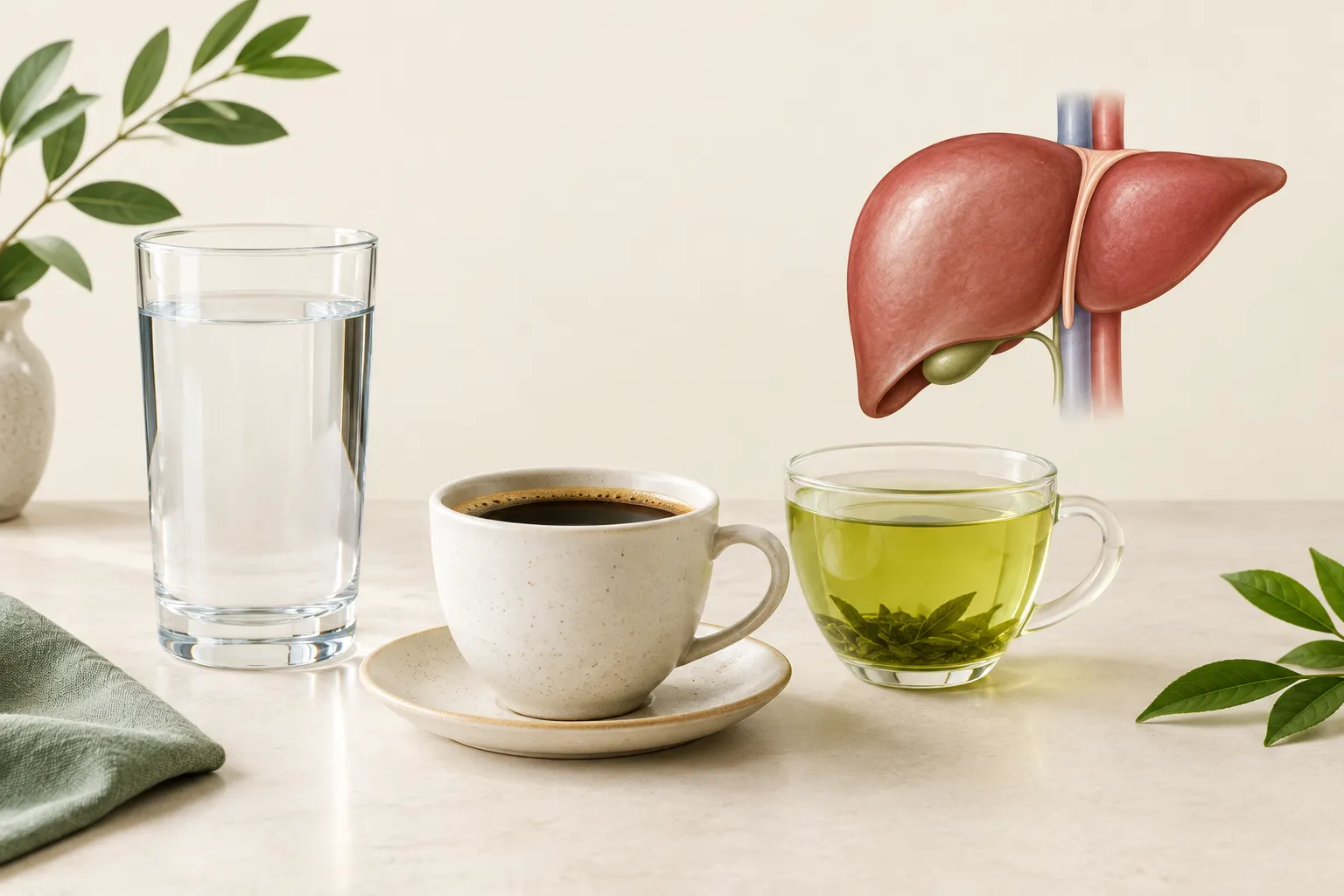
No natural drink is a proven standalone cure for fatty liver. Water, unsweetened coffee and unsweetened tea can fit into a liver-friendly diet, but they do not remove liver fat on their own. Their main value often comes from replacing sugary drinks, sweetened tea, packaged juices or other high-calorie beverages.
Research has linked regular coffee consumption with some favourable liver outcomes, but much of this evidence is observational. Evidence that green tea directly reduces liver fat is limited and inconsistent. Concentrated green-tea extracts and certain herbal supplements may even injure the liver. If you have fatty liver, the priorities remain medical assessment, sustainable weight management where needed, regular physical activity and control of diabetes, cholesterol and blood pressure.
Introduction
Searches for natural drinks to reduce liver fat often produce long lists of juices, herbal waters, teas and “detox” mixtures. Common Indian suggestions include lemon water, amla juice, turmeric water, methi water and green tea. These options may sound harmless, but the claims made about them are often much stronger than the available evidence.
Fatty liver is not simply a collection of toxins that can be washed away. It is usually connected with broader metabolic health. Factors such as excess body weight, insulin resistance, type 2 diabetes, high triglycerides, an unhealthy diet and low physical activity can contribute to fat building up in the liver.
The condition is now commonly called metabolic dysfunction-associated steatotic liver disease, or MASLD. It was previously widely known as non-alcoholic fatty liver disease, or NAFLD. The newer name highlights its close relationship with metabolic risk factors.
Some people with liver fat have no symptoms. Others may have tiredness or discomfort on the upper-right side of the abdomen, but these symptoms are not specific. Blood tests can also be normal even when liver fat is present. Diagnosis and risk assessment may involve medical history, blood tests, ultrasound or other imaging, and sometimes tests that estimate liver stiffness or scarring.
This distinction matters because a person may focus on finding the “best” drink while missing diabetes, high cholesterol, significant liver inflammation or fibrosis. Drinks can support healthier eating habits, but they should not replace an appropriate medical review.
1. Can Any Natural Drink Reduce Liver Fat?
The direct answer is no: there is currently no natural drink that can reliably treat fatty liver by itself. A beverage may be sensible, low in calories or associated with better liver outcomes, but that is not the same as proving that it removes fat from the liver.
Established dietary guidance generally focuses on the overall eating pattern. This includes limiting added sugar and highly processed foods, choosing appropriate portions, eating more minimally processed plant foods, and avoiding or limiting alcohol based on individual medical advice. For people who are overweight, gradual and sustainable weight loss can be important. Exercise also provides benefits even when weight changes slowly.
It is useful to separate three different types of evidence:
- Established guidance: Recommendations supported by a wider body of clinical evidence, such as replacing sugar-sweetened drinks with low-calorie options and managing metabolic risk factors.
- Observational association: Researchers notice that people who consume a particular drink tend to have better outcomes. This does not prove that the drink caused the benefit, because other habits may explain part of the association.
- Preliminary research: Small or short studies suggest a possible effect, but the results are not strong or consistent enough to support treatment claims.
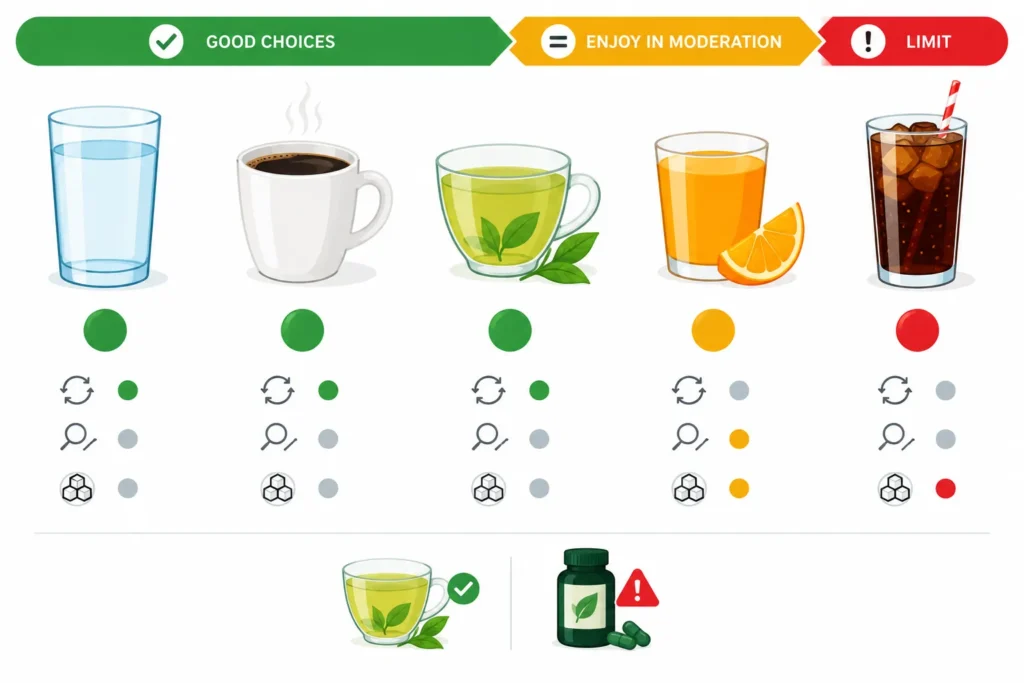
How Common Drink Options Compare
| Drink | What the evidence suggests | Practical caution |
|---|---|---|
| Plain water | A sensible everyday choice, particularly when it replaces sugary or calorie-heavy drinks. It does not directly flush fat from the liver. | Flavoured water may contain added sugar. People with certain heart or kidney conditions may need individual advice about fluid intake. |
| Unsweetened coffee | Observational studies have linked coffee consumption with some favourable liver outcomes, including a lower risk of advanced liver disease in certain groups. It is not a treatment for fatty liver. | Caffeine may worsen acidity, anxiety, palpitations or sleep problems. Sugar, cream and flavoured syrups can add substantial calories. |
| Unsweetened tea | It can replace sweetened beverages and contribute to a healthier overall diet. Evidence that ordinary tea directly reduces liver fat remains limited. | Tea with several teaspoons of sugar is not equivalent to unsweetened tea. Excess caffeine may not suit everyone. |
| Green tea | Some clinical studies have examined green tea compounds, but findings on liver fat are limited and not sufficiently consistent to treat it as a therapy. | Concentrated green-tea extracts are different from brewed tea and have been linked with liver injury in some cases. |
| Juice or sweetened “detox” drinks | There is no good evidence that they detoxify the liver or cure fatty liver. Juice can provide significant sugar without the fibre found in whole fruit. | Honey, jaggery and dates still add sugar. “Natural” does not automatically mean low-calorie or liver-friendly. |
Water: Helpful, but Not a Liver Cleanse
Plain water is usually the simplest everyday beverage. Good hydration supports normal body functions, but water does not dissolve or flush fat out of the liver. Claims that drinking large quantities of water will “clean” the liver misunderstand how the organ works.
The practical benefit appears when water replaces something less suitable. For example, switching from a bottle of sugary soft drink, sweet lassi or packaged fruit drink to plain water can reduce added sugar and calorie intake. Over time, this may support weight and metabolic management as part of a broader plan.
Lemon slices, mint or cucumber can be added for flavour if they help you drink water without sugar. They do not turn water into a fatty-liver treatment. Similarly, lemon water taken on an empty stomach has not been shown to melt liver fat.
Avoid forcing extreme amounts of fluid. More is not always better, and people with kidney disease, heart failure or certain electrolyte problems may receive specific fluid instructions from their doctor.
Unsweetened Coffee: Promising Associations, Not a Prescription
Coffee is among the more extensively studied beverages in liver research. Observational studies have associated coffee consumption with lower rates of certain adverse liver outcomes, including fibrosis and chronic liver disease, in some populations. Researchers have also studied compounds in coffee beyond caffeine.
However, an association does not establish that coffee itself produced the outcome. Coffee drinkers may differ in diet, physical activity, income, smoking, healthcare access or other factors. Studies also vary in the type, strength and quantity of coffee consumed.
For this reason, coffee should not be presented as a cure or prescribed as a substitute for medical care. If you already enjoy coffee and tolerate it, an unsweetened version may fit into a balanced diet. Filter coffee with plenty of sugar, condensed milk or high-fat cream is a different proposition because these additions increase calories and added sugar.
Caffeine may not suit people with anxiety, sleep difficulty, troublesome acidity, uncontrolled palpitations or certain medical conditions. Pregnant or breastfeeding women should follow professional guidance on caffeine limits. Decaffeinated coffee has also been studied, but evidence is not sufficient to promise the same liver effects for every person.
Tea and Green Tea: Keep Expectations Realistic
Unsweetened black tea or green tea can be a low-calorie alternative to sweetened chai, soft drinks and packaged juices. That substitution may be useful. It does not prove that tea directly removes liver fat.
Green tea contains compounds called catechins, which have attracted research interest. Some small clinical studies have reported possible changes in liver enzymes or liver fat, while others have not shown clear benefits. Differences in doses, study duration, participant health and product formulation make the findings difficult to apply broadly.
There is also an important safety distinction between a normally brewed cup of green tea and a concentrated extract sold as a capsule, powder or “fat burner”. High-dose green-tea extracts have been associated with liver injury in some people. Taking more of a natural compound does not necessarily make it safer or more effective.
People who already have abnormal liver tests should be especially cautious with herbal mixtures and supplements. Product labels may not clearly show every ingredient or the true dose. Tell your doctor about any powders, extracts, Ayurvedic products or gym supplements you use, because this information can be relevant when investigating liver injury.
What This Means in Daily Life
Choose drinks for their role in your overall diet, not because they promise a cleanse. Plain water should usually be the default. Unsweetened coffee or tea may be reasonable if you tolerate them, but neither should be treated as medicine.
If an ultrasound or blood test suggests fatty liver, arrange a medical assessment rather than relying on a drink routine. The clinician may review alcohol intake, medicines, supplements, weight, waist measurement, blood sugar, cholesterol and signs of liver scarring. The safest plan is one that addresses the cause and your individual risk, not one built around a single “natural” ingredient.
2. Homemade Drinks, Fruit Juice and Drinks to Limit
When people search for natural drinks to reduce liver fat, they often find claims about lemon water, ginger water, cumin water or special juices. These drinks may fit into a balanced diet, but they do not directly burn, cleanse or melt fat stored in the liver.
The more useful question is whether a drink helps replace one that contains a lot of added sugar or alcohol. For example, choosing plain lemon water instead of a sugary soft drink can reduce added sugar intake. The benefit comes mainly from what has been replaced, not from lemon acting as a liver-fat remedy.
Can Homemade Drinks Remove Liver Fat?
Simple homemade drinks can add flavour and variety without requiring expensive powders, detox kits or supplements. They may also make it easier to stay hydrated if someone finds plain water boring.
However, these drinks should be understood realistically:
- Lemon water: Water with a squeeze of lemon is a low-sugar option when no sugar, honey or syrup is added. It can replace sweetened beverages, but lemon does not flush fat from the liver.
- Ginger water: Ginger can provide flavour and may be enjoyable warm or cold. It should not be described as a treatment that dissolves liver fat.
- Cumin water: Jeera water is commonly consumed in Indian homes. Unsweetened cumin water may be used as an alternative to sweet drinks, but there is no reason to treat it as a liver cleanse.
- Mint or infused water: Water flavoured with mint, cucumber or a small amount of fruit can offer variety. Its main advantage is that it can be prepared without added sugar.
- Buttermilk: Plain, unsweetened chaas may be an option for people who tolerate dairy. Salt, portion size and individual dietary needs still matter. Sweetened or heavily salted versions are not automatically healthier.
Adding sugar, jaggery, honey or flavoured syrup changes the picture. These ingredients may sound more natural than refined sugar, but they still add free or added sugars to the drink. A homemade beverage can therefore become sugar-heavy if it contains several spoonfuls of honey or jaggery.
There is also no need to force down strong mixtures on an empty stomach. Drinks containing a lot of lemon, ginger or spices may cause acidity, stomach discomfort or irritation in some people. A person with digestive problems, other medical conditions or medicine-related concerns should seek individual advice rather than following a viral recipe.
Whole Fruit Is Usually a Better Choice Than Juice
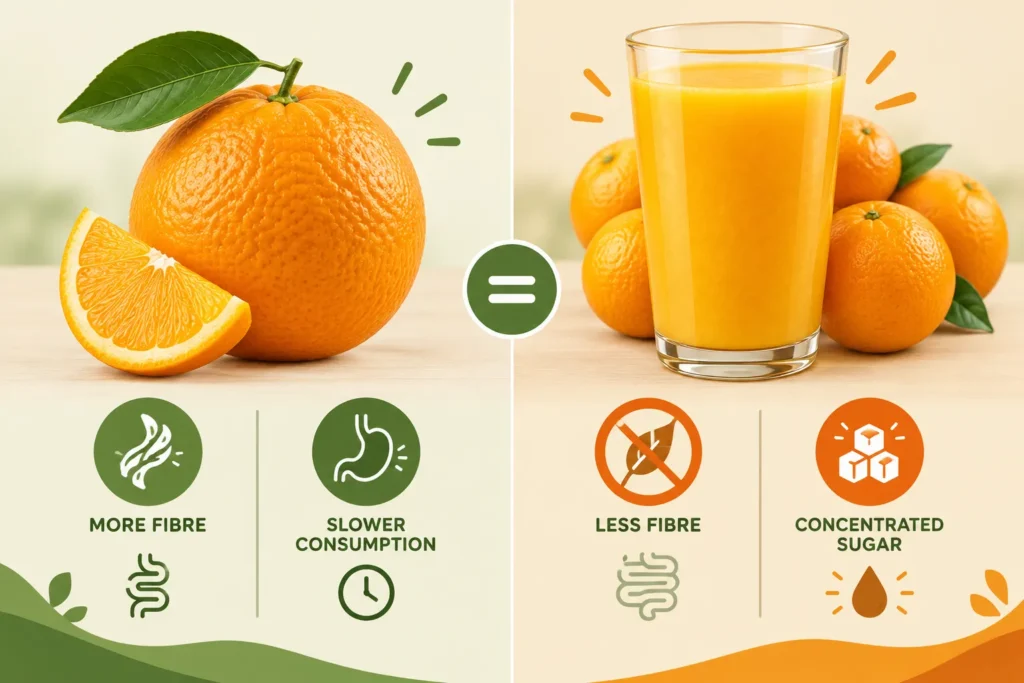
Fruit can be part of a balanced diet. The important distinction is between eating whole fruit and drinking fruit juice.
Whole fruit generally provides more fibre and takes longer to eat. Chewing also makes it easier to notice the portion being consumed. Juice contains less fibre, especially when it is strained, and several pieces of fruit may be used to prepare one glass. This can deliver a substantial amount of naturally occurring sugar in a form that is quick to drink.
For example, eating one orange is different from drinking a large glass of orange or mosambi juice prepared from several fruits. Similarly, apple, grape, mango, pomegranate and mixed-fruit juices should not be treated as unlimited drinks simply because they are homemade or labelled “100% fruit”.
No fruit juice has been shown to wash away or remove liver fat. Claims about amla juice, beetroot juice, carrot juice or bitter vegetable blends should be viewed carefully. Such ingredients may contain nutrients, but that does not make the resulting drink a treatment for fatty liver disease.
Packaged juice can present additional concerns. Some products contain added sugar, while fruit drinks and fruit-flavoured beverages may contain relatively little actual fruit. Reading the ingredient list and nutrition label can help distinguish juice from a sweetened fruit drink. Terms such as “natural”, “refreshing” or “with vitamins” do not tell you how much sugar the product contains.
If someone enjoys juice, portion and frequency matter. It should not replace water throughout the day, and it should not be relied upon as a liver remedy. People with diabetes, high blood sugar or other health conditions may need personalised guidance about fruit and juice.
Drinks High in Added Sugar to Limit
Regularly drinking sugar-sweetened beverages can add significant sugar and energy without being very filling. Reducing these drinks may improve overall dietary quality and support broader weight and metabolic health goals in people with fatty liver disease.
Common examples include:
- Regular soft drinks and fizzy beverages
- Sweetened packaged teas and iced teas
- Energy drinks
- Sports drinks that contain added sugar
- Sweet lassi, milkshakes and flavoured milk
- Packaged fruit drinks and sweetened juice beverages
- Tea or coffee made with several teaspoons of sugar
- Cold coffee topped with ice cream, syrup or whipped cream
- Sharbat and concentrated syrups mixed with water or milk
- Sweetened beverages made with sugar, jaggery or honey
This does not mean every person must make an abrupt or rigid change. A gradual reduction may be more practical. Someone who adds two teaspoons of sugar to each cup of chai could slowly reduce the amount. A person who drinks a soft drink with lunch every day could start by choosing water or unsweetened chaas on some days.
It is also useful to look at the full day. One sweetened tea may seem minor, but sugar can add up when the day includes several cups of chai, a packaged juice and a soft drink. Frequent small servings may matter as much as an occasional large beverage.
Alcohol Needs Separate Attention
Alcohol should not be grouped with ordinary homemade drinks. It can contribute to liver damage, and no type of alcoholic drink should be presented as protective for the liver. Beer, wine, whisky and other spirits all contain alcohol, even though their serving sizes and alcohol concentrations differ.
A person may also have more than one reason for fat or inflammation in the liver. Alcohol use can complicate the assessment and management of liver disease. Switching from one alcoholic drink to another does not turn alcohol into a liver-health product.
People who have fatty liver disease, abnormal liver tests or another liver condition should discuss alcohol use honestly with a qualified healthcare professional. The appropriate advice can depend on the diagnosis, current liver health, medicines and drinking pattern. Anyone who may be dependent on alcohol should seek medical help rather than attempting sudden withdrawal without guidance, because withdrawal can be dangerous.
Practical Indian Swaps That Do Not Require Expensive Products
Improving beverage choices does not require imported detox drinks or costly “liver support” powders. Ordinary options available at home can be enough.
- Carry a reusable bottle of plain water when travelling or going to work.
- Add lemon, mint, cucumber or a small piece of ginger to water without adding sugar.
- Ask for less sugar in chai, coffee, nimbu pani or fresh lime soda.
- Choose plain soda with lemon instead of a sweetened fizzy drink, if carbonation suits you.
- Prepare unsweetened chaas at home rather than buying a sweet dairy beverage.
- Eat a piece of whole fruit instead of making a large glass of juice.
- Keep chilled water ready so that a packaged drink is not the easiest option.
- When buying a beverage, compare labels for added sugar and serving size.
- Reduce sugar gradually if an unsweetened drink initially feels difficult to enjoy.
The key point is simple: homemade lemon, ginger or cumin water may be pleasant substitutes for sugary drinks, but they do not directly remove liver fat. Whole fruit is generally more fibre-rich than juice, sugary beverages are worth limiting, and alcohol requires specific medical discussion when liver disease is present.
3. What Actually Helps, Common Myths and FAQs
No single drink can remove liver fat. Drinks may support a healthy routine, but fatty liver management depends mainly on the overall pattern of food, activity, weight management and medical care.
The right approach also varies from person to person. Someone with diabetes, high triglycerides or significant liver scarring may need a different plan from someone with mildly abnormal liver tests. A qualified doctor should consider your health conditions, medicines, test results and personal circumstances.
What Actually Helps Reduce Liver Fat?
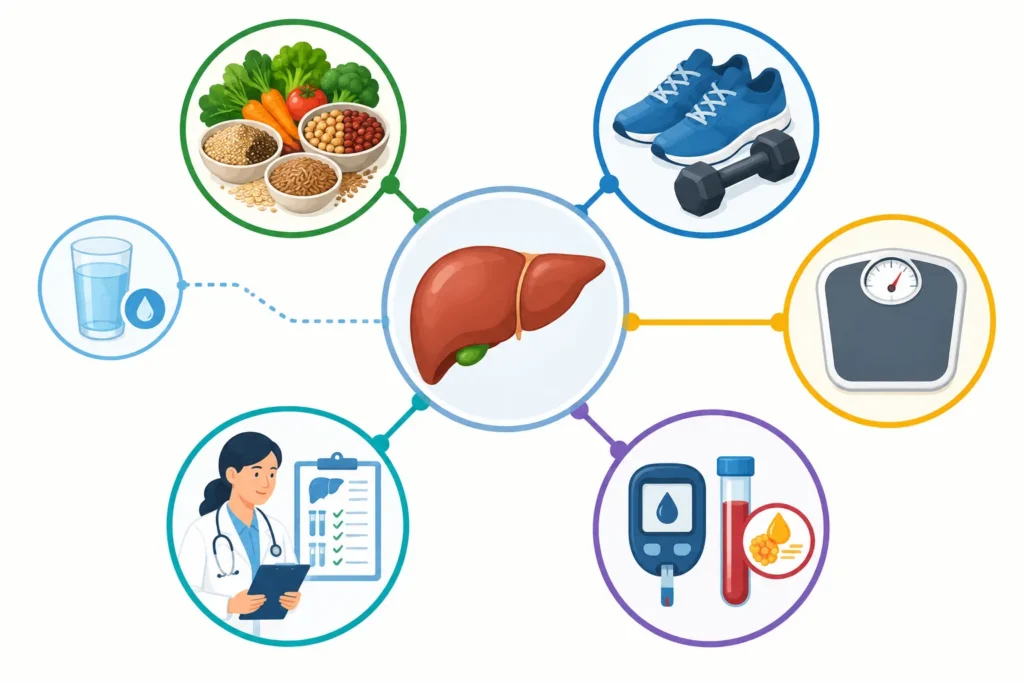
Current clinical guidance focuses on sustainable lifestyle changes and treatment of related health conditions. The main steps generally include:
- Eating a balanced diet: Choose more vegetables, whole grains, pulses, beans, nuts and suitable sources of protein. Limit sugary drinks, highly processed foods and frequent large portions.
- Being physically active: Regular walking, cycling, swimming, strength training or another suitable activity can support metabolic health. Start according to your fitness and medical condition.
- Managing weight gradually when needed: For people who are overweight, medically appropriate and sustainable weight loss can help reduce liver fat. Crash diets and extreme fasting are not good substitutes for a structured plan.
- Managing diabetes: High blood glucose and insulin resistance are closely linked with fatty liver disease. Take prescribed medicines and follow your diabetes care plan.
- Treating abnormal cholesterol and triglycerides: These conditions should be assessed and managed rather than relying on home remedies.
- Avoiding or limiting alcohol as advised: Alcohol can worsen liver injury. A doctor may recommend complete avoidance, particularly when liver disease is already present.
- Reviewing medicines and supplements: Tell your doctor about all prescription medicines, over-the-counter products, Ayurvedic preparations, gym supplements and herbal remedies you use.
Water, unsweetened tea or coffee may fit into this overall pattern for many adults. Their main practical benefit may be that they replace sugary beverages. However, changing a drink without improving the rest of the routine is unlikely to produce a major result.
Why Gradual Change Matters
Many people search for natural drinks to reduce liver fat because a drink appears easier than changing meals or activity. Unfortunately, rapid “liver cleanse” claims do not reflect how the liver works.
The liver continuously processes nutrients, medicines and waste products. It does not need a special juice to flush out toxins. Liver fat develops through several interacting factors, including body weight, insulin resistance, diet, genetics, alcohol use and certain health conditions.
A practical plan may begin with small changes: replace sweetened beverages with water, reduce frequent fried snacks, add a daily walk and attend scheduled medical reviews. These habits are less dramatic than a detox, but they are better aligned with established medical guidance.
Common Myths About Liver-Cleansing Drinks
Myth: A Detox Drink Can Clean the Liver
There is no standard detox drink proven to cleanse the liver or rapidly remove liver fat. Products containing lemon, ginger, herbs or spices may be ordinary beverages, but calling them a “cleanse” does not make them a treatment.
Some detox plans also involve severe calorie restriction, laxatives or long periods without balanced meals. These practices can cause dehydration, weakness, digestive problems or poor nutrition. They may be especially risky for people taking diabetes or blood-pressure medicines.
Myth: A Juice Cleanse Reverses Fatty Liver
Fruit and vegetables can be part of a balanced diet, but a juice-only plan is not a proven fatty liver treatment. Juicing often removes much of the fibre and makes it easy to consume a large amount of sugar quickly.
Whole fruit is generally more filling than fruit juice. If you drink juice, keep the quantity modest and do not assume that an unsweetened label makes it suitable in unlimited amounts. People with diabetes should discuss juice intake with their doctor or dietitian.
Myth: Turmeric Drinks Melt Liver Fat
Turmeric is commonly used in Indian cooking, and normal culinary use is different from taking concentrated extracts. Evidence does not support treating fatty liver with a turmeric drink instead of established care.
Concentrated turmeric or curcumin supplements can interact with medicines and may not be appropriate for everyone. Rare cases of liver injury have also been associated with some herbal and dietary supplements. “Natural” does not automatically mean safe.
Myth: Apple Cider Vinegar Removes Liver Fat
Apple cider vinegar has not been shown to cleanse the liver or reliably treat fatty liver disease. It can irritate the throat or stomach, damage tooth enamel and affect blood glucose or potassium levels. It may also interact with some medicines.
Adding a small amount to food is different from drinking concentrated vinegar as treatment. Never stop prescribed care in favour of apple cider vinegar.
Myth: Herbal Mixtures Are Safe Liver Medicines
The contents and strength of herbal mixtures may vary. Some products may contain undeclared ingredients, contaminants or substances that can damage the liver. This includes products marketed as liver tonics, slimming remedies, bodybuilding aids or traditional cures.
Do not use a supplement or herbal remedy as a liver treatment without medical advice. If liver tests become abnormal after starting a product, stop self-treatment and seek prompt medical guidance. Take the product container or ingredient list to the appointment if possible.
Frequently Asked Questions
Does Coffee Cure Fatty Liver?
No. Coffee does not cure fatty liver disease. Observational research has linked coffee consumption with some favourable liver outcomes, but this does not mean it removes liver fat or replaces treatment.
For many adults, moderate unsweetened coffee can fit into a healthy diet. Avoid loading it with sugar, cream or flavoured syrups. Pregnant people, those sensitive to caffeine and people with certain heart, sleep or digestive conditions may need to limit it.
Does Lemon Water Remove Liver Fat?
No. Lemon water does not directly remove liver fat or cleanse the liver. It can be a low-calorie alternative to sweetened drinks when no sugar or honey is added, but the benefit comes mainly from beverage replacement and hydration.
People with acid reflux or sensitive teeth may find frequent lemon water uncomfortable. Plain water is equally suitable for hydration.
Is Green Tea Safe for Fatty Liver?
Ordinary brewed green tea is generally acceptable for many adults in moderate amounts. However, it should not be considered a fatty liver treatment. Avoid adding large quantities of sugar.
Concentrated green tea extracts are different from the brewed drink. High-dose extracts have been linked with liver injury in some cases. Ask a doctor before using green tea capsules or concentrated weight-loss products, particularly if you have known liver disease or take regular medicines.
Should I Drink Fruit Juice?
Fruit juice is not necessary for liver health. Whole fruit is usually the better choice because it provides fibre and is more filling. Sweetened packaged juices, fruit drinks and large servings of even pure juice can add substantial sugar and calories.
If you choose juice, have a small portion occasionally rather than treating it as unlimited or medicinal. People with diabetes or high triglycerides may need more specific advice.
When Should I Seek Medical Care?
Arrange a qualified medical review if you have abnormal liver tests, diabetes, obesity with metabolic risk factors, high triglycerides, known fatty liver or another diagnosed liver condition. Medical review is also important before starting supplements promoted for liver health.
Persistent symptoms such as unusual tiredness, discomfort in the upper right abdomen, poor appetite or unexplained weight change should be assessed. Seek urgent care for yellow skin or eyes, dark urine, vomiting blood, black stools, severe abdominal swelling, confusion or marked drowsiness.
Fatty liver can be present without obvious symptoms. Blood tests alone also cannot always show the extent of liver scarring. Depending on the situation, a doctor may recommend further blood tests, an ultrasound, a non-invasive fibrosis assessment or referral to a liver specialist.
Summary
There is no proven drink that can rapidly melt liver fat, detoxify the liver or replace medical care. Water and unsweetened beverages may support a healthy routine, while coffee may be associated with certain liver benefits, but none is a cure.
The most useful approach is an overall pattern: balanced meals, regular physical activity, gradual weight management when appropriate, limited sugary drinks, and proper treatment of diabetes, abnormal cholesterol and other relevant conditions. Avoid juice cleanses, concentrated extracts and unverified herbal mixtures marketed as liver treatments.
Educational disclaimer: This article is for general education only and is not medical advice, diagnosis or treatment. Liver-fat management must be personalised. Consult a qualified doctor for abnormal liver tests, diabetes, known liver disease, persistent symptoms or before taking any supplement or herbal remedy. The information reflects established guidance from major digestive and liver-health authorities and peer-reviewed clinical guidance, but it cannot replace an individual medical assessment.


Comments