


A daily skincare routine for beginners can stay simple. Start with three basics: a gentle cleanser, a suitable moisturiser, and a broad-spectrum sunscreen with SPF 30 or higher. Use cleanser and moisturiser in the morning and at night. Apply sunscreen every morning. Choose products according to how your skin currently feels, introduce them gradually, and avoid adding several active ingredients at once.
Introduction
Skincare can feel confusing when every product promises a different benefit. Cleansers, toners, serums, exfoliants, masks and spot treatments may all appear essential. For most beginners, however, an elaborate routine is neither necessary nor practical.
A simple routine is easier to follow consistently. It also makes it easier to notice whether a product suits your skin. If you begin with many new products together and develop dryness, itching or breakouts, identifying the cause can be difficult.
The purpose of a basic routine is not to achieve “perfect” skin. Real skin has pores, texture and occasional blemishes. The first goal is to clean it gently, support its natural barrier and protect it from sunlight.
Your routine may also need small adjustments during the year. A lightweight moisturiser that feels comfortable during a humid Mumbai monsoon may not be enough in a dry Delhi winter. Similarly, long hours in an air-conditioned office can make skin feel tighter even when the weather outside is hot.
Understanding Your Skin and Building a Simple Foundation
Begin by understanding how your skin behaves
Skin type is a broad description of how your skin generally behaves, especially how much oil it produces and how easily it loses moisture. You do not need an online quiz or an expensive skin analysis to make a reasonable starting assessment.
Wash your face with a gentle cleanser, pat it dry and observe how it feels after some time without applying another product. Do not deliberately leave uncomfortable or very dry skin untreated for hours. This is only a practical observation, not a medical test.
- Normal skin: It generally feels comfortable rather than very oily or tight. It may still have visible pores, occasional pimples or temporary dry patches.
- Oily skin: It tends to become shiny or greasy, often around the forehead, nose and chin. Oily skin can still become dehydrated or irritated, so harsh cleansing is not helpful.
- Dry skin: It may feel tight, rough or flaky, particularly after washing. Dry skin usually benefits from a mild cleanser and a richer moisturiser that helps reduce moisture loss.
- Combination skin: Some areas are oily while others feel normal or dry. A common pattern is an oily forehead and nose with drier cheeks.
- Sensitive skin: It may sting, itch, burn or become red easily after exposure to certain products or environmental conditions. “Sensitive” can overlap with oily, dry or combination skin.
These categories are starting points, not permanent labels. Your skin may feel oilier in hot, humid weather because of sweat and sebum. In cooler months, lower humidity may make it feel dry or tight. Air conditioning can also contribute to dryness by reducing moisture in the surrounding air.
Indian conditions vary widely. Chennai’s humidity, Bengaluru’s milder climate, Rajasthan’s dry heat and a north Indian winter can create different skincare needs. Travel, stress, hormonal changes, medicines and age may also affect how your skin behaves.
Skin type and skin concerns are not the same
Skin type describes your skin’s general behaviour. A skin concern is a particular issue you may want to manage, such as acne, dark spots, uneven tone, sensitivity or fine lines.
For example, a person may have oily skin as a skin type and pigmentation as a concern. Another person may have dry skin and acne at the same time. Having acne does not automatically mean your entire face is oily, and having oily skin does not mean moisturiser should be skipped.
Concerns can also change. A breakout may be temporary, while dryness may appear only in winter. This is why it is better to build a stable basic routine before buying products for every concern. Once the foundation is comfortable, targeted products can be considered separately if needed.
Persistent acne, painful cysts, severe itching, swelling, a spreading rash or sudden changes should not be managed only through trial and error. A qualified dermatologist can assess the cause and recommend appropriate treatment.
The three beginner essentials
A practical daily skincare routine for beginners needs only three core products at first. These products have clear jobs and provide a useful foundation without making the routine difficult to maintain.
- Gentle cleanser: It removes sweat, excess oil, dust, sunscreen and everyday dirt without leaving the skin excessively tight or irritated.
- Suitable moisturiser: It helps the skin retain moisture and supports the protective skin barrier.
- Broad-spectrum sunscreen with SPF 30 or higher: It helps protect against ultraviolet radiation. “Broad-spectrum” means protection against both UVA and UVB rays.
Buy these basics before considering toners, face oils, scrubs, masks or multiple serums. A beginner can use cleanser and moisturiser in the morning and at night, with sunscreen as the final morning step.
How to choose a gentle cleanser
A cleanser should leave your face feeling clean but not “squeaky,” stretched or uncomfortable. Strong fragrance, aggressive scrubbing particles and very harsh formulas can be irritating, especially when used frequently.
People with oily skin often prefer a light gel or foaming cleanser. Those with dry or sensitive skin may find a creamier, low-foaming cleanser more comfortable. These are general preferences rather than strict rules. How your skin responds matters more than the product label.
Do not assume that a stronger cleanser will control oil permanently. Over-cleansing may irritate the skin and damage its barrier. Washing repeatedly throughout the day can also make dryness and sensitivity worse.
How to choose a moisturiser
Moisturiser is useful for every skin type, including oily skin. The main difference is usually texture. A light lotion or gel-cream may feel better on oily skin or in humid weather. A richer cream may suit dry skin, air-conditioned environments or colder months.
If your skin is sensitive, a simple fragrance-free formula may reduce the number of potential irritants. Look for comfort rather than instant transformation. A suitable moisturiser should reduce tightness without causing persistent burning, itching or congestion.
Why sunscreen belongs in the foundation
Sunscreen is not reserved for beach holidays or peak summer. Ultraviolet exposure can occur during ordinary daytime activities, including commuting, shopping or sitting near a bright window.
Choose a broad-spectrum sunscreen with SPF 30 or higher that you are willing to use regularly. Texture is important in Indian heat and humidity. A heavy product that you avoid applying is less practical than a comfortable lotion, gel or fluid that suits your skin.
Sunscreen should be applied as the last step of the morning skincare routine. It may need reapplication, particularly after heavy sweating, wiping the face or spending extended time outdoors. Sunscreen supports sun protection, but it does not replace shade, protective clothing or sensible limits on intense sun exposure.
What should you buy first?
If you are starting from zero, buy one cleanser, one moisturiser and one sunscreen. There is no need to purchase an entire product range from the same brand. Each item can be selected according to your skin’s needs, comfort and budget.
Introduce products gradually when possible. Patch-testing a small area can help identify obvious irritation, although it cannot guarantee that a product will suit your whole face. Stop using a product if it causes significant burning, swelling, persistent itching or a worsening rash.
More products do not automatically produce better results. Every additional formula increases cost, time and the chance of irritation or ingredient overlap. A simple routine followed consistently is usually a more sensible beginner foundation than a long routine used irregularly.
Morning and Night Skincare Routine for Beginners

A daily skincare routine for beginners does not need many products. The basic routine has three main jobs: clean the skin gently, support it with moisturiser, and protect it from the sun during the day.
Consistency matters more than using a long list of expensive products. Start with the basic steps below and follow them for a few weeks. You can then decide whether your skin needs anything extra.
Simple Morning Skincare Routine
Your morning routine prepares your skin for the day. Keep it simple: cleanse, moisturise, and apply sunscreen.
Step 1: Cleanse Gently
Wash your hands before touching your face. Use lukewarm water and a gentle cleanser to remove sweat, oil, and residue that may have collected overnight.
Take a small amount of cleanser and massage it gently over your face. Avoid harsh rubbing or using very hot water. Rinse thoroughly and pat your face dry with a clean, soft towel.
Choose the cleanser according to how your skin feels rather than relying only on labels. A light gel or foaming cleanser may feel comfortable on oily-feeling skin. A mild cream or lotion cleanser may suit dry-feeling skin better.
Your face should not feel painfully tight, itchy, or unusually dry after cleansing. If it does, the cleanser may be too harsh, or you may be washing too frequently.
Some people with very dry or sensitive-feeling skin may find that rinsing with water in the morning is enough. However, cleansing can be useful if you wake up with noticeable oiliness or have used a heavy product the previous night.
Step 2: Apply Moisturiser
Moisturiser helps reduce dryness and supports the skin barrier. Apply it after cleansing, preferably while the skin is still slightly damp rather than dripping wet.
The best texture is one that feels comfortable enough to use regularly:
- Oily-feeling skin: Try a lightweight gel, gel-cream, or lotion that spreads easily and does not feel overly heavy.
- Dry-feeling skin: Consider a richer cream that leaves the skin feeling comfortable for longer.
- Combination skin: Use a light lotion over the entire face, adding a little more to dry areas if required.
- Sensitive-feeling skin: Look for a simple formula and avoid starting several unfamiliar ingredients together.
Having oily-feeling skin does not automatically mean moisturiser should be skipped. Cleansing, air conditioning, dry weather, and certain treatments can still leave the skin uncomfortable. A lighter moisturiser can provide hydration without the feel of a thick cream.
Step 3: Finish with Broad-Spectrum Sunscreen
Sunscreen is the final step of the morning routine. Choose a broad-spectrum sunscreen with SPF 30 or higher. “Broad-spectrum” means the product is designed to protect against both UVA and UVB rays.
Apply it to exposed skin, including the face, ears, and neck. Do not forget areas such as the hairline and the sides of the face. If your hands, arms, or other areas will remain uncovered, apply sunscreen there too.
Use a generous, even layer rather than a very thin smear. Follow the quantity and application directions printed on the product label. Allow it to settle before applying makeup or going outdoors.
Sunscreen use is relevant even when the weather looks cloudy. It is also useful during everyday activities such as commuting to college, walking to the market, riding a two-wheeler, or sitting near a sunny window.
Reapplication may be needed, especially after sweating, swimming, wiping the face, or spending extended time outdoors. Follow the label instructions and consider your activity level. No sunscreen provides perfect protection, so combine it with practical measures such as seeking shade, carrying an umbrella, wearing a cap, or using protective clothing when possible.
Texture can make regular use easier. Someone with oily-feeling skin may prefer a fluid, gel, or lightweight lotion sunscreen. A person with dry-feeling skin may find a creamier sunscreen more comfortable. The most suitable option is one that offers the required protection and that you are willing to apply properly.
Simple Night Skincare Routine
The night routine removes the day’s sunscreen, makeup, sweat, excess oil, and dirt. Its basic steps are removal when needed, gentle cleansing, and moisturising.
Step 1: Remove Makeup and Sunscreen When Needed
If you wear makeup or a water-resistant sunscreen, begin with a suitable remover. This may be micellar water, a cleansing balm, or a cleansing oil. Use it gently instead of repeatedly scrubbing the skin.
For eye makeup, hold a remover-soaked cotton pad over the closed eye briefly before wiping carefully. Avoid pulling the delicate skin around the eyes.
A separate removal step is not compulsory for everyone. If you wear little or no makeup and your regular cleanser removes your sunscreen comfortably, one thorough but gentle cleanse may be enough. The aim is clean skin, not the maximum possible number of washing steps.
Step 2: Cleanse Gently
After removing makeup or stubborn sunscreen, wash with a gentle cleanser. Massage it over the face using light circular movements, then rinse with lukewarm water.
Avoid scrubs, rough face brushes, and aggressive rubbing as part of the everyday routine. A “squeaky clean” feeling is not necessary and may indicate that the skin has been stripped of too much natural oil.
Pat the skin dry with a clean towel. If the face feels persistently tight or irritated, consider using less cleanser, switching to a milder formula, or reviewing how often you cleanse.
Step 3: Apply Moisturiser
Finish with moisturiser. You can use the same product in the morning and at night; a separate night cream is not essential for a beginner.
Choose the texture according to your comfort. A light lotion or gel may be enough during a humid Mumbai summer or for skin that becomes oily quickly. A richer cream may feel better during a dry Delhi winter, in an air-conditioned room, or when the skin feels rough and tight.
Apply a comfortable layer across the face and neck. You can use slightly more on dry patches and less on areas that become greasy. If the product causes ongoing burning, swelling, or marked redness, wash it off and stop using it.
Where Optional Targeted Products Fit

Targeted products are optional. They are intended for a particular concern, such as acne, uneven-looking tone, dryness, or signs of ageing. They should not replace cleanser, moisturiser, or daytime sunscreen.
Before adding one, identify the concern you actually want to address. Buying several serums because they are popular can make the routine expensive and may increase the chance of irritation.
Introduce only one optional product at a time. Use it according to its label, and give yourself time to observe how your skin responds before adding anything else. If three new products are started together, it becomes difficult to identify which one caused dryness, bumps, or irritation.
Strong exfoliating acids, retinoids, and acne treatments may not suit every beginner. Using more than directed or combining multiple active products can irritate the skin. If you have persistent acne, eczema, significant pigmentation, painful rashes, or another ongoing concern, seek advice from a qualified dermatologist rather than repeatedly experimenting.
How to Patch-Test a New Product
A patch test cannot guarantee that a product will never cause a reaction, but it can help you notice an obvious problem before applying it widely.
- Apply a small amount to a limited area, such as behind the ear or along the side of the jaw.
- Use it in the same way and frequency recommended on the product label.
- Observe the area for redness, itching, swelling, burning, or a rash before using the product over the full face.
- If there is no concerning reaction, introduce it gradually into your routine.
Mild, brief tingling can occur with some products, but significant burning, swelling, blistering, or persistent irritation should not be ignored. Stop using the product and rinse it off. Seek medical care promptly if the reaction is severe, affects the eyes or breathing, or continues to worsen.
For most beginners, the practical routine remains straightforward: cleanse gently, moisturise with a comfortable texture, and use broad-spectrum SPF 30 or higher sunscreen every morning. At night, remove makeup or stubborn sunscreen when necessary, cleanse, and moisturise. Add targeted products only when there is a clear reason to do so.
Skin-Type Adjustments, Mistakes, Results, FAQs, and Conclusion
A daily skincare routine for beginners does not need to be complicated. The basic steps remain cleansing, moisturising, and protecting the skin from the sun. However, your product textures and frequency of use may change according to your skin type.
Start with a small number of gentle products. Observe how your skin responds before adding anything new. This makes it easier to identify which product is helping and which one may be causing irritation.
How to Adjust Your Routine for Your Skin Type
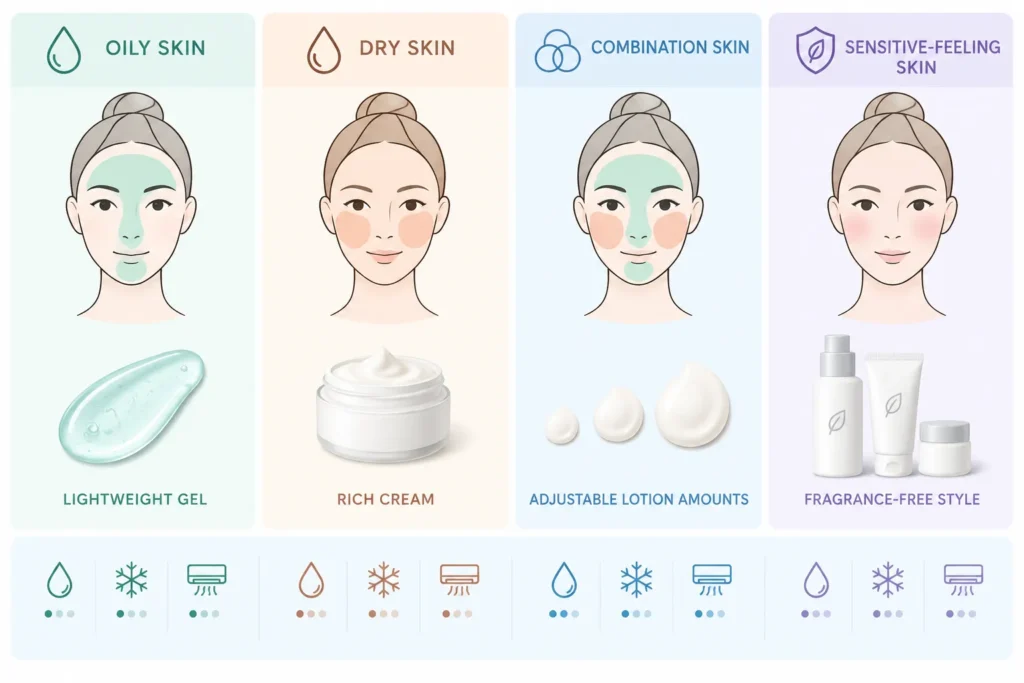
Skin type is mainly about how oily, dry, or sensitive your skin usually feels. It may also change with the weather, age, hormones, travel, or certain medicines. For example, skin may feel oilier during a humid Indian summer and drier during winter.
Oily Skin
Oily skin may look shiny and can be more prone to clogged pores. However, oily skin still needs moisturiser. Skipping it may leave the skin feeling uncomfortable and can encourage you to use harsh cleansers unnecessarily.
- Choose a gentle gel or foaming cleanser that does not leave the face tight.
- Use a lightweight, non-greasy moisturiser, such as a gel or lotion.
- Look for a comfortable broad-spectrum sunscreen with a matte, gel, or fluid texture.
- Avoid washing your face repeatedly to remove shine. Cleansing twice a day is generally enough for most people.
If you have frequent pimples or clogged pores, do not add several acne ingredients at once. Introduce one suitable product gradually, or ask a dermatologist for guidance.
Dry Skin
Dry skin may feel rough, tight, flaky, or itchy. It generally benefits from mild cleansing and richer moisturising products.
- Use a creamy or low-foaming cleanser.
- Avoid very hot water, which can make dryness feel worse.
- Apply moisturiser while the skin is slightly damp.
- Choose a cream containing ingredients such as glycerin, ceramides, or hyaluronic acid.
- Use a sunscreen with a moisturising cream or lotion texture if that feels more comfortable.
On very dry days, you may not need a cleanser in the morning. Rinsing with water can be enough for some people, but this depends on comfort, sweating, and the products used at night.
Combination Skin
Combination skin is usually oilier around the forehead, nose, and chin, while the cheeks may feel normal or dry. You do not necessarily need separate products for every part of the face.
- Begin with a mild cleanser suitable for the whole face.
- Choose a lightweight lotion that moisturises without feeling heavy.
- Apply a little more moisturiser to dry areas if needed.
- Use one sunscreen that feels comfortable across the face.
Adjusting the amount of moisturiser is often simpler than buying multiple creams. During humid weather, you may prefer a lighter texture. In winter, a slightly richer product may work better.
Sensitive Skin
Sensitive skin may sting, burn, itch, or become red easily. A simple routine is especially important because using many products can make it difficult to identify a trigger.
- Choose gentle, fragrance-free products where possible.
- Avoid harsh scrubs, strong peels, and frequent exfoliation.
- Patch-test a new product on a small area before using it widely.
- Introduce only one new product at a time.
- Stop using a product if it causes persistent burning, swelling, or worsening irritation.
Labels such as “natural”, “herbal”, or “chemical-free” do not guarantee that a product will suit sensitive skin. Plant extracts, essential oils, and fragrances can also cause irritation in some people.
Common Skincare Mistakes to Avoid
Beginners often assume that stronger products or more steps will produce faster results. In reality, an overcomplicated routine can irritate the skin and make consistency harder.
- Over-cleansing: Washing too often or using a strong cleanser can remove too much surface oil. If your face feels stretched, dry, or uncomfortable after cleansing, consider a gentler product.
- Using harsh scrubs: Rough particles and forceful rubbing can irritate the skin. Scrubbing harder does not clean pores more deeply or remove acne permanently.
- Combining too many active ingredients: Using retinoids, exfoliating acids, acne treatments, and strong brightening products together may cause dryness or irritation. Beginners should add active ingredients slowly and only when there is a clear need.
- Skipping sunscreen: Sunscreen is not only for beach days. Day-to-day exposure can occur while commuting, walking, sitting near bright windows, or doing outdoor tasks.
- Changing products too quickly: Replacing several products every few days makes it difficult to judge what suits your skin. Unless a product is causing irritation, give the routine reasonable time before making changes.
- Expecting instant results: Skincare is not an overnight fix. Be cautious of claims promising guaranteed, permanent, or extremely fast changes.
How Long Does a Skincare Routine Take to Show Results?
There is no single timeline that applies to everyone. Results depend on the concern, product, ingredients, frequency of use, consistency, lifestyle, and individual skin response.
A moisturiser may make dry skin feel more comfortable relatively quickly, while concerns such as acne marks, uneven tone, or clogged pores can take longer. Some concerns may also require medical treatment rather than cosmetic products.
Take a simple photo in similar lighting every few weeks if you want to track changes. Daily mirror checks can be misleading because small improvements are difficult to notice from one day to the next.
Do not continue a product merely because you expect an initial reaction. Mild adjustment can occur with certain active ingredients, but significant burning, swelling, blistering, severe itching, or rapidly worsening acne should not be ignored. Stop the suspected product and seek professional advice.
Frequently Asked Questions
1. What is the simplest skincare routine for a beginner?
The simplest routine includes a gentle cleanser, a moisturiser, and a broad-spectrum sunscreen for daytime. At night, cleanse the skin and apply moisturiser. You can consider additional products later if you have a specific concern and the basic routine is comfortable.
2. Should I follow a skincare routine both morning and night?
Yes, but the two routines do not have to be identical. In the morning, focus on gentle cleansing if needed, moisturising, and sun protection. At night, remove sunscreen, makeup, sweat, and dirt with appropriate cleansing, then moisturise. Avoid using a strong cleanser more often than your skin needs.
3. Do I need sunscreen every day?
Daily sunscreen is a useful part of a morning routine, especially when you will be exposed to daylight. Choose a broad-spectrum product with suitable SPF protection and use an adequate, even layer on exposed skin. Reapplication may be needed after heavy sweating, wiping the face, swimming, or extended outdoor exposure.
Sunscreen should support, not replace, practical protection such as shade, an umbrella, a cap, or suitable clothing.
4. Can I use the same moisturiser in the morning and at night?
Yes. If one moisturiser suits your skin and feels comfortable, you can use it twice a day. You do not need separate day and night creams. Some people prefer a lighter moisturiser in the morning under sunscreen and a richer cream at night, but this is a personal choice rather than a requirement.
5. How many skincare products does a beginner need?
Most beginners can start with three core products: cleanser, moisturiser, and sunscreen. More products are not automatically better. Add a treatment only for a specific concern, introduce it gradually, and continue the basic routine. A manageable three-product routine used consistently is often more practical than a ten-step routine used irregularly.
Summary
A daily skincare routine for beginners should be simple enough to follow every day. Select gentle products according to whether your skin is oily, dry, combination, or sensitive. Cleanse without over-washing, moisturise even if your skin is oily, and use sunscreen during the day.
Avoid harsh scrubbing, frequent product changes, and combining several active ingredients without guidance. Give your routine time, pay attention to irritation, and remember that skincare results vary. No product or routine can guarantee a particular result for every person.
This information is for general education and is not a medical diagnosis or treatment plan. Consult a qualified dermatologist or other appropriate healthcare professional if a skin concern is persistent, severe, painful, rapidly worsening, or affecting your daily life. Keep the routine simple, comfortable, and consistent.




Comments