

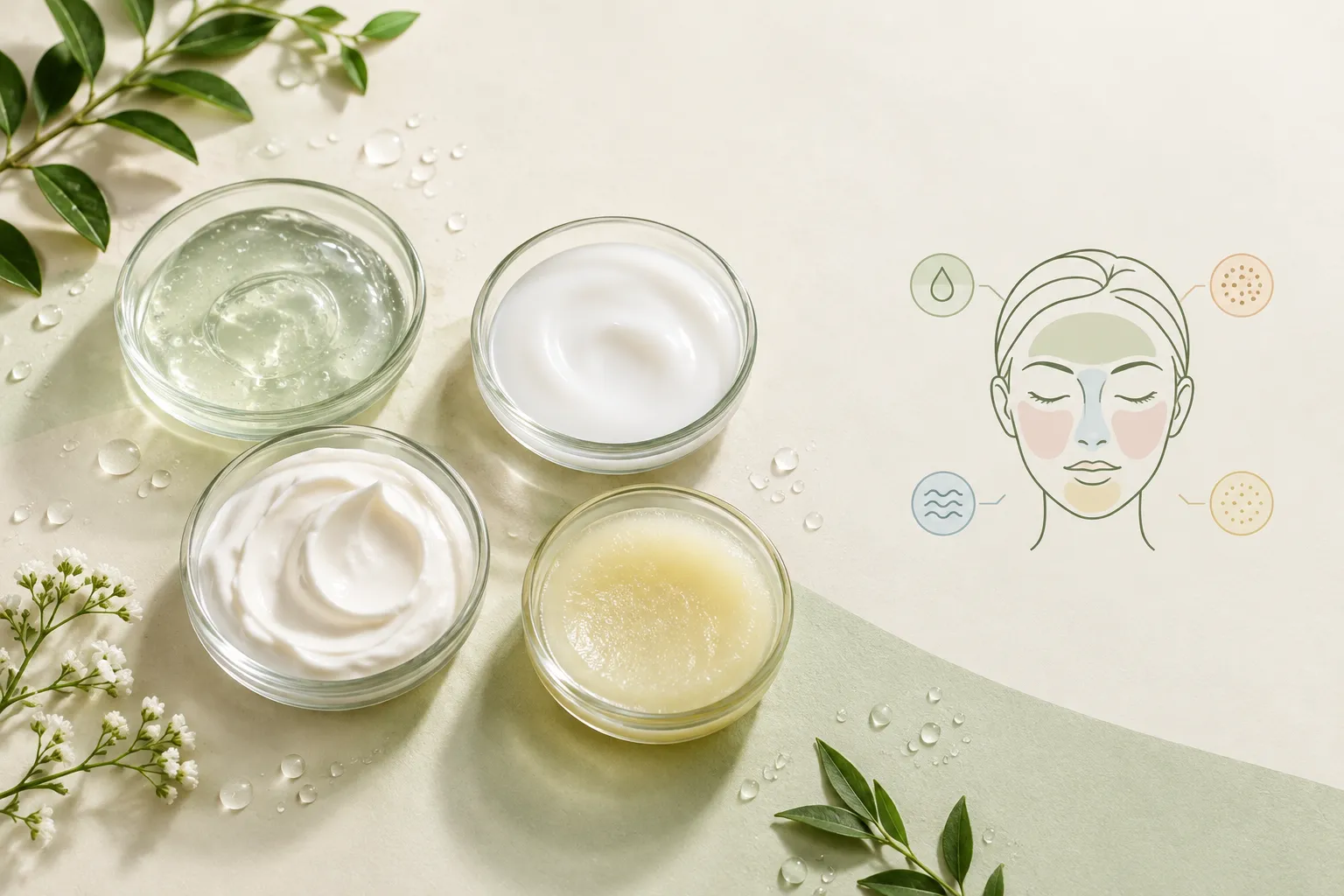
How to Choose a Moisturiser for Your Skin Type

A practical beginner’s guide to choosing a facial moisturiser based on your skin type, useful ingredients, texture, climate and signs of sensitivity.

How to Choose a Moisturiser for Your Skin Type

To understand how to choose a moisturiser for your skin type, first notice how your skin feels a few hours after gentle cleansing. Dry skin usually feels tight or rough, while oily skin becomes shiny across much of the face. Combination skin has both oily and dry areas. Normal skin generally feels comfortable, and sensitive skin may sting, itch or turn red easily.

Next, look for a texture that matches these needs. Creams and ointment-like formulas usually suit dry skin, while lightweight gels or lotions may feel better on oily skin. Combination skin often needs a light lotion or different amounts on different areas. If your skin is sensitive, choose a simple, fragrance-free formula and introduce it gradually.

Your skin type is only a starting point. Indian weather, air conditioning, age, cleansing habits and recently introduced products can all change how much moisture your skin needs.

Introduction

A moisturiser is not only for skin that looks visibly dry. It can help the outer layer of your skin retain water, feel comfortable and stay protected from everyday moisture loss. Even oily skin can become dehydrated and may benefit from a suitable moisturiser.

The difficulty is that moisturisers come in many forms, including gels, lotions, creams and balms. A rich cream that feels comforting on dry skin may feel heavy on an oily face. A very light gel that works during a humid Mumbai summer may not be enough during a dry Delhi winter.

This is why there is no single best moisturiser for everyone. The right choice depends on your skin type, current skin condition, climate and routine. It should leave your skin comfortable without causing persistent greasiness, tightness, stinging or new congestion.

Understanding Your Skin and Its Moisturising Needs

Your skin naturally contains water and oils that help keep its outer barrier comfortable and flexible. Water can still escape from the surface throughout the day, especially in dry weather, air-conditioned rooms or after harsh cleansing. A moisturiser helps by adding water, attracting it to the outer skin layer and reducing how quickly it is lost.

Many formulas combine three broad types of moisturising ingredients. Humectants, such as glycerin and hyaluronic acid, help attract water. Emollients help soften rough areas and fill small gaps between surface skin cells. Occlusive ingredients form a layer that slows moisture loss. You do not need to memorise every ingredient name, but these functions explain why moisturisers can have very different textures.

A gel may focus on light hydration, while a thick cream may contain more oils and moisture-sealing ingredients. Neither is automatically better. The useful question is whether the formula provides enough comfort for your skin without feeling unpleasant or causing problems.

How to Get a Basic Sense of Your Skin Type
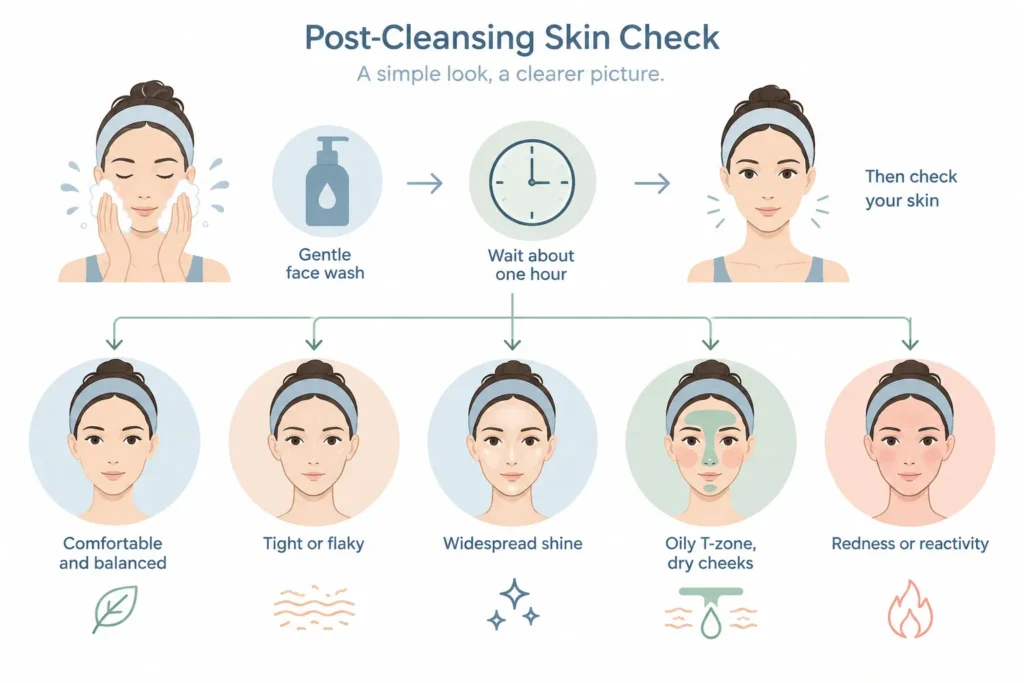
Flowchart showing signs associated with normal, dry, oily, combination and sensitive skin

Wash your face with a gentle cleanser and pat it dry. Avoid applying other products immediately. After about an hour, observe your skin in normal light and notice how it feels. Do not deliberately leave your skin bare for a long period if it becomes very uncomfortable.

  • Comfortable with little shine or tightness: Your skin may be normal.
  • Tight, rough, flaky or dull-looking: Your skin may be dry.
  • Shiny or greasy across most of the face: Your skin may be oily.
  • Oily around the forehead, nose or chin but dry elsewhere: Your skin may be combination.
  • Prone to burning, itching, redness or stinging: Your skin may be sensitive, although these signs can also occur for other reasons.

This simple check is not a medical diagnosis. Persistent rashes, swelling, severe itching, painful cracking or sudden skin changes should be assessed by a qualified dermatologist.

Normal Skin

Normal skin generally feels balanced. It is not regularly very oily or very dry, and it may tolerate a range of product textures. Pores may be visible, but the face does not usually develop heavy shine or obvious flaking soon after cleansing.

A light lotion or medium-weight cream is often a practical starting point. Your choice can change with the season. A lotion may be comfortable in humid weather, while a slightly richer cream may help during winter or after long hours in air conditioning.

“Normal” does not mean that the skin needs no care. Frequent washing, strong cleansers or skipping moisturiser when the skin feels tight can still affect comfort.

Oily Skin

Oily skin produces more surface oil and may look shiny across the forehead, nose, cheeks and chin. Makeup or sunscreen may slide off more quickly, and clogged pores or breakouts may occur. However, oil and water are not the same. Oily skin can still lack water, particularly after over-cleansing or using strong acne products.

A lightweight gel, gel-cream or fluid lotion may feel more comfortable than a rich cream. Labels such as “non-comedogenic” indicate that a product is designed to be less likely to clog pores, but they do not guarantee that it will suit every person.

Avoid trying to make oily skin feel completely dry or squeaky clean. Harsh cleansing can leave it tight and irritated. The aim is comfortable hydration with a finish that you can use consistently, especially in hot and humid Indian conditions.

You May Also Like:How to Open a Demat Account in India: Steps and Documents

Dry Skin

Dry skin may feel tight after washing and can look rough, flaky or dull. Fine surface lines may appear more noticeable when the skin lacks moisture. Some people also experience dry patches around the mouth, cheeks or eyebrows.

Creams and richer lotions usually provide more lasting comfort than very light gels. Ingredients such as glycerin, ceramides, squalane, shea butter or petrolatum may help hydrate, soften or reduce moisture loss. A thicker product can be particularly useful at night or in dry weather.

Applying moisturiser to slightly damp skin after cleansing can help retain water. Use lukewarm rather than very hot water, as hot water and prolonged washing may make dryness feel worse.

Combination Skin

Combination skin has different needs in different areas. The forehead, nose and chin, often called the T-zone, may become oily, while the cheeks or area around the mouth feels normal or dry.

A light lotion or gel-cream can be a sensible starting point for the whole face. Apply a smaller amount to oily areas and more to dry areas. If that is not enough, use a richer cream only where needed rather than covering the entire face with a heavy layer.

Combination skin can also shift with the seasons. The T-zone may feel oilier during the monsoon, while cheeks may become dry in winter or in air-conditioned offices.

Sensitive Skin

Sensitive skin is more likely to sting, burn, itch or become red after exposure to certain products or environmental conditions. It can also be oily, dry, normal or combination. Sensitivity describes how reactive the skin is, not how much oil it produces.

Look for a simple, fragrance-free moisturiser with a short and understandable ingredient list. “Unscented” does not always mean fragrance-free, because an unscented product may contain ingredients used to mask odours. Avoid changing several products at the same time, as this makes it difficult to identify what caused a reaction.

Before using a new moisturiser across your face, test a small amount on a limited area for several days. Stop using it if you develop persistent burning, swelling, a rash or worsening irritation.

Your Skin Type Can Change

Skin type is not a permanent label. Oil production and moisture needs can change with age, hormones, health conditions and medicines. External conditions also matter. Hot, humid weather may make a rich cream feel greasy, while a cold winter or a full day under air conditioning may increase dryness.

Cleansing habits can create temporary changes too. Washing frequently, using a strong face wash or applying exfoliating products too often may leave skin tight and sensitive. Newly introduced retinoids, acne treatments or exfoliating acids can also increase dryness or irritation, particularly at the beginning.

When considering how to choose a moisturiser for your skin type, assess how your skin behaves now rather than relying only on an old label. Recheck its comfort, shine and dry areas when the weather, routine or products change. The most suitable moisturiser is one that meets your skin’s present needs and remains comfortable enough for regular use.

How to Choose a Moisturiser for Your Skin Type

Learning how to choose a moisturiser for your skin type starts with understanding what your skin needs. A good moisturiser can attract water, soften rough areas, reduce moisture loss and support the skin barrier. However, the same product may feel comfortable on one person and heavy or irritating on another.

Your skin type provides a useful starting point, but it is not the only factor. Weather, air conditioning, age, medicines and the rest of your skincare routine can affect how a moisturiser performs. For example, a light lotion may be enough during a humid Chennai summer, while the same person may prefer a cream during a dry Delhi winter.

Moisturiser Ingredients and What They Do

Most moisturisers use a combination of humectants, emollients and occlusives. Some also contain ingredients that support the skin barrier. Understanding these groups can make product labels easier to assess.

  • Humectants: Ingredients such as glycerin and hyaluronic acid help attract and hold water in the upper layers of the skin. They are commonly found in gels, lotions and creams.
  • Emollients: These ingredients fill small gaps between skin cells and make the surface feel softer and smoother. Examples may include plant oils, fatty acids and certain silicones.
  • Occlusives: Ingredients such as petrolatum create a protective layer that slows water loss. They can be especially useful for very dry or cracked areas, although some people find them heavy.
  • Barrier-supporting ingredients: Ceramides are fats naturally present in the skin barrier. Moisturisers containing ceramides may help support a barrier affected by dryness, over-cleansing or irritating products.
You May Also Like:Crypto Support and Resistance Levels Explained: A Beginner’s Guide

No single ingredient guarantees that a moisturiser will suit you. The complete formulation matters, including the amount of each ingredient, the texture, added fragrance and preservatives. Individual skin responses also vary.

Gel, Lotion, Cream or Ointment?
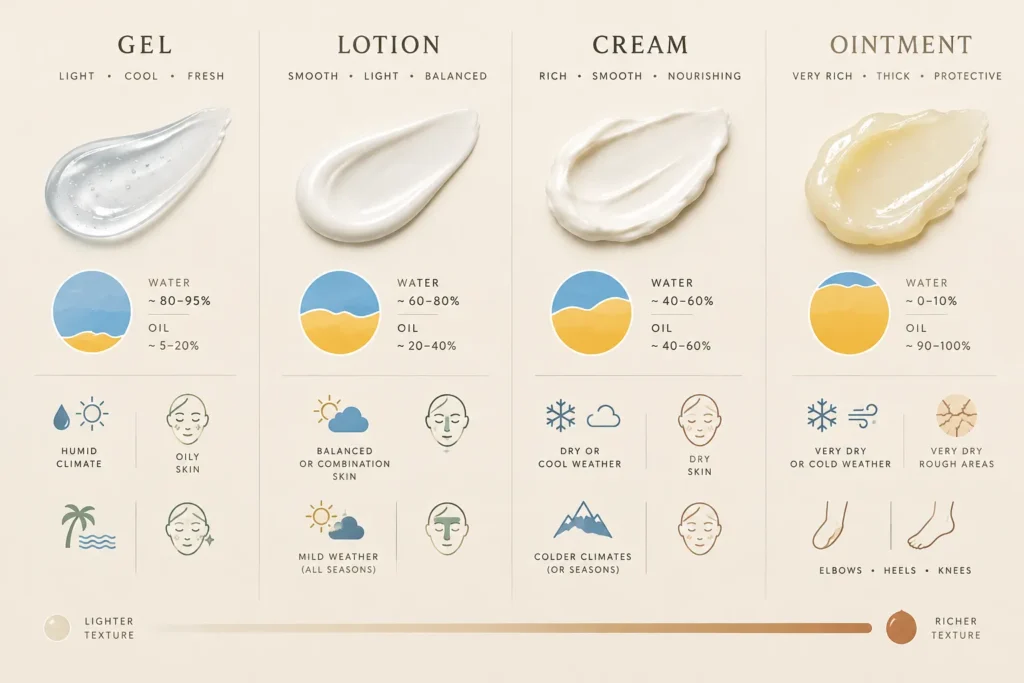
Comparison of gel, lotion, cream and ointment textures from lightest to richest

Moisturisers are available in several textures. The main difference is usually the balance of water, oils and moisture-sealing ingredients.

TextureTypical feelMay suit
GelVery light, cooling and quick to absorbOily skin, humid weather or people who dislike a greasy finish
LotionLight to medium, easy to spreadNormal, combination or mildly dry skin
CreamRicher and more protectiveDry skin, cooler weather or night-time use
OintmentThick, greasy and strongly moisture-sealingVery dry, cracked or rough areas

These are general patterns rather than fixed rules. A gel can contain rich emollients, while a well-designed cream may still feel light. Consider both the ingredient list and how the finished product behaves on your skin.

Moisturiser for Oily Skin

Oily skin produces more sebum, but it can still need moisturiser. Skipping moisturiser may leave the skin feeling tight, particularly if you use foaming cleansers, acne treatments or exfoliating products.

Begin with a lightweight gel or lotion that absorbs without leaving an uncomfortable film. A product labelled non-comedogenic is formulated with the aim of reducing the chance of blocked pores. The label is useful, but it is not a guarantee that the product will never cause breakouts for you.

Humectants such as glycerin or hyaluronic acid can provide hydration without requiring a very rich texture. If you are acne-prone, introduce one new product at a time. This makes it easier to identify whether a moisturiser is linked to irritation or new clogged pores.

During humid weather, a small amount may be enough. Apply a thin layer and add more only if the skin still feels tight. Moisturiser should leave oily skin comfortable, not excessively shiny or sticky.

Moisturiser for Dry Skin

Dry skin often feels tight, rough or flaky because it lacks enough oil or loses water easily. A richer cream is usually more suitable than a very light gel.

Look for a combination of humectants, emollients and occlusives. Glycerin can help hold water, emollients can smooth rough skin, and occlusives can reduce moisture loss. Ceramides may also be helpful when the skin barrier feels dry or easily disturbed.

Apply moisturiser soon after washing, while the skin is slightly damp rather than dripping wet. This can help retain the water already present on the surface. If certain areas remain very dry, such as around the nose, elbows or heels, a small amount of petrolatum or an ointment may provide extra protection.

A thicker product can be useful at night or during a dry winter. In hot weather, you may prefer a medium cream that provides comfort without feeling too heavy.

Moisturiser for Combination Skin

Combination skin commonly has an oilier T-zone, covering the forehead, nose and chin, with normal or dry cheeks. One balanced lotion may work across the face, particularly if the differences between areas are mild.

You can also adjust the amount used on each area. Apply a thin layer to the oily T-zone and a little more to dry cheeks. If the difference is significant, use a light gel or lotion on oily areas and a richer cream only where dryness occurs.

This approach can change with the season. Your cheeks may need more support in winter, while the T-zone may need less product during the monsoon or a humid summer.

Moisturiser for Sensitive Skin

Sensitive skin may sting, burn, itch or become red after using certain products. Choose a simple formula with fewer unnecessary additions. A fragrance-free moisturiser is generally a sensible starting point because fragrance can be irritating for some people.

Check the label carefully. Fragrance-free usually means fragrance has not been added, while unscented may mean that masking ingredients have been used to reduce the product’s natural smell. Sensitive skin may also benefit from a gentle cream containing glycerin, emollients or ceramides.

Patch test a new moisturiser before applying it across the face. Use a small amount on a limited area, such as behind the ear or along the jaw, and observe the area over the next few days. Stop if you develop persistent burning, swelling, itching or a rash.

Patch testing cannot predict every reaction, but it can reduce the risk of using an unsuitable product over a large area. If your skin reacts often or symptoms are severe, seek advice from a dermatologist rather than repeatedly trying new products.

Moisturiser for Normal Skin

Normal skin generally feels comfortable without being consistently oily or dry. A lotion or light cream is often enough, but the best choice is the one that keeps the skin comfortable through the day.

You can use a lighter texture in hot, humid conditions and a richer one when the weather becomes cool or dry. There is no need to choose the thickest or most complicated formula if a basic moisturiser works well.

Whatever your skin type, assess the result after regular use. The right moisturiser should reduce tightness and roughness without causing ongoing irritation, excessive greasiness or frequent clogged pores. Treat labels and ingredient lists as guides, then adjust the texture and amount according to how your own skin responds.

You May Also Like:Natural Drinks to Reduce Liver Fat: What Does the Evidence Say?

Using and Testing Your Moisturiser Safely

Knowing how to choose a moisturiser for your skin type is only the first step. Weather, application method and the rest of your routine can affect how comfortable a product feels.

A moisturiser that works well in one season may feel too heavy or too light in another. You do not always need to replace it, but you may need to adjust the amount or frequency of use.

Adjust the Texture for Weather and Indoor Conditions

India has varied climates. A person living in humid Chennai may prefer a different texture from someone experiencing a dry winter in Delhi. Your own preference may also change during the year.

  • Hot and humid weather: A lightweight lotion or gel-cream may feel more comfortable, especially for oily or combination skin.
  • Dry or cold weather: A richer cream may help if the skin starts feeling tight, rough or flaky.
  • Monsoon conditions: Some people prefer lighter layers because sweat and humidity can make heavy creams feel sticky.
  • Air-conditioned rooms: Long hours in air conditioning may leave some people feeling dry, even when the weather outside is humid.

These are practical starting points, not fixed rules. If your current moisturiser keeps your skin comfortable without causing irritation or congestion, there may be no reason to change it simply because the season has changed.

Combination skin may need flexible application. For example, you can use a small amount on an oily forehead and apply a little more around dry cheeks. Another option is to use a light moisturiser across the face and add a richer product only to areas that need it.

Apply Moisturiser in the Right Order

Begin with gentle cleansing. Use lukewarm water and avoid aggressive scrubbing, particularly if your skin is dry or sensitive. Pat the face gently instead of rubbing it with a towel.

Moisturiser can often be applied while the skin is slightly damp. This may help reduce water loss and make the product easier to spread. However, follow the product directions if it needs to be used differently. Prescription treatments may also require a specific order or waiting period.

A simple daytime routine can follow this order:

  1. Gentle cleanser
  2. Any suitable treatment or serum
  3. Moisturiser
  4. Broad-spectrum sunscreen

Sunscreen usually comes after moisturiser as the final skincare step in the morning. Allow the moisturiser to settle if the layers are pilling or rolling off. Applying smaller amounts and avoiding unnecessary layers may also help.

At night, sunscreen is not required. After cleansing, apply any treatment as directed and follow with moisturiser. If you use a strong active ingredient or prescription medicine, ask a dermatologist how to combine it with your moisturiser.

Avoid Common Moisturiser Mistakes

Choosing only by price: The cheapest product is not automatically unsuitable, and an expensive moisturiser is not automatically better. Look at whether the formula suits your skin, feels comfortable and can be used consistently within your budget.

Buying only because a product is popular: Reviews and social media trends cannot tell you exactly how your skin will react. A rich cream praised by someone with dry skin may feel uncomfortable on oily skin.

Assuming fragrance means better skincare: Fragrance may make a product pleasant to use, but it is not needed for moisturising. It can irritate some people, particularly those with sensitive skin or an impaired skin barrier. A fragrance-free option is often a sensible starting point if you react easily.

Applying too much: More product does not always mean more hydration. Excess moisturiser may feel greasy, interfere with sunscreen or cause products to pill. Start with a modest amount and add more only where needed.

Changing products too often: Frequent switching makes it difficult to identify what is helping or causing irritation. Unless you develop a reaction, give a basic moisturiser enough consistent use to judge its comfort and suitability.

Ignoring changes in your skin: Your skin type and skin condition are not always the same. Oily skin can temporarily become dehydrated or irritated, while normally dry skin may feel oilier in humid weather. Adjust based on how your skin behaves rather than following a label rigidly.

You May Also Like:Health Benefits of Eating Pomegranate Daily: Nutrition, Evidence and Safety

Patch Test a New Moisturiser

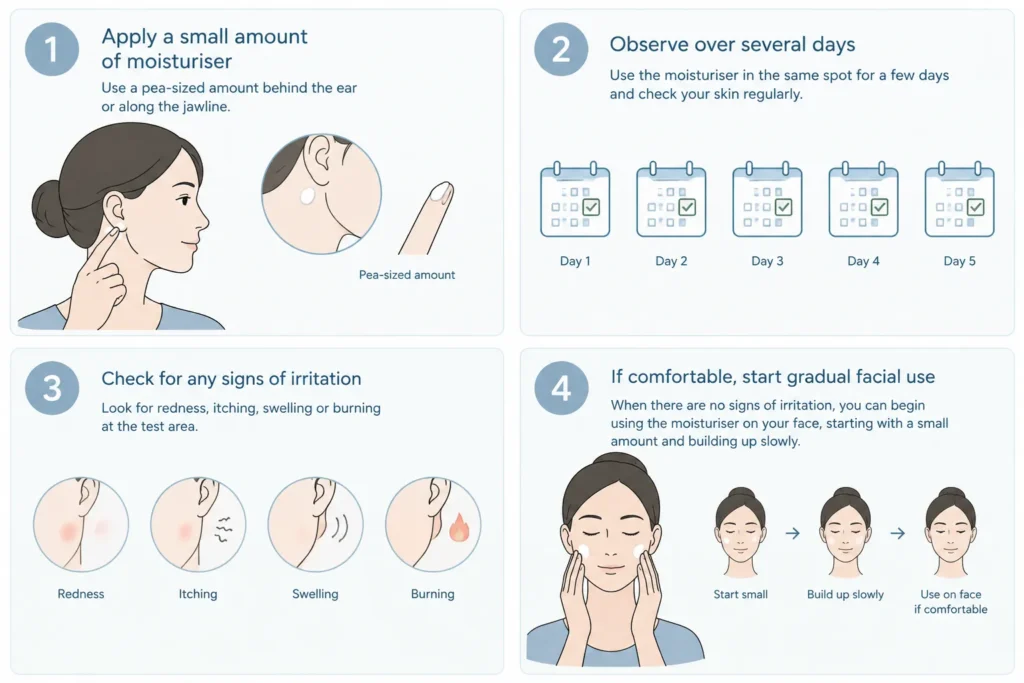
Four-step illustration for patch testing a new moisturiser before full facial use

A patch test may help identify an obvious reaction before you apply a new product across your face. It cannot guarantee that the product will never irritate you or cause clogged pores.

  1. Apply a small amount to a limited area, such as behind the ear or along the side of the jaw.
  2. Leave it on according to the product instructions.
  3. Repeat for several days if no reaction appears, particularly if you have sensitive skin.
  4. Watch for persistent redness, itching, swelling, burning or a rash.
  5. If the area remains comfortable, introduce the moisturiser to your face gradually.

Test one new product at a time where possible. If you start a cleanser, serum and moisturiser together, it can be hard to identify which one caused a reaction.

People with a history of serious allergies, eczema or repeated cosmetic reactions should ask a dermatologist about the safest testing approach. A home patch test is not the same as formal allergy patch testing performed by a qualified medical professional.

Know When to Stop Using a Product

A moisturiser should not cause ongoing burning, significant itching, swelling, hives or a spreading rash. Stop using the product if these symptoms appear, and gently rinse it off if appropriate. Seek urgent medical help for breathing difficulty, facial or throat swelling, or another sign of a severe allergic reaction.

A brief mild sensation can sometimes occur when severely dry skin is exposed to a product, but persistent stinging should not be ignored. Continuing to use an irritating formula may worsen the skin barrier.

Consult a dermatologist if you have severe or persistent dryness, cracked or bleeding skin, repeated inflammation, intense itching, oozing patches or eczema-like symptoms. Professional advice is also useful when several moisturisers cause reactions or when symptoms do not improve with a gentle routine.

Frequently Asked Questions

Does oily skin need a moisturiser?

Yes, oily skin may still benefit from moisturiser. Choose a lightweight, comfortable formula and use an appropriate amount. Look for products described as non-comedogenic if clogged pores are a concern, while remembering that no label can guarantee the same result for everyone.

Is a gel moisturiser better than a cream?

Neither texture is universally better. Gels and gel-creams often feel lighter in humid weather or on oily skin. Creams may feel more supportive for dry skin or during colder, drier conditions. Comfort and skin response matter more than the texture name.

Which moisturising ingredients may suit dry skin?

Dry skin may benefit from formulas containing humectants such as glycerin or hyaluronic acid, barrier-supporting ingredients such as ceramides, and occlusive ingredients that reduce moisture loss. A balanced formula can contain more than one type.

Should sunscreen go before or after moisturiser?

In a typical morning routine, apply moisturiser first and sunscreen afterwards. Sunscreen should usually be the final skincare layer before makeup. Follow the directions on your sunscreen and use an adequate, even layer.

How should I select a moisturiser for sensitive skin?

Start with a simple, fragrance-free formula with fewer potential irritants. Patch test it and introduce it gradually. “Natural” or “herbal” does not automatically mean gentle, as plant extracts and essential oils can also cause reactions in some people.

Summary

Use weather and skin comfort to guide texture choices rather than following rigid seasonal rules. Apply moisturiser gently after cleansing, often while the skin is slightly damp where suitable, and place sunscreen after it during the day.

Avoid selecting products only by price, popularity or luxury branding. Use a reasonable amount, limit unnecessary product changes and consider fragrance-free options if your skin is reactive. Patch testing can reduce the chance of an unexpected reaction, although it cannot predict every problem.

This information is for general education and does not replace medical advice. See a qualified dermatologist for persistent irritation, severe dryness, suspected eczema, allergic reactions or symptoms that do not settle with a simple skincare routine.

Share this article
KEEP READING

Related Articles

View all →

Comments

Leave a Comment

How to Choose a Moisturiser for Your Skin Type

To understand how to choose a moisturiser for your skin type, first notice how your skin feels a few hours after gentle cleansing. Dry skin usually feels tight or rough, while oily skin becomes shiny across much of the face. Combination skin has both oily and dry areas. Normal skin generally feels comfortable, and sensitive skin may sting, itch or turn red easily.

Next, look for a texture that matches these needs. Creams and ointment-like formulas usually suit dry skin, while lightweight gels or lotions may feel better on oily skin. Combination skin often needs a light lotion or different amounts on different areas. If your skin is sensitive, choose a simple, fragrance-free formula and introduce it gradually.

Your skin type is only a starting point. Indian weather, air conditioning, age, cleansing habits and recently introduced products can all change how much moisture your skin needs.

Introduction

A moisturiser is not only for skin that looks visibly dry. It can help the outer layer of your skin retain water, feel comfortable and stay protected from everyday moisture loss. Even oily skin can become dehydrated and may benefit from a suitable moisturiser.

The difficulty is that moisturisers come in many forms, including gels, lotions, creams and balms. A rich cream that feels comforting on dry skin may feel heavy on an oily face. A very light gel that works during a humid Mumbai summer may not be enough during a dry Delhi winter.

This is why there is no single best moisturiser for everyone. The right choice depends on your skin type, current skin condition, climate and routine. It should leave your skin comfortable without causing persistent greasiness, tightness, stinging or new congestion.

Understanding Your Skin and Its Moisturising Needs

Your skin naturally contains water and oils that help keep its outer barrier comfortable and flexible. Water can still escape from the surface throughout the day, especially in dry weather, air-conditioned rooms or after harsh cleansing. A moisturiser helps by adding water, attracting it to the outer skin layer and reducing how quickly it is lost.

Many formulas combine three broad types of moisturising ingredients. Humectants, such as glycerin and hyaluronic acid, help attract water. Emollients help soften rough areas and fill small gaps between surface skin cells. Occlusive ingredients form a layer that slows moisture loss. You do not need to memorise every ingredient name, but these functions explain why moisturisers can have very different textures.

A gel may focus on light hydration, while a thick cream may contain more oils and moisture-sealing ingredients. Neither is automatically better. The useful question is whether the formula provides enough comfort for your skin without feeling unpleasant or causing problems.

How to Get a Basic Sense of Your Skin Type

Flowchart showing signs associated with normal, dry, oily, combination and sensitive skin

Wash your face with a gentle cleanser and pat it dry. Avoid applying other products immediately. After about an hour, observe your skin in normal light and notice how it feels. Do not deliberately leave your skin bare for a long period if it becomes very uncomfortable.

  • Comfortable with little shine or tightness: Your skin may be normal.
  • Tight, rough, flaky or dull-looking: Your skin may be dry.
  • Shiny or greasy across most of the face: Your skin may be oily.
  • Oily around the forehead, nose or chin but dry elsewhere: Your skin may be combination.
  • Prone to burning, itching, redness or stinging: Your skin may be sensitive, although these signs can also occur for other reasons.

This simple check is not a medical diagnosis. Persistent rashes, swelling, severe itching, painful cracking or sudden skin changes should be assessed by a qualified dermatologist.

Normal Skin

Normal skin generally feels balanced. It is not regularly very oily or very dry, and it may tolerate a range of product textures. Pores may be visible, but the face does not usually develop heavy shine or obvious flaking soon after cleansing.

A light lotion or medium-weight cream is often a practical starting point. Your choice can change with the season. A lotion may be comfortable in humid weather, while a slightly richer cream may help during winter or after long hours in air conditioning.

“Normal” does not mean that the skin needs no care. Frequent washing, strong cleansers or skipping moisturiser when the skin feels tight can still affect comfort.

Oily Skin

Oily skin produces more surface oil and may look shiny across the forehead, nose, cheeks and chin. Makeup or sunscreen may slide off more quickly, and clogged pores or breakouts may occur. However, oil and water are not the same. Oily skin can still lack water, particularly after over-cleansing or using strong acne products.

A lightweight gel, gel-cream or fluid lotion may feel more comfortable than a rich cream. Labels such as “non-comedogenic” indicate that a product is designed to be less likely to clog pores, but they do not guarantee that it will suit every person.

Avoid trying to make oily skin feel completely dry or squeaky clean. Harsh cleansing can leave it tight and irritated. The aim is comfortable hydration with a finish that you can use consistently, especially in hot and humid Indian conditions.

Dry Skin

Dry skin may feel tight after washing and can look rough, flaky or dull. Fine surface lines may appear more noticeable when the skin lacks moisture. Some people also experience dry patches around the mouth, cheeks or eyebrows.

Creams and richer lotions usually provide more lasting comfort than very light gels. Ingredients such as glycerin, ceramides, squalane, shea butter or petrolatum may help hydrate, soften or reduce moisture loss. A thicker product can be particularly useful at night or in dry weather.

Applying moisturiser to slightly damp skin after cleansing can help retain water. Use lukewarm rather than very hot water, as hot water and prolonged washing may make dryness feel worse.

Combination Skin

Combination skin has different needs in different areas. The forehead, nose and chin, often called the T-zone, may become oily, while the cheeks or area around the mouth feels normal or dry.

A light lotion or gel-cream can be a sensible starting point for the whole face. Apply a smaller amount to oily areas and more to dry areas. If that is not enough, use a richer cream only where needed rather than covering the entire face with a heavy layer.

Combination skin can also shift with the seasons. The T-zone may feel oilier during the monsoon, while cheeks may become dry in winter or in air-conditioned offices.

Sensitive Skin

Sensitive skin is more likely to sting, burn, itch or become red after exposure to certain products or environmental conditions. It can also be oily, dry, normal or combination. Sensitivity describes how reactive the skin is, not how much oil it produces.

Look for a simple, fragrance-free moisturiser with a short and understandable ingredient list. “Unscented” does not always mean fragrance-free, because an unscented product may contain ingredients used to mask odours. Avoid changing several products at the same time, as this makes it difficult to identify what caused a reaction.

Before using a new moisturiser across your face, test a small amount on a limited area for several days. Stop using it if you develop persistent burning, swelling, a rash or worsening irritation.

Your Skin Type Can Change

Skin type is not a permanent label. Oil production and moisture needs can change with age, hormones, health conditions and medicines. External conditions also matter. Hot, humid weather may make a rich cream feel greasy, while a cold winter or a full day under air conditioning may increase dryness.

Cleansing habits can create temporary changes too. Washing frequently, using a strong face wash or applying exfoliating products too often may leave skin tight and sensitive. Newly introduced retinoids, acne treatments or exfoliating acids can also increase dryness or irritation, particularly at the beginning.

When considering how to choose a moisturiser for your skin type, assess how your skin behaves now rather than relying only on an old label. Recheck its comfort, shine and dry areas when the weather, routine or products change. The most suitable moisturiser is one that meets your skin’s present needs and remains comfortable enough for regular use.

How to Choose a Moisturiser for Your Skin Type

Learning how to choose a moisturiser for your skin type starts with understanding what your skin needs. A good moisturiser can attract water, soften rough areas, reduce moisture loss and support the skin barrier. However, the same product may feel comfortable on one person and heavy or irritating on another.

Your skin type provides a useful starting point, but it is not the only factor. Weather, air conditioning, age, medicines and the rest of your skincare routine can affect how a moisturiser performs. For example, a light lotion may be enough during a humid Chennai summer, while the same person may prefer a cream during a dry Delhi winter.

Moisturiser Ingredients and What They Do

Most moisturisers use a combination of humectants, emollients and occlusives. Some also contain ingredients that support the skin barrier. Understanding these groups can make product labels easier to assess.

  • Humectants: Ingredients such as glycerin and hyaluronic acid help attract and hold water in the upper layers of the skin. They are commonly found in gels, lotions and creams.
  • Emollients: These ingredients fill small gaps between skin cells and make the surface feel softer and smoother. Examples may include plant oils, fatty acids and certain silicones.
  • Occlusives: Ingredients such as petrolatum create a protective layer that slows water loss. They can be especially useful for very dry or cracked areas, although some people find them heavy.
  • Barrier-supporting ingredients: Ceramides are fats naturally present in the skin barrier. Moisturisers containing ceramides may help support a barrier affected by dryness, over-cleansing or irritating products.

No single ingredient guarantees that a moisturiser will suit you. The complete formulation matters, including the amount of each ingredient, the texture, added fragrance and preservatives. Individual skin responses also vary.

Gel, Lotion, Cream or Ointment?

Comparison of gel, lotion, cream and ointment textures from lightest to richest

Moisturisers are available in several textures. The main difference is usually the balance of water, oils and moisture-sealing ingredients.

TextureTypical feelMay suit
GelVery light, cooling and quick to absorbOily skin, humid weather or people who dislike a greasy finish
LotionLight to medium, easy to spreadNormal, combination or mildly dry skin
CreamRicher and more protectiveDry skin, cooler weather or night-time use
OintmentThick, greasy and strongly moisture-sealingVery dry, cracked or rough areas

These are general patterns rather than fixed rules. A gel can contain rich emollients, while a well-designed cream may still feel light. Consider both the ingredient list and how the finished product behaves on your skin.

Moisturiser for Oily Skin

Oily skin produces more sebum, but it can still need moisturiser. Skipping moisturiser may leave the skin feeling tight, particularly if you use foaming cleansers, acne treatments or exfoliating products.

Begin with a lightweight gel or lotion that absorbs without leaving an uncomfortable film. A product labelled non-comedogenic is formulated with the aim of reducing the chance of blocked pores. The label is useful, but it is not a guarantee that the product will never cause breakouts for you.

Humectants such as glycerin or hyaluronic acid can provide hydration without requiring a very rich texture. If you are acne-prone, introduce one new product at a time. This makes it easier to identify whether a moisturiser is linked to irritation or new clogged pores.

During humid weather, a small amount may be enough. Apply a thin layer and add more only if the skin still feels tight. Moisturiser should leave oily skin comfortable, not excessively shiny or sticky.

Moisturiser for Dry Skin

Dry skin often feels tight, rough or flaky because it lacks enough oil or loses water easily. A richer cream is usually more suitable than a very light gel.

Look for a combination of humectants, emollients and occlusives. Glycerin can help hold water, emollients can smooth rough skin, and occlusives can reduce moisture loss. Ceramides may also be helpful when the skin barrier feels dry or easily disturbed.

Apply moisturiser soon after washing, while the skin is slightly damp rather than dripping wet. This can help retain the water already present on the surface. If certain areas remain very dry, such as around the nose, elbows or heels, a small amount of petrolatum or an ointment may provide extra protection.

A thicker product can be useful at night or during a dry winter. In hot weather, you may prefer a medium cream that provides comfort without feeling too heavy.

Moisturiser for Combination Skin

Combination skin commonly has an oilier T-zone, covering the forehead, nose and chin, with normal or dry cheeks. One balanced lotion may work across the face, particularly if the differences between areas are mild.

You can also adjust the amount used on each area. Apply a thin layer to the oily T-zone and a little more to dry cheeks. If the difference is significant, use a light gel or lotion on oily areas and a richer cream only where dryness occurs.

This approach can change with the season. Your cheeks may need more support in winter, while the T-zone may need less product during the monsoon or a humid summer.

Moisturiser for Sensitive Skin

Sensitive skin may sting, burn, itch or become red after using certain products. Choose a simple formula with fewer unnecessary additions. A fragrance-free moisturiser is generally a sensible starting point because fragrance can be irritating for some people.

Check the label carefully. Fragrance-free usually means fragrance has not been added, while unscented may mean that masking ingredients have been used to reduce the product’s natural smell. Sensitive skin may also benefit from a gentle cream containing glycerin, emollients or ceramides.

Patch test a new moisturiser before applying it across the face. Use a small amount on a limited area, such as behind the ear or along the jaw, and observe the area over the next few days. Stop if you develop persistent burning, swelling, itching or a rash.

Patch testing cannot predict every reaction, but it can reduce the risk of using an unsuitable product over a large area. If your skin reacts often or symptoms are severe, seek advice from a dermatologist rather than repeatedly trying new products.

Moisturiser for Normal Skin

Normal skin generally feels comfortable without being consistently oily or dry. A lotion or light cream is often enough, but the best choice is the one that keeps the skin comfortable through the day.

You can use a lighter texture in hot, humid conditions and a richer one when the weather becomes cool or dry. There is no need to choose the thickest or most complicated formula if a basic moisturiser works well.

Whatever your skin type, assess the result after regular use. The right moisturiser should reduce tightness and roughness without causing ongoing irritation, excessive greasiness or frequent clogged pores. Treat labels and ingredient lists as guides, then adjust the texture and amount according to how your own skin responds.

Using and Testing Your Moisturiser Safely

Knowing how to choose a moisturiser for your skin type is only the first step. Weather, application method and the rest of your routine can affect how comfortable a product feels.

A moisturiser that works well in one season may feel too heavy or too light in another. You do not always need to replace it, but you may need to adjust the amount or frequency of use.

Adjust the Texture for Weather and Indoor Conditions

India has varied climates. A person living in humid Chennai may prefer a different texture from someone experiencing a dry winter in Delhi. Your own preference may also change during the year.

  • Hot and humid weather: A lightweight lotion or gel-cream may feel more comfortable, especially for oily or combination skin.
  • Dry or cold weather: A richer cream may help if the skin starts feeling tight, rough or flaky.
  • Monsoon conditions: Some people prefer lighter layers because sweat and humidity can make heavy creams feel sticky.
  • Air-conditioned rooms: Long hours in air conditioning may leave some people feeling dry, even when the weather outside is humid.

These are practical starting points, not fixed rules. If your current moisturiser keeps your skin comfortable without causing irritation or congestion, there may be no reason to change it simply because the season has changed.

Combination skin may need flexible application. For example, you can use a small amount on an oily forehead and apply a little more around dry cheeks. Another option is to use a light moisturiser across the face and add a richer product only to areas that need it.

Apply Moisturiser in the Right Order

Begin with gentle cleansing. Use lukewarm water and avoid aggressive scrubbing, particularly if your skin is dry or sensitive. Pat the face gently instead of rubbing it with a towel.

Moisturiser can often be applied while the skin is slightly damp. This may help reduce water loss and make the product easier to spread. However, follow the product directions if it needs to be used differently. Prescription treatments may also require a specific order or waiting period.

A simple daytime routine can follow this order:

  1. Gentle cleanser
  2. Any suitable treatment or serum
  3. Moisturiser
  4. Broad-spectrum sunscreen

Sunscreen usually comes after moisturiser as the final skincare step in the morning. Allow the moisturiser to settle if the layers are pilling or rolling off. Applying smaller amounts and avoiding unnecessary layers may also help.

At night, sunscreen is not required. After cleansing, apply any treatment as directed and follow with moisturiser. If you use a strong active ingredient or prescription medicine, ask a dermatologist how to combine it with your moisturiser.

Avoid Common Moisturiser Mistakes

Choosing only by price: The cheapest product is not automatically unsuitable, and an expensive moisturiser is not automatically better. Look at whether the formula suits your skin, feels comfortable and can be used consistently within your budget.

Buying only because a product is popular: Reviews and social media trends cannot tell you exactly how your skin will react. A rich cream praised by someone with dry skin may feel uncomfortable on oily skin.

Assuming fragrance means better skincare: Fragrance may make a product pleasant to use, but it is not needed for moisturising. It can irritate some people, particularly those with sensitive skin or an impaired skin barrier. A fragrance-free option is often a sensible starting point if you react easily.

Applying too much: More product does not always mean more hydration. Excess moisturiser may feel greasy, interfere with sunscreen or cause products to pill. Start with a modest amount and add more only where needed.

Changing products too often: Frequent switching makes it difficult to identify what is helping or causing irritation. Unless you develop a reaction, give a basic moisturiser enough consistent use to judge its comfort and suitability.

Ignoring changes in your skin: Your skin type and skin condition are not always the same. Oily skin can temporarily become dehydrated or irritated, while normally dry skin may feel oilier in humid weather. Adjust based on how your skin behaves rather than following a label rigidly.

Patch Test a New Moisturiser
Four-step illustration for patch testing a new moisturiser before full facial use

A patch test may help identify an obvious reaction before you apply a new product across your face. It cannot guarantee that the product will never irritate you or cause clogged pores.

  1. Apply a small amount to a limited area, such as behind the ear or along the side of the jaw.
  2. Leave it on according to the product instructions.
  3. Repeat for several days if no reaction appears, particularly if you have sensitive skin.
  4. Watch for persistent redness, itching, swelling, burning or a rash.
  5. If the area remains comfortable, introduce the moisturiser to your face gradually.

Test one new product at a time where possible. If you start a cleanser, serum and moisturiser together, it can be hard to identify which one caused a reaction.

People with a history of serious allergies, eczema or repeated cosmetic reactions should ask a dermatologist about the safest testing approach. A home patch test is not the same as formal allergy patch testing performed by a qualified medical professional.

Know When to Stop Using a Product

A moisturiser should not cause ongoing burning, significant itching, swelling, hives or a spreading rash. Stop using the product if these symptoms appear, and gently rinse it off if appropriate. Seek urgent medical help for breathing difficulty, facial or throat swelling, or another sign of a severe allergic reaction.

A brief mild sensation can sometimes occur when severely dry skin is exposed to a product, but persistent stinging should not be ignored. Continuing to use an irritating formula may worsen the skin barrier.

Consult a dermatologist if you have severe or persistent dryness, cracked or bleeding skin, repeated inflammation, intense itching, oozing patches or eczema-like symptoms. Professional advice is also useful when several moisturisers cause reactions or when symptoms do not improve with a gentle routine.

Frequently Asked Questions

Does oily skin need a moisturiser?

Yes, oily skin may still benefit from moisturiser. Choose a lightweight, comfortable formula and use an appropriate amount. Look for products described as non-comedogenic if clogged pores are a concern, while remembering that no label can guarantee the same result for everyone.

Is a gel moisturiser better than a cream?

Neither texture is universally better. Gels and gel-creams often feel lighter in humid weather or on oily skin. Creams may feel more supportive for dry skin or during colder, drier conditions. Comfort and skin response matter more than the texture name.

Which moisturising ingredients may suit dry skin?

Dry skin may benefit from formulas containing humectants such as glycerin or hyaluronic acid, barrier-supporting ingredients such as ceramides, and occlusive ingredients that reduce moisture loss. A balanced formula can contain more than one type.

Should sunscreen go before or after moisturiser?

In a typical morning routine, apply moisturiser first and sunscreen afterwards. Sunscreen should usually be the final skincare layer before makeup. Follow the directions on your sunscreen and use an adequate, even layer.

How should I select a moisturiser for sensitive skin?

Start with a simple, fragrance-free formula with fewer potential irritants. Patch test it and introduce it gradually. “Natural” or “herbal” does not automatically mean gentle, as plant extracts and essential oils can also cause reactions in some people.

Summary

Use weather and skin comfort to guide texture choices rather than following rigid seasonal rules. Apply moisturiser gently after cleansing, often while the skin is slightly damp where suitable, and place sunscreen after it during the day.

Avoid selecting products only by price, popularity or luxury branding. Use a reasonable amount, limit unnecessary product changes and consider fragrance-free options if your skin is reactive. Patch testing can reduce the chance of an unexpected reaction, although it cannot predict every problem.

This information is for general education and does not replace medical advice. See a qualified dermatologist for persistent irritation, severe dryness, suspected eczema, allergic reactions or symptoms that do not settle with a simple skincare routine.

Leave a Comment